Protecting Civilians in Sudan

Even without a Ceasefire, There Are Ways to Curb the Brutal Violence against the Civilian Population

SWP Comment, 8 July 2025 (available in German, too)

The war in Sudan, which broke out on 15 April 2023 between the Sudanese Armed Forces (SAF) and the paramilitary Rapid Support Forces (RSF), has triggered the largest humanitarian crisis in the world. Civilians are being directly attacked by the warring parties. The violent actors are destroying civilian infrastructure and blocking humanitarian aid as part of their war strategy. Some are also targeting members of specific identity groups, including on an ethnic basis. At the same time, the parties to the conflict claim to be protecting the civilian population. International efforts to pro­tect the civilian population or particularly vulnerable groups have so far been largely unsuccessful. Calls for military intervention have little chance of success in the current global situation. In fact, the committed efforts of Sudanese citizens to protect themselves and others around them deserve more attention and support. Pro­tection efforts can help alleviate the suffering of the civilian population, even if an end to the war remains out of reach.

On Sunday, 13 April 2025, the RSF captured the Zam-Zam IDP (internally displaced per­sons) camp in North Darfur. Until then, it had been the largest camp for IDPs in Sudan, containing at least half a million people. Some of them had been living there for more than 20 years, since the time they had fled from the RSF’s predecessors. According to the United Nations (UN), around 400,000 people fled the camp in just two days follow­ing its capture by the RSF, and more than 400 civilians were killed in or near the camp. One survivor told Reuters that the RSF killed 14 people who had taken shelter in a mosque. Mohammed, another survivor, said in an online press interview that the RSF had labelled the residents as “slaves”. He said that armed young people from the camp had con­tinued to resist the RSF until their ammu­nition ran out. “Without them, many more people would have been killed”, he said.

Conversely, the RSF said on their official Telegram channel that they had saved the people in Zam-Zam from the “mercenaries” in the “military base”. Abdelrahim Hamdan Dagalo, deputy leader of the RSF, was there himself and had ordered the “securing” of the camp, according to the RSF. Its leader, Mohammed Hamdan Dagalo, Abdelrahim’s brother, announced the formation of a gov­ernment for “peace and unity” in a speech two days after the camp was captured. This government is supposed to serve all Suda­nese, especially those who “have ever felt forgotten, marginalised or excluded”, said RSF leader Dagalo, who is also known as Hemedti.

At the Sudan conference in London on 15 April 2025 – the same day as Hemedti’s speech – the states and international orga­nisations present were unable to agree on a joint final declaration. Egypt and Saudi Arabia, both supporters of the SAF, and the United Arab Emirates (UAE), supporters of the RSF, were able to block an agreement. Less than one-sixth of the required inter­national aid for Sudan and the neighbour­ing states was pledged at the conference.

The protection of civilians has long been politicised in Sudan. All parties to the con­flict claim not only to be fighting in the interests of the civilian population, but also to be taking specific measures to protect them from violence. These claims are in stark contrast to their actual behaviour.

Civilians as a target

Violence against the civilian population is not a mere by-product of warfare in Sudan, it is an intrinsic aspect of the behaviour of the warring parties and their respective allies. Both the UN as well as national and international non-governmental organisa­tions (NGOs) have presented numerous detailed reports on the human rights situa­tion in Sudan. At the same time, difficulties in accessing certain regions and the some­times severely restricted telecommunica­tion services mean that many incidents are un­likely to appear in the reports. As a result, there are no exact figures on how many people have already died in the war. How­ever, it is likely that the number of direct and indirect victims has passed six figures.

The danger to the civilian population is first and foremost due to the type of mili­tary action: When using artillery, barrel bombs or other explosive weapons in cities, the warring parties do not differentiate sufficiently between combatants and non-combatants. The RSF shell hospitals with artillery and strike power stations and other civilian infrastructure with drones; the army shells schools, markets and residential areas. Both parties arrest, torture and kill humani­tarian personnel, volunteers and human rights defenders, who they accuse of cooper­ating with the other side. These are the find­ings of the Fact-Finding Mission on Sudan set up by the UN Human Rights Council.

The RSF are looting and pillaging in the places they conquer. Instead of receiving adequate pay, their troops are given a licence to loot. In addition, the RSF use sexual violence across the board, destroy agricultural equipment and rob warehouses, which jeopardises the food supply. In the Zam-Zam camp, RSF units killed the last remain­ing medical staff belonging to the NGO Refugees International before capturing it.

According to the UN panel of experts, 10,000 to 15,000 people are said to have been killed in attacks by the RSF between June and November 2023 in El Geneina, the capital of West Darfur. As a result of these attacks, a large part of the Masalit community fled across the border to Chad – their expulsion was obviously a goal of the RSF. The US State Department formally catego­rised the RSF’s actions as genocide.

The warring parties also benefit from massive external support – military, logis­tical, financial and political. The RSF are primarily supported by the UAE, with Chad, South Sudan, Uganda, Kenya and the Somali region of Puntland making their respective contributions. The SAF cooperate primarily with Egypt, Russia, Turkey, Eritrea and Iran.

However, the violence against the civilian population is not only being committed by the RSF and the SAF. Although the war began as a war between these military units, it has now spread to segments of society. Both sides use ethnically connoted rhetoric to mobilise and recruit. Some units are recruited on a tribal basis; they see the fight as an opportunity to realise their own goals against hostile groups.

Events in the state of Al-Jazeera illustrate the complexity of the violence: The RSF con­trolled the central Sudanese state – to which many people had also fled from Khartoum – between December 2023 and January 2025. The Sudan Shield Forces militia – under the leadership of Abu Aqla Kikel, a former SAF officer – played a key role in this. Under his leadership, the RSF captured the state capital, Wad Madani. In October 2024, however, Kikel defected back to the army and secured the recapture of the state a few months later.

Armed conflicts had not affected Al-Jazeera in the past. It was home to the country’s most important granary. In prior decades, seasonal labourers from other parts of the country – and from what is now South Sudan – went there. They settled there and were known as “Kanabi”. Many of them lived in camps outside the villages of the local population. The state did not provide these camps with public services such as schools and health centres, which were available in the established villages. The RSF knew how to capitalise on the resulting latent tensions by using the lan­guage of the disenfranchised. However, many Kanabi came from so-called “African” ethnic groups from the west of the country and were not treated equally by either the RSF or the Shield Forces, as a women’s rights activist from Al-Jazeera described. The RSF attacked villages they suspected of being close to Kikel after he rejoined the army. Conversely, Shield Forces attacked the Kanabi after recapturing Wad Madani for the army in early 2025.

Although many displaced people are now returning to Al-Jazeera, their relations with other ethnic groups and their confidence that the state will protect them have been severely damaged. The violence against the civilian population is also a consequence of the practice of outsourcing violence to militias and an exploitative state, which Sudan has known for decades.

Calls for international protection

At the international level, the brutal vio­lence against the civilian population in Sudan is a recurring theme of official bodies. Both the UN Security Council and the Peace and Security Council of the Afri­can Union (AU) took up the issue in 2024, but they were unable to take effective action. In June 2024, the UN Security Coun­cil passed a resolution that demanded that all warring parties protect the civilian population and that the RSF end its siege of El-Fasher, the capital of North Darfur. In October 2024, UN Secretary-General António Guterres presented a report on the protection of civilians in Sudan, but it contained hardly any measures that the UN Security Council could take itself. A draft resolution submitted by the United King­dom and Sierra Leone failed in November 2024 due to Russia’s veto; it would have instructed the Secretary-General to work with the warring parties to develop a mechanism to implement their previous voluntary commitments.

On 11 May 2023, shortly after the start of the war, the SAF and the RSF had already agreed on the Jeddah Declaration of Com­mitment to Protect the Civilians of Sudan after mediation by the United States and Saudi Arabia. It lists in detail existing obli­gations arising from international humanitarian law and international human rights law. This declaration remains one of the few common reference documents on the protection of civilians in Sudan. However, it does not contain a mechanism to monitor compliance with these obligations, review incidents or penalise violations. The United States exerted considerable pressure on the warring parties in 2024 and steadily increased the sanctions on senior leaders, including RSF leader Dagalo and SAF leader Abdelfattah al-Burhan. This pressure appears to have temporarily reduced the number of RSF attacks on El-Fasher.

The European Union (EU) is working towards an agreement between the warring parties on the protection of civilian infra­structure. This should explicitly serve as a starting point for further talks. However, in view of the widespread attacks on markets, hospitals and power stations, no agreement has yet been reached.

The idea of a military or civil-military mission to protect the civilian population has attracted international attention. The US administration under Joe Biden fuelled the discussion about a mission led by Afri­can states or the AU – but the proposal was met with little enthusiasm from the latter. Representatives of the Intergovernmental Authority on Development (IGAD) spoke of a task force of up to 4,500 soldiers to monitor the implementation of the Jeddah Declaration. The UN Fact-Finding Mission on Sudan called for a protection mission, as did the then civilian Sudanese coalition Taqaddum, whose chairman, Abdallah Hamdok, also demanded a no-fly zone and security zones that would grad­ually expand.

However, these demands were strictly rejected by the parties to the conflict. Fur­thermore, practical problems were hardly discussed, such as how a large number of troops could be deployed to secure the most important combat zones and how such a mission could be financed. Even during the joint UN-AU mission in Darfur (UNAMID), which was withdrawn at the end of 2020, the security forces obstructed the mission’s active protection measures. Without the consent of the parties to the conflict and without a ceasefire, a new military mission in Sudan would effectively mean entering the war. So far, nobody seems willing to do this.

Local protection measures

At the local level, Sudanese actors are in­volved in protecting segments of the popula­tion. At the beginning of the war in particu­lar, there were a whole series of successful efforts to achieve local ceasefires, not least due to indications that the decisive battle would be fought in the centre and would not be decided in a provincial capital.

The best known – and longest lasting – efforts were those of the Elders and Media­tion Committee in El-Fasher, the capital of North Darfur state. High-ranking and com­mitted citizens of the town took the initia­tive on the third day of the war to at least ensure the proper and speedy burial of the bodies. They quickly agreed with the local representatives of the SAF and the RSF on a ceasefire and the deployment of police forces between their respective districts in the city. The committee monitored the ceasefire, clarified the movement of troops and handled any incidents. To do this, it was able to build on a long tradition of col­lective conflict management as well as its relationships and social capital with local commanders and the population. The gov­ernor of North Darfur supported the ini­tiative. A few months later, the committee also integrated representatives of armed groups from Darfur, whose leaders held gov­ernment positions (in a government controlled by the SAF) but were still mili­tarily neutral at the time.

Similar efforts were also made in other towns, for example in Ed-Daen, the capital of East Darfur – where merchants in par­ticular campaigned for peace in order to retain access to the market – or in An-Nuhud in West Kordofan. The UN Develop­ment Programme (UNDP) Sudan commissioned a study on these local peace efforts that has been made available to the author and will be published soon.

A central lesson of this revealing study is that, in Sudan, protection and peace efforts at the local level always originate from local social structures. These were often tradi­tional authorities and religious leaders, who sometimes worked together with lawyers, merchants and young activists. Humanitar­ian negotiations could often serve as a gate­way for further talks: Negotiations on medical access or the burial of war victims developed into a dialogue with the parties to the conflict, thereby improving the situa­tion of the civilian population as a whole. According to the study, this shows how important the peace aspect is in the triple nexus of humanitarian aid, development cooperation and peace-building. It was also essential for the local peace efforts to affect and include all of the relevant social groups on the ground, as long as this did not jeop­ardise their impartiality.

Nevertheless, each of the initiatives analysed also exhibited considerable weak­nesses, which are also known from other contexts (see below). Another finding from the study is that areas with a longer ex­perience of armed conflict were often better prepared to negotiate with marauding gangs and militias than the populations in those parts of the country that had been spared fighting for decades.

That said, protection should not be equated with peace measures. If there is no ceasefire, people take measures to protect themselves and those closest to them. The most important measure is to take flight. Sudan is currently experiencing the largest displacement crisis in the world. People are fleeing within the country (or to other countries) not only because of the immedi­ate war, but also because of the danger of attacks by the armed actors, hunger, and because food production and basic supplies have collapsed.

The population movements are of stra­tegic importance for the parties to the con­flict: If a warring party conquers an area and subsequently holds it, it makes a big difference to its legitimacy as to whether the civilian population flees, stays or even returns. Time and again, civilians had placed their hopes for protection in the army, which then retreated before the RSF captured a town.

Taking up arms themselves

Some people in Sudan do not want to run away, but to confront the danger to them­selves and their communities. They join the army, the RSF or one of the numerous militias, armed groups and self-defence units. Of course, widespread recruitment serves the strategic goals of the warring par­ties. There are often few other opportuni­ties for young men to earn money, espe­cially in areas where the economy has been severely damaged. There are also reports of forced recruitment and the use of minors. For some, however, the motivation to pro­tect themselves and others also plays a role.

According to a leaked internal report by the Sudanese Islamic Movement, more than 650,000 people were “mobilised” and more than 2,200 training camps were set up in the first year of the war alone. These figures refer to the areas under the control of the army.

Armed groups from Darfur have at times been involved in the protection of humanitarian supplies, refugee movements and segments of the civilian population. How­ever, as these armed groups came under increasing fire from the RSF, they ended their impartiality and declared their full support for the army in November 2023. In January 2025, the Sudan Liberation Army (SLA-AW) under Abdel Wahid al-Nur and the Gathering of Sudan Liberation Forces (GSLF) under Tahir Hajar founded a so-called neutral protection force, which was also intended to protect deliveries of civil­ian goods, but which in turn came under fire from the RSF. In addition, the GSLF’s alliance with the RSF from February 2025 called into question the impartiality of this protection force.

Humanitarian protection

Protection is a core task of humanitarian aid. Nevertheless, humanitarian actors do not necessarily agree as to what exactly constitutes humanitarian protection. The generally accepted definition of humanitarian protection, as established by the Inter-Agency Standing Committee, is not easy to grasp at first glance. Its core message is that humanitarian actors should ensure – at least in their own emergency relief work – that they protect vulnerable groups and respect the civilian status of the population.

At a local level in Sudan, networks of mutual aid – the Emergency Response Rooms (ERRs) – also fulfil protection func­tions. The ERRs, of which there are hun­dreds throughout the country, are best known for their soup kitchens, which they use to ensure the food supply of neighbouring communities, primarily in areas that are rarely accessible to international actors. The ERRs are based on the Sudanese concept of nafeer, a traditional practice of mutual support in the community. The regular joint activities of people from different back­grounds contribute to social cohesion and thus defy the polarisation caused by the war to a certain extent.

However, the ERRs go even further. In Khartoum, for example, they maintain safe spaces for women and children and also offer psychosocial support for the many traumatised people. Finally, the ERRs’ pro­tection committees help those affected to move from high-risk areas to other parts of the country. To this end, they carry out their own risk assessments in order to prior­itise the evacuation of particularly vulner­able people. They also continually research which routes are currently safe and acces­sible. According to their own statements, the ERRs have helped around 200,000 people to relocate from the capital region alone since the start of the war.

Sudan has a nationwide structure for the coordination of mutual humanitarian aid, the Localisation Coordination Council. ERRs from 13 (out of a total of 18) federal states, 9 national NGOs and, as observers, 6 inter­national NGOs participate in the arrangement. For example, the Council helped vol­unteers in Al-Jazeera to set up ERRs and evacu­ate people after the state was cap­tured by the RSF.

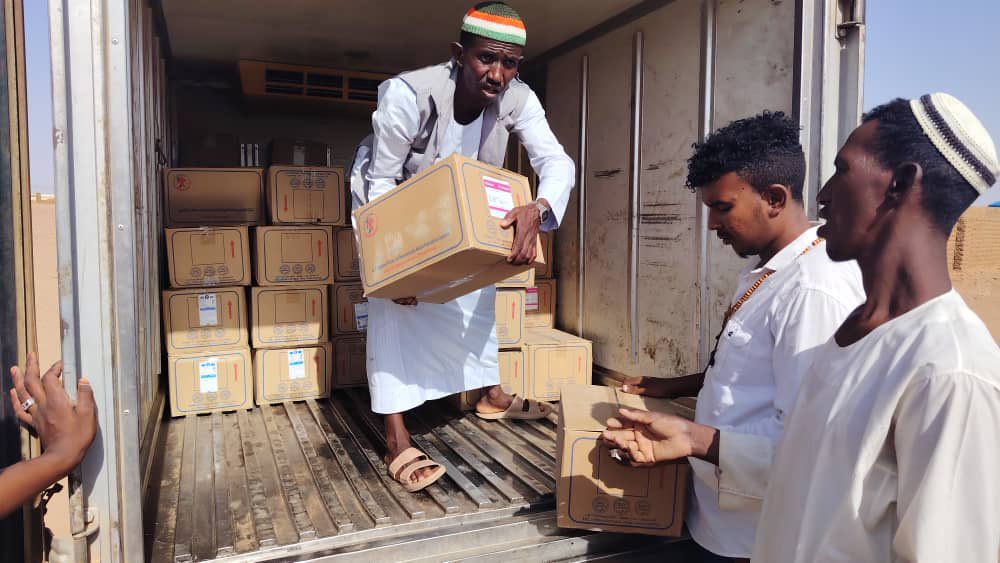
International aid organisations, NGOs and the UN support the ERRs and can also improve the protection of vulnerable groups in Sudan through their own measures. The presence of international aid organisations in an area can, in principle, help to ensure the non-discriminatory distribution and or­ganisation of aid. However, the authorities in Port Sudan have not yet allowed the UN to maintain permanent bases in the areas controlled by the RSF in the west, which is why international aid organisations only come to these areas on a temporary basis. Their work is made more difficult by the significant bureaucratic, logistical, financial and security challenges. It can take weeks for lorries from the Chadian border or from Port Sudan to arrive in parts of Darfur. The first UN convoy from Port Sudan to El-Fasher in a year was bombed near Al-Koma in June 2025, killing five humanitarian workers.

In August 2024, high-level UN humanitarian diplomacy succeeded in reopening the border crossing to Chad in Adré, which has remained open ever since. However, the bureaucratic obstacles of the Humanitarian Aid Commission (HAC) on the SAF side and the Sudan Agency for Relief and Humanitarian Operations (SARHO) on the RSF side are massively hampering the work of inter­national aid organisations. On the ground, armed militias are making money from every vehicle passing through the numer­ous checkpoints.

In areas where aid organisations have been active for some time, they can support local protection networks, many of which were set up before the war. For example, there were protection committees in all of Darfur’s federal states that brought together both civilian and local security authorities with representatives of the civilian popu­lation. However, even then the security forces did not always take part in meetings or showed no interest in reaching agreements. Some networks for the protection of women or for resolving tensions between farmers and herders are anchored locally and continue to function.

Finally, access to telecommunication ser­vices is important so that people can inform themselves and exchange information in order to make their own decisions about their protection. In the areas controlled by the RSF, there is no mobile phone network available because the authorities in Port Sudan have banned Sudanese mobile phone companies from operating there. Instead, people use smuggled Starlink terminals, access to which is expensive and usually controlled by the RSF or people close to them. The collapse of the electricity supply, the lack of availability of cash and the high cost of living make mobile communications difficult everywhere in Sudan, not to men­tion the damage to the telecommunications infrastructure caused by the war, not least in the Khartoum area.

Risks of and experiences with protective measures

Many political demands for the protection of the civilian population frequently refer to the idea of protection zones that are either protected or monitored by different mechanisms: by an international mission (civilian or military), through agreements with the conflict parties, the presence of hu­manitarian actors, or through remote moni­toring with satellites and other methods. According to one proposal, humanitarian partners should offer assistance in these zones and local administrations should ensure basic supplies.

Experiences with local ceasefires such as in El-Fasher show the enormous difficulties of such an approach. All local ceasefires collapsed sooner or later. Even when there were agreements with the local commanders of the conflict parties, the respective leadership groups at the national level in­sisted on military operations. Conversely, the conflict parties’ lack of an effective command and control structure makes local agreements more difficult. Although such agreements can reduce violence in one region, this then allows the parties to the conflict to intensify their offensives else­where. For example, when the RSF advanced into the state of Sennar, the violence in the previously occupied state of Al-Jazeera decreased because the troops were preoccu­pied with the offensive in the neighbouring state.

The concentration of the civilian population in protected zones that are supposedly safe places – where they may also have better access to humanitarian aid – can also benefit the strategies of the parties to the conflict: whether it is to drive out seg­ments of the population or to bring them under their own control, and thus increase their own legitimacy. If attacks do occur – such as in Wad Madani in December 2023, when hundreds of thousands fled from Khar­toum, or in El-Fasher in May 2024 – dis­placed people are particularly at risk because they have few resources of their own and lack local connections. Explicitly declaring protection zones should therefore go hand in hand with a comprehensive local conflict analysis.

Entry points for international actors

As long as the war continues, all efforts to protect civilians in Sudan will have limi­tations. Nevertheless, there are certainly opportunities to strengthen civilian protec­tion measures from the outside without a ceasefire. Given the divisions between the conflict actors and the polarised society, a ceasefire could even lead to its own wave of mass atrocities if it is not accompanied by such preventive measures.

Sudanese actors themselves have identified a need for support that includes fur­ther capacity-building and training for local mediators as well as financial support for ERRs. UNDP could expand existing regional mediation networks and create a national coordination platform, as recommended by the study that it commissioned. Inter­national support for the establishment of local monitoring and verification mechanisms for local agreements, including in the form of digital platforms, is crucial. The ERRs, with their local networks, have sig­nificant experience and are offering to become cooperation partners.

Sudanese media platforms need support and can help to combat disinformation and discriminatory language. UN member states can also assist national human rights orga­nisations and continue to support the UN Fact-Finding Mission on Sudan.

NGOs also make an important contribution and need international support. For example, Geneva Call organises training and workshops with armed actors in Sudan. Nonviolent Peaceforce still has a team in Sudan that supports the civilian population in negotiating with the warring parties on issues of daily survival, and it helps with early warnings about renewed attacks and possible displacement.

The German government should make a strong case to the conflict parties and ensure that international aid organisations have unrestricted access and can be per­manently situated throughout the country, including in areas controlled by the RSF. In addition, humanitarian aid should be more decentralised.

The German government should publicly and explicitly denounce particularly brutal attacks on the civilian population, such as during the takeover of the Zam-Zam camp for displaced persons by the RSF and the bombing of markets by the SAF. The EU should impose further sanctions against both the Sudanese perpetrators of these human rights violations and their international supporters. Reports of foreign mercenaries travelling to Sudan via European airports such as Paris and Madrid, and Emirati com­panies bringing these mercenaries to Sudan via Libya together with weapons – includ­ing European-made arms – demonstrate the need for action.

Despite the deadlock in the conflict, there are numerous starting points for Germany and its European partners to contribute to the protection of the civilian population in Sudan.

Dr Gerrit Kurtz is an Associate in the Africa and Middle East Research Division at SWP. He would like to thank all interviewees in Nairobi, Kampala and online (also in Sudan) as well as Wibke Hansen and Judith Vorrath for their helpful comments.

Photo: Mutual aid kitchen in Khartoum, June 2025. Published by Khartoum Aid Kitchen on X

„Man spürt auch hier, dass die USA mehr nach innen gekehrt sind“

Interview mit Die Welt, 20.August 2024

Der Krieg im Sudan hat die größte Flüchtlingskrise der Welt ausgelöst. Die USA organisierten internationale Verhandlungen in der Schweiz, um den Krieg zu beenden – aber die Armee des Landes nahm gar nicht erst teil. Sudan-Experte Gerrit Kurtz sieht vor allem einen Akteur kritisch.

Seit 16 Monaten bekämpfen sich die sudanesische Armee und die Miliz Rapid Support Forces (RSF). Zehntausende Menschen starben, jeder fünfte Bürger wurde vertrieben. Und jeder zweite Sudanese ist von einer akuten Hungerkatastrophe bedroht. Gerrit Kurtz (38), Sudan-Experte bei der Stiftung Wissenschaft und Politik (SWP) in Berlin, über die Chancen, den Krieg und die größte Flüchtlingskrise der Welt zu beenden, die Rolle der Akteure – sowie strategische Fehler der USA und Europa.

WELT: Sudans Armee hat Gespräche mit der RSF-Miliz in Genf abgelehnt, am Montag aber dann Vertreter zu Gesprächen mit US-Vermittlern nach Ägypten geschickt. Gibt Ihnen das Hoffnung, dass doch noch Bewegung in die Friedensinitiative kommen könnte?

Gerrit Kurtz: Im Vorfeld der Schweiz-Konferenz waren Unstimmigkeiten mit Sudans Armee nicht ausgeräumt worden. Sie lehnt die Teilnahme der Vereinigten Arabischen Emirate (VAE) als Beobachter ab, kritisiert seit Monaten deren Unterstützung für die RSF mit Waffen und Geld. Es ist aber natürlich genau deshalb entscheidend, dass die VAE bei diesen Verhandlungen eingebunden sind, weil sie eben Einfluss auf die RSF haben. So wie Ägypten Einfluss auf die Armee hat und ebenfalls eingeladen wurde. Vorwürfe der Armee an die RSF, wie etwa die Blockade humanitärer Hilfe, treffen auf sie selbst genauso zu. Das sind für mich also vorgeschobene Gründe. Die Generäle fürchten, dass sich Verhandlungen negativ auf ihre Machtkämpfe innerhalb der Armee auswirken könnten. Aber immerhin finden in Kairo ja nun persönliche Gespräche mit US-Mediatoren statt. Das ist ein Hoffnungsschimmer.

WELT: Wurden Fehler gemacht?

Kurtz: Der Zeitpunkt für die Schweiz-Konferenz war ungünstig angesetzt. Der Beginn am 14. August ist der Tag der Armee im Sudan, an dem Armee-Chef Abdel Fattah al-Burhan eine große kämpferische Rede gehalten hat. Es wirkt auch so, als hätte es mehr Gespräche der USA im Vorfeld geben müssen. Aber man ist natürlich unter Zeitdruck. Wegen der unglaublich dramatischen humanitären Situation, aber auch den anstehenden US-Wahlen, wegen denen ja unklar ist, ob das Mandat des US-Sondergesandten für den Sudan, Tom Perriello, fortgesetzt werden kann. Aber das Ziel des Waffenstillstands setzt die Klärung politischer Rahmenbedingungen voraus. Es steht die Frage im Raum: Was passiert mit den Konfliktparteien am Tag nach dem Waffenstillstand? Das wurde nicht ausreichend verhandelt.

WELT: Sie argumentieren, dass der Sudan kein Stellvertreterkrieg ist und beschreiben die Lage eher als einen Konflikt um die Vorherrschaft des Sicherheitssektors und die Kontrolle der Wirtschaft. Gleichzeitig heizt die Unterstützung von Regionalmächten den Krieg an. Wie passt das zusammen?

Kurtz: Es geht mir um die Charakterisierung des Konflikts, da spielen die Interessen von außen nicht die primäre Rolle. Aber natürlich haben auch geopolitische Rivalitäten Einfluss, wie etwa zwischen den VAE und dem Iran. Abu Dhabi möchte als maritime Macht nicht, dass Teheran als Unterstützer der Armee an Einfluss am Roten Meer gewinnt. Die VAE verfolgen insgesamt eine sehr aggressive Außenpolitik in der Region, das kennen wir auch aus Äthiopien und Libyen. Es handelt sich um ein sehr autokratisches Land, in dem wenige Menschen viel Einfluss haben, ohne für ihre Entscheidungen auch intern viel Rechenschaft ablegen zu müssen. Diese Akteure können mit den Geschicken anderer Länder regelrecht spielen, ohne die Auswirkungen davon zu spüren, über Flüchtlingsströme etwa. Das ist ein großer Unterschied zu Ägypten oder anderen Nachbarländern Sudans.

WELT: Über die Vereinigten Arabischen Emirate wird nicht nur das Gold aus dem Sudan gewaschen, sondern auch das aus anderen Konfliktländern wie Mali. Warum wird so wenig internationaler Druck auf das Land ausgeübt?

Kurtz: In die Richtung der Finanzflüsse zum Konfliktgoldhandel müsste tatsächlich mehr Druck auf die VAE ausgeübt werden, auch aus Europa. Da wurde zuletzt etwas verstärkt draufgeschaut – aber immer noch nicht im ausreichenden Maße. Man verlässt sich darauf, dass die Emirate sich bei der Überwachung selbst überwachen. Die VAE waren mal auf der „Grauen Liste“ der Financial Action Task Force, einem internationalen Gremium zur Bekämpfung illegaler Geldströme, wurden dann aber wieder heruntergenommen, weil sie behaupteten, ausreichend Maßnahmen getroffen zu haben. Mit Blick auf den Konflikt im Sudan ist das aber nicht ersichtlich. Da müsste man womöglich auch noch mehr VAE-Wirtschaftsakteure im Goldsektor sanktionieren und von europäischen Banken abschirmen und Reisen nach Europa ausschließen.

WELT: Fehlt es an einem europäischen Bewusstsein zur Rolle der VAE?

Kurtz: Es ist ein Problem, dass die afrikanischen Konflikte häufig nicht so hoch auf der Agenda von bilateralen Gesprächen westlicher Länder mit den VAE rangieren, anders als etwa der Nahost-Konflikt oder das Thema Energie. Die Geheimdienste dürften klare Beweise haben. Man spricht das vielleicht an. Mehr aber auch nicht.

WELT: Glauben Sie, dass diese Interessen im Nahost-Konflikt oder bei der Energieversorgung so sehr überwiegen, dass man deshalb Themen wie die Ausbeutung afrikanischer Rohstoffe nicht zur Sprache bringt?

Kurtz: Ja. Wenn man es überhaupt zur Sprache bringt, ist gleichzeitig klar, dass keine Konsequenzen zu befürchten sind. Diese müsste man klarer signalisieren und auch durchsetzen. Und da habe ich zumindest meine Zweifel, dass das ausreichend passiert.

WELT: Die USA haben eine von Sanktionen begleitete Geschichte mit dem Sudan. Wird das Land überhaupt als neutraler Vermittler akzeptiert?

Kurtz: Es gibt natürlich keine große Freundschaft mit den USA. Aber das Militär weiß, dass die USA auch bei vergangenen Kriegen wie im Darfur-Konflikt oder dem Unabhängigkeitskrieg des Südens viel Druck ausüben konnten. Aber Sudan hat inzwischen an Relevanz in den USA verloren, der Sondergesandte war früher direkt dem Präsidenten unterstellt, jetzt ist er Gesandter des Außenministers. Man spürt auch hier, dass die USA, abgesehen von der aktuellen Situation in Israel, weit mehr nach innen gekehrt sind als noch vor 20 Jahren. Das gilt besonders für die Situation in Sudan, und das spiegelt sich auch auf den politischen Einfluss dort wider. Natürlich könnte man, wenn man wollte, auch andere Großnarrative finden, die aktuell noch in den USA relevant sind, wie den Einfluss von China und Russland. Aber das sind nun einmal nicht die wichtigsten Akteure im Sudan.

WELT: Russland hat sich bislang beide Kriegsparteien warmgehalten. Glauben Sie, dass der Kreml sein Gewicht klar hinter eine Seite verlagern wird?

Kurtz: Russland ist ein opportunistischer Akteur und versucht, so viel wie möglich aus Sudan herauszuholen. Das betrifft Gold und andere Ressourcen, die Sicherheitspolitik über die geplante Militärbasis am Roten Meer und andere Möglichkeiten, dem Westen zu schaden. Es liegt den Russen näher, mit einem formellen Militär und einer Regierung zu arbeiten. Aber sollte RSF-Anführer Hemedti die Macht übernehmen, dann würde Russland nicht zögern, auch offiziell mit ihm Geschäfte zu machen.

    WELT: Viele fürchten, dass der Krieg in einem Libyen-Szenario resultieren wird, bei dem der Westen dauerhaft von der RSF und der Osten von der Armee kontrolliert wird. Teilen Sie diese Sorge?

    Kurtz: Es ist auf jeden Fall ein realistisches Szenario. Aber es hat zuletzt signifikante Geländegebiete der RSF im Zentrum des Landes gegeben. Es ist nicht gesagt, dass die Front so bleibt, wie sie ist.

    WELT: Gibt es irgendetwas, das Ihnen Hoffnung für den Sudan gibt?

    Kurtz: Der Sudan hat weiterhin eine sehr starke Zivilgesellschaft, die trotz des Krieges ein anderes Ausmaß hat als die in Ländern wie Äthiopien oder Südsudan. Das allein wird nicht den Krieg beenden, aber das sollte uns auch weiterhin Hoffnung machen. Solange der Krieg anhält, ist jede Form der zivilen Herrschaft natürlich unmöglich. Armee und RSF wollen die Vorherrschaft über Sicherheitsapparat und Wirtschaft. Aber sie wollen nicht wirklich regieren, dafür fehlen ihnen die Strukturen. Eine gewisse zivile Mitbestimmung ist auch in Zukunft möglich. Aber leider absehbar nicht im Sinne einer Demokratie mit gleichen Rechten für alle. Ein System ohne massiven Einfluss der Gewaltakteure ist aktuell nicht vorstellbar.

    Navigating shifting power relations in Sudan – implications for the aid response

    Aid and peace efforts need to consider the sustained civilian mobilisation, the rise of the RSF and the fractious nature of the warring parties.

    Blog Post, Conflict Sensitivity Facility, 30 July 2024

    Sudan’s recent history has been marred by wars and military coups. Since the lowering of the British flag and the creation of independence in 1956, there have only been eleven years without war and thirteen without a military government. Nonetheless, the war between the Sudanese Armed Forces (SAF) and the Rapid Support Forces (RSF) that broke out on 15 April 2023 is different from the past. In contrast to previous wars, it started in Sudan’s centre Khartoum, not the periphery, and within the security sector, not between government and rebel forces. One might say that the ways in which successive Sudanese governments have fought wars in the periphery have reached the centre, with the RSF claiming to fight on behalf of the down-trodden against their exploitation by the elites of Sudan’s post-independence state and the RSF using similar methods of looting, raping and killing in the centre that have previously been largely reserved to the periphery.

    While the war has deep roots in Sudan’s militarised history, it also reflects important shifts in Sudanese politics in recent years. These shifts mean that the previous transactional pattern of conflict management no longer works. Understanding these dynamics is crucial for aid actors to avoid feeding into the conflict.

    Dominance of the security sector

    In one sense, the war is the culmination of a highly militarised political settlement. Since colonial times, central governments in Sudan have exploited the peripheries for their resources. As some people from those marginalised peripheries joined armed groups, the government delegated counter-insurgency to militias and government-aligned armed groups outside the formal security sector (already in the late 1980s). The RSF emerged from Darfuri militias in 2013, and grew to become the strongest infantry in the country. The RSF leadership became rich by loaning their services not just to the government but to the Saudi-Emirati coalition in Yemen and by using their forces to protect their own business interests.

    In the centre, governments remained highly vulnerable to coup plotters that were dissatisfied with the distribution of rents and power resulting from the exploitation of the periphery. Sudan has been the most coup-prone country in Africa. In 1964, 1985 and 2019, military coup-leaders sided with civilian uprisings to establish civilian governments. In 1958, 1969 and 1989, military coup leaders allied with a political party to interrupt democratic governance, using them as civilian façade.

    Civilian politics has been warped by the authoritarian context. Mainstream political parties such as the National Umma Party and the Democratic Unionist Party at several points cooperated with the government of President Bashir. Given their experience with infiltration, betrayal and co-option, many civilian policymakers espouse a zero-sum mentality, which made trusted cooperation among the parties difficult.

    In sum, the legacy of Sudan’s militarised political settlement meant that any civilian transition process was going to be fragile. Political parties would fight for their own visibility rather than focus on the establishment of institutions. It also meant that the threat of a renewed coup would be ever present, especially since the transitional government aimed to dismantle the dominance of the security sector in politics and in the economy.

    Power shifts

    In the past five years, there have been two major shifts in Sudan’s political order. Starting with the December 2018 revolution, Sudanese civil forces proved that they could sustain protests and grassroots opposition despite violent repression. As a result, both military and political elites faced obstacles to continuing exclusive deals. It is worth remembering that the military failed in its attempt to retain the monopoly of power after removing President Bashir. A few weeks after violently dispersing the sit-in in front of the military Headquarters in central Khartoum, protestors came out in droves in the “millions march”. When the military seized power yet again in October 2021, they tried to resort to old-style co-option tactics with an agreement between Abdel Fattah al-Burhan, the head of the military, and Abdalla Hamdok, the prime minister who was under house arrest at that time. Yet political parties ultimately rejected the agreement of 21 November 2021, faced with mass protests and strikes organised by resistance committees. The military’s efforts to create a civilian façade failed also in the following weeks.

    The second shift has been the rise of the RSF as a parallel army, major economic network and political actor. With the ousting of Bashir, Hemedti became deputy chair of the transitional military council and retained that position in the Sovereign Council that was created with the formation of the civil-military transitional government in August 2019. During the transition process, the RSF grew significantly in size and influence to rival the SAF. Initially, Burhan was a willing accomplice in this as were mainstream political parties, both trying to use the rise of the RSF to guard against the resurgence of loyalists of the defunct National Congress Party (NCP), Bashir’s party. Hemedti became a major interlocutor for the armed groups that negotiated the Juba peace agreement with the new government. He also conducted his own foreign policy in the region, notably in Ethiopia, South Sudan and the UAE. At the same time, with its origin as a tribal militia-turned into paramilitary force, the RSF did not fit well with the political and security class from riverain Sudan that dominates Khartoum politics.

    From coup to war risk

    As a consequence, the division in the security sector was the greatest threat to the transition since its start, as I show in my recent study on power relations since the fall of Bashir. Many observers had expected a military coup when it happened in October 2021, but the security forces did not sufficiently prepare for the changed political environment. With no credible civilian partner willing to join them, RSF and SAF had to manage ruling the country on their own. Their mutual suspicions and mistrust only increased though when both reached out to different sections of the civilian sector. The SAF brought back loyalists of the NCP into public service, while Hemedti tried to present himself as an ally of the democracy movement and began openly saying that the coup had failed. Both prepared for an armed confrontation.

    When the conflict escalated on 15 April 2023, either side failed to quickly seize power. The RSF had brought in massive troops in the weeks leading up to the war, but the SAF had the advantage of an air force, more heavy weapons, and heavily fortified garrisons (the RSF still have not managed to take the military HQ in Khartoum). The RSF dispersed, looting and occupying civilian residences as war booty and to protect themselves against air strikes. The highly mobile and adaptive RSF forces were able to capture significant parts of Sudan’s territory, as SAF remained focused on defending fixed positions and withdrew when they felt they could no longer hold their position.

    Three implications for the aid response

    Aid actors need to navigate the shifting power relations in Sudan carefully. The integrity and stability of the Sudanese state is severely challenged. As things stand, it is unlikely that the country will soon see a return of any of the power-sharing models among the SAF and the RSF or between civilians (technocrats or political parties) and the security forces of the past five years. Plausible scenarios include a formally civilian government with strong interference from the security forces and NCP loyalists in the background or a de facto split of the governance of the country according to the effective control of the warring parties with different configurations in each territory.

    More specifically, aid actors should draw three broad lessons from the shift in power relations. One, they need to consider the sustained civilian mobilisation, including by further pursuing the localisation of aid and working more with community efforts such as emergency response rooms and communal kitchens, where they are available. In mid-July, the emergency room in Khartoum’s South Belt announced the closure of 25 community kitchens because of lack of funds, for example. Supporting these community-led service providers not only helps mitigate the famine but can also strengthen social cohesion and gender equality. At the same time, outside actors should avoid creating too high expectations for these local civilian actors. In particular, they should look out for the most vulnerable sections of society which may fall through the cracks if engagement happens more within smaller circles of well-established groups.

    Two, aid organisations and humanitarian policy-makers should explore more ways for cross-border and cross-line deliveries in RSF-held and non-aligned territories (such as Jebel Marra and the Nuba mountains). The authorities in Port Sudan currently hold sway over visa, travel permits and access procedures even in areas that they do not control; which is all the more problematic as many of the greatest humanitarian needs are in RSF-held territories, including most of the hotspots identified as at risk of famine.While there is no unfettered right for humanitarian access across borders, conflict parties violate International Humanitarian Law when their refusal “results in starvation of civilians”. Member states can support aid organisations in more robust negotiations with the SAF-controlled authorities and by making clear that those authorities lack legitimacy to represent Sudan. In some cases, cash programming may enable private sector actors to scale up activities in areas that are hard for international actors to reach.

    Third, aid actors should prepare for further shifts in Sudan’s power relations. The longer the war goes on, the more the main conflict parties will fragment and the more people are likely to join armed factions to protect themselves and to ensure an income for their families. Already, three quarters of the fighting force on the army side are volunteers, according to Burhan. Relations between the popular resistance forces (quickly mobilised and trained volunteer forces responding to Burhan‘s June 2023 call to arms), Islamist brigades, formal military and associated armed groups such as the Sudan Liberation Army-Minni Minnawi could weaken. In practical terms, the relative efficiency of top-down decisions in SAF-controlled territories that aid organisations have experienced so far may come to resemble more the fractious relations between different armed units already known in RSF-controlled areas. As a result, more access expertise for local-level negotiations may become necessary.

    In the end, all outside actors, humanitarian, peace and diplomatic ones alike, should avoid undue deference to the priorities of military actors.  Instead, they should hold themselves accountable to the Sudanese civilian population as much as possible.

    Protecting civilians as a common endeavour: DGVN expert workshop in Braunschweig

    https://www.flickr.com/photos/monusco/20867077294/in/album-72157656405149364/
    (c) MONUSCO/ UN Photo

    I wrote this piece as a summary of our expert workshop and network meeting on “Protection of individuals from harm as a system-wide challenge for the United Nations” that took place in Braunschweig in July 2016. It first appeared on the Junge UN-Forschung Blog.

    Securing access to besieged areas of Aleppo, increasing patrols around UN House in Juba, or ending refugee maltreatment in Australian detention centres in Nauru: the protection of civilians from immediate harm is one of the core tasks of the United Nations system. There are few issues for which UN actors are so frequently in the news. Senior UN officials routinely criticize state authorities and non-state actors responsible for violence against civilians. Too often, the UN are in the spotlight themselves because they failed to live up to the expectations and responsibilities related to the protection of civilians, for example at the protection of civilians site in Malakal, South Sudan in February this year.

    Research on how to better protect civilians from harm is essential in order to enable the UN to fulfil their charter-based mandate: creating a safer, fairer and more prosperous world for all. In this vein, we organized an expert workshop and network meeting on the common theme „Protecting civilians as system-wide challenge for the United Nations“, which took place from 15 to 17 July at the Technische Universitaet Braunschweig, Germany. It brought together around 20 junior scholars from Germany, Europe, the United States, and Brazil in order to facilitate academic exchange and build a network of scholars around the topic. The workshop was designed to take into account perspectives from three major policy fields: humanitarian action, peacekeeping, and human rights. It took place in the context of the German Association of the United Nations and its working group on young UN research.

    At a public panel discussion, a dedicated break-out session and the presentation of our own preliminary research, we discussed the distinction between the three policy fields of humanitarian action, peacekeeping, and human rights, as well as open questions and debates within those fields. As the workshop itself took place under Chatham House rules, we only quote from the public panel discussion, and provide a general sense of the discussion during the rest of the event.

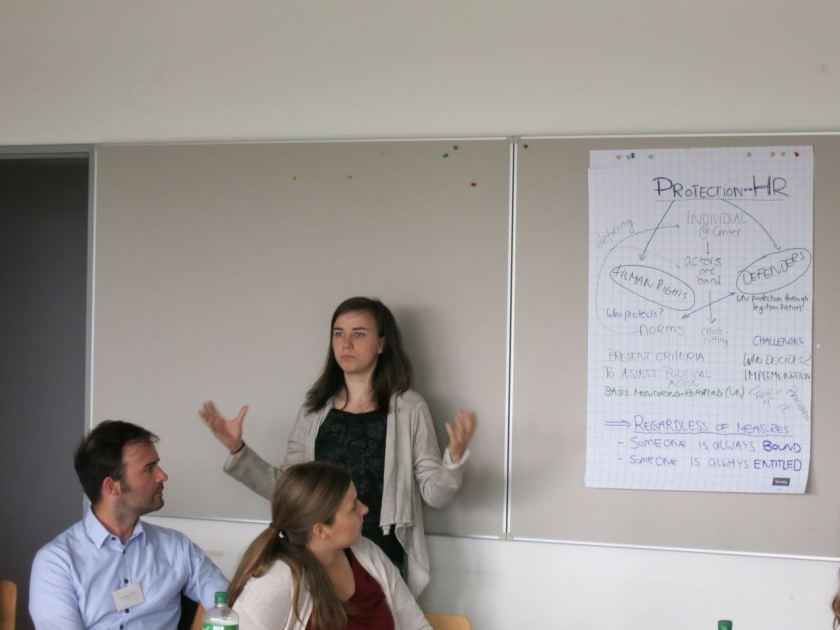
    Discussing the results of the breakout session
    Discussing the results of the breakout session

    Humanitarian action, peacekeeping, and human rights perspectives

    The official definition of protection approved by the Inter-Agency Standing Committee (IASC) for humanitarian action is much too broad for practical purposes. A tiered, increasingly ambitious understanding of protection is more helpful in that regard: ensuring access to humanitarian aid is the most basic definition of humanitarian protection, followed by ensuring access to protection services. More contentious are the roles humanitarian agencies can play in putting a stop to on-going rights violations, or even in furthering international criminal justice through witness statements and the collection of evidence. For Médecins Sans Frontières, protection frequently equates to really taking the principle of doing no harm seriously, said the director of the agency’s German chapter, Florian Westphal, at the panel discussion. Providing aid to displaced persons must not help armed groups locate them. The public and private advocacy that humanitarian organisations like MSF engage in always needs to make sure that people are actually better protected, even when the agencies want to ensure that they are not being seen as complicit with violations because of their (public) silence, Westphal argued.

    UN peacekeeping is a highly political undertaking, even if senior UN officials and member states don’t always recognize it as such, claimed Peter Schumann, former chief of staff of the UN Mission in Sudan and long-term UNDP staff member. As the UN peace operation in South Sudan showed, too often member states create over-ambitious mandates without sufficient resources and political backing to meet the high expectations that the mission will actually protect the population from immediate threats of violence. UN peacekeeping operates largely according to a short-term logic: creating physical security for civilians, responding to their immediate needs. This may sit uncomfortably with the long-term requirement to develop a political strategy, for which the military can create space and which helps the warring parties move to a peaceful way to settle their disputes. Moreover, rhetorical commitments to the effective protection of civilians and national policies of member states in the Security Council as well as of individual troop contributing countries may differ significantly. Germany’s recent evacuation of its police personnel that was supposed to protect women and children as part of the UN Mission in South Sudan was one example mentioned at the workshop.

    Human rights agencies have the most long-term perspective of the three policy fields. The Office of the High Commissioner of Human Rights (OHCHR), for example stresses not only that states have a primary responsibility to protect their populations from harm (as do humanitarian and peacekeeping actors). The methods OHCHR lists in its most recent management plan aim to enable rights-holders exercise their rights and to build the capacities of duty-bearers to guarantee fundamental human rights. Someone is always bound by human rights, and someone else is always entitled, as the break out group on human rights protection put it. However, some actors put themselves deliberately outside the international legal system, such as the so-called Islamic State or North Korea. Protecting those who defend human rights on the ground is an important, concrete task for international actors such as peace brigades international, said Christiane Schultz, who founded the organisation’s German section. The Committee on enforced disappearances can issue urgent measures, for example, and conduct country visits to raise individual cases and instigate structural change.

    Over the three-day workshop, it became clear that protecting populations from harm is a hugely ambitious and complex undertaking. In all policy fields, there are gaps between rhetorical commitments and implementing promises on the ground. There can be differences between individual mandate-holders, national peacekeeping contingents, missions, institutions, and policy fields.

    The main impediment to better protection are not the differences about the meaning, methods and objectives of protection per se – they are the natural and inevitable consequence of varying mandates and contexts. Rather, it is the lack of mutual understanding that leads to gaps in the protection architecture. It also misses out on opportunities to jointly tackle common challenges and recognise each other’s complementarity, in full recognition of their distinct mandates. Thus, there is much to learn from each other. Academic and policy exchange on the theme of protecting civilians from harm needs to intensify (for example here).