Der Iran-Krieg als Multiplikator für Krisen und Konflikte am Horn von Afrika

Sudan, Äthiopien und Somalia sind besonders stark von den wirtschaftlichen Folgen des Iran-Kriegs betroffen, könnten aber auch von der Umleitung des internationalen Handels profitieren. Die Konfliktakteure am Horn von Afrika bemühen sich derweil, die Unterstützung der Golfstaaten aufrechtzuerhalten.

Spotlight, Megatrends Afrika, 14.4.2026

Die Staaten am Horn von Afrika liegen bisher am Rande des Sturms, der den Mittleren Osten seit dem 28. Februar 2026 erfasst hat. Trotz Beziehungen zum Iran als auch israelischer und US-amerikanischer militärischer Interessen am Horn ist die Region bisher von den Kampfhandlungen nicht betroffen. Gleichwohl sind die wirtschaftlichen Auswirkungen bereits jetzt signifikant, insbesondere bei Treibstoffimporten. Das Rote Meer und die Meerenge Bab-el-Mandab haben geopolitisch an Bedeutung gewonnen, u.a. für den Export saudischen Öls. Das grundsätzliche Interesse von Saudi-Arabien, den Vereinigten Arabischen Emiraten (VAE) und Katar an wirtschaftlichen, militärischen und politischen Aspekten am Horn von Afrika wird wahrscheinlich bestehen bleiben und möglicherweise sogar wachsen.  Insgesamt verschärft der Iran-Krieg die bestehenden Krisen am Horn von Afrika.

Treibstoffknappheit und Handelseffekte

Bereits nach wenigen Wochen sind die wirtschaftlichen Effekte der Blockade der Straße von Hormus, des reduzierten Luftverkehrs und der iranischen Angriffe auf Energie- und Verkehrsinfrastruktur am Golf in einigen Ländern am Horn von Afrika zu spüren. 

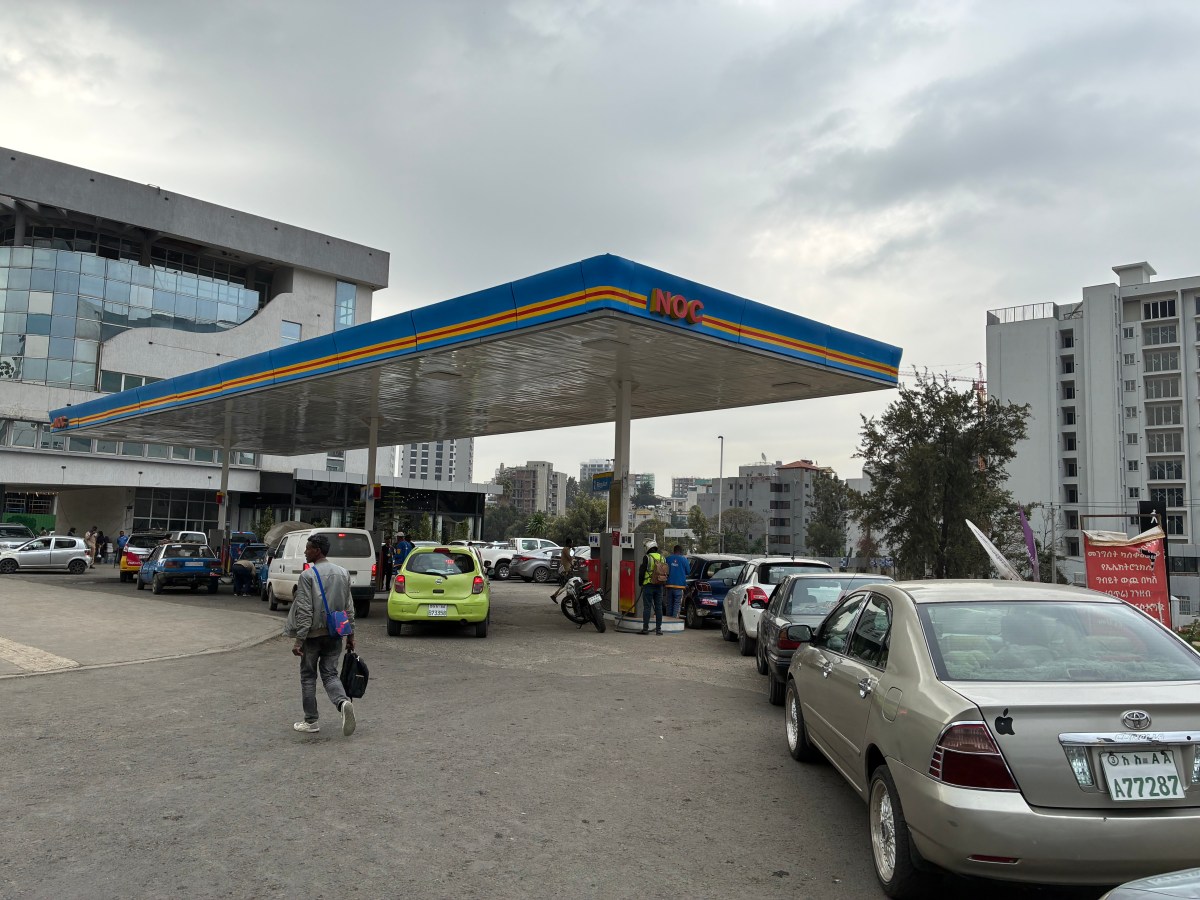
In Äthiopien kommt es zu langen Schlangen an Tankstellen, denn der Treibstoff wird knapp – etwa die Hälfte des nationalen Bedarfs wird aus Kuwait, Saudi-Arabien und den VAE importiert. Die Regierung sah sich veranlasst, die Bevölkerung zum Sparen aufzurufen, hat aber gleichzeitig die Subventionen für Treibstoff erhöht. Angestellte öffentlicher Unternehmen sollen, wo möglich, ihren Jahresurlaub nehmen, um Transportkosten zu sparen. Außerdem legte die Regierung eine Rationierung von Treibstoff fest und ging hart gegen Schmuggel und Korruption von Benzin und Diesel vor. Der im Vergleich zu den Nachbarländern günstigere Treibstoff hatte offensichtlich bereits vor dem Iran-Krieg zu großflächig organisiertem Betrug geführt, indem Treibstoff am offiziellen digitalen Zahlungssystem vorbei geschmuggelt wurde. Mehr als 650 Personen sind in diesem Zusammenhang bereits festgenommen worden.

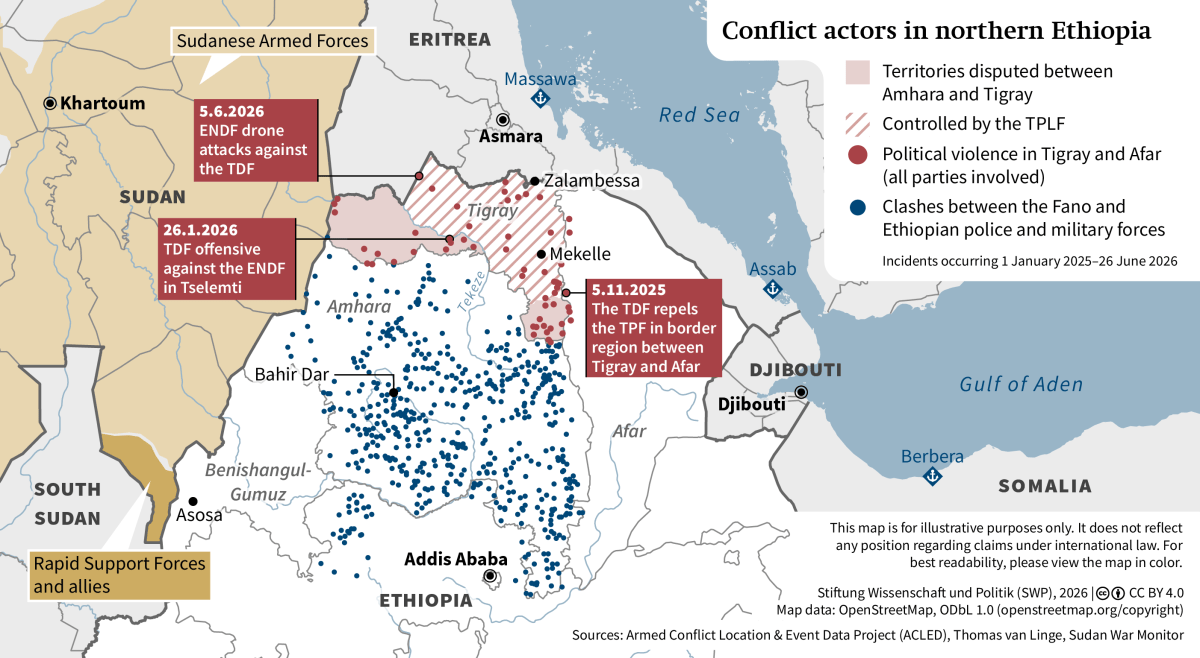
In Tigray ist die Situation noch dramatischer, vor allem weil bereits vor dem Beginn des Iran-Kriegs kaum noch Treibstoff auf regulärem Wege in die Region kam. Dort werden 10-Liter-Fässer für 8000 Birr (umgerechnet rund vierzig Euro) auf der Straße verkauft. Mittlerweile schränkt die Treibstoffknappheit die öffentliche Versorgung in der Region stark ein. Seit Wochen stehen sich Einheiten des äthiopischen Militärs und der Sicherheitskräfte Tigrays gegenüber, nachdem es Ende Januar zu mehrtätigen bewaffneten Auseinandersetzungen gekommen war. Die Treibstoffkrise könnte eine mögliche Offensive in Tigray kurzfristig verzögern.

Ein weiteres Problem betrifft die Lieferung humanitärer Güter in den Sudan, für die Dubai ein zentraler Umschlagplatz ist. Versicherungs- und Transportkosten für Medikamente seien bereits um 120 Prozent gestiegen, vermelden sudanesische Importeure. Die Hilfsorganisation Save the Children beklagte, dass medizinische Güter für die Versorgung von 400.000 Kindern wegen der Blockade der Straße von Hormus in Dubai festsäßen. Das International Rescue Committee berichtete von ähnlichen Transportproblemen, ebenfalls weil die zentrale Route von Produzenten in Indien über den Golf zu Einsatzländern wie Somalia und Sudan derzeit stark eingeschränkt sei. Sudan bezieht überdies einen Großteil seiner Düngemittellieferungen aus den Golfstaaten – laut UN Conference on Trade and Development ist es das in dieser Hinsicht am stärksten exponierte Land weltweit. 

Der Handel am Horn von Afrika könnte sich daher stark verändern. Einerseits gibt es Sorgen bei Äthiopien, Somalia und Dschibuti, dass der Kriegseintritt der Houthis die Lage weiter eskalieren könnte. Dies wäre insbesondere der Fall, wenn die Houthis nicht nur Raketen und Drohnen auf Israel feuern, sondern auch (wieder) auf Schiffe im Roten Meer oder sogar auf die US-Basis in Dschibuti zielen sollten. 95 Prozent von Äthiopiens Handel wird über Dschibuti abgewickelt; eine Gefährdung dieser Route ist von existenzieller Bedeutung für das Land. Umso wichtiger wird also das äthiopische Interesse an der Diversifizierung seiner Versorgungsrouten, insbesondere über die Häfen in Berbera in Somaliland sowie Lamu in Kenia. 

Hier zeigen sich bereits einige Umleitungseffekte, die Äthiopien und Kenia strukturell zu Gute kommen könnten. Ethiopian Airlines, die in staatlichem Besitz ist und einen wesentlichen Anteil der ausländischen Devisen reinbringt, musste zwar Verbindungen in den Golf absagen, kann aber mit seiner Cargo-Sparte auch profitieren. Insbesondere der Lamu Port-South Sudan-Ethiopia-Transport (Lapsset) Korridor gewinnt an Bedeutung. Im März stieg der Umladeverkehr im kenianischen Lamu um 1200 Prozent, weil beispielsweise Autolieferungen aus Asien dort statt am Golf umgeladen wurden. 74 Schiffe dockten dort seit Jahresbeginn an, während es im ersten Quartal letzten Jahres nur zwei waren. Diese Entwicklungen könnten nach Schätzungen Äthiopien und Kenia bis zum Ende des Jahres rund 3,5 Mrd. US-Dollar zusätzliche Einnahmen generieren – eine willkommene Finanzspritze für die beiden Staatshaushalte, die jeweils mit hohen Schulden zu kämpfen haben. Zur Einordnung:  der äthiopische Staatshaushalt beträgt etwa 12,3 Mrd. USD, der kenianische etwa 32,6 Mrd. USD.

Ungebremste Einflussnahme der Golfstaaten

Ein weiteres Augenmerk gilt den Aktivitäten der Golfstaaten am Horn von Afrika, insbesondere Saudi-Arabien, Katar und den VAE. Diese haben in den letzten Jahren stark in Infrastruktur (wie Häfen), Landwirtschaft und Sicherheit in Sudan, Äthiopien, Kenia und Somalia investiert. Auf der einen Seite werden diese Staaten aufgrund des Iran-Kriegs deutlich stärker in die eigene Wirtschaft investieren müssen, um verlorenes Vertrauen von Investor*innen, Tourist*innen und Handelspartner*innen wiederzuerlangen und ihre Verteidigung zu stärken. Fähigkeiten wie Anti-Drohnen-Technologie, von denen beispielsweise auch die Konfliktparteien in Sudan profitiert haben, werden sie fortan möglicherweise weniger freigebig weitergeben. 

Auf der anderen Seite ist das Interesse dieser Staaten am Horn von Afrika durchaus langfristig angelegt und wird auch angesichts der prekären Situation am Golf bestehen bleiben. Für Saudi-Arabien ist derzeit der Export von Öl über seine Pipeline an die Rotmeerküste und von dort weiter über den Bab-el-Mandab nach Asien von großer Bedeutung. Die Rivalität zwischen den VAE und Saudi-Arabien, die sich in den Monaten vor Ausbruch des Iran-Kriegs zugespitzt hatte, wird derzeit von der GCC-Solidarität angesichts der iranischen Angriffe überdeckt. Zumindest auf ökonomischer Ebene ist die Rivalität jedoch struktureller Natur und wird daher das Horn von Afrika in den nächsten Jahren wahrscheinlich weiter prägen.

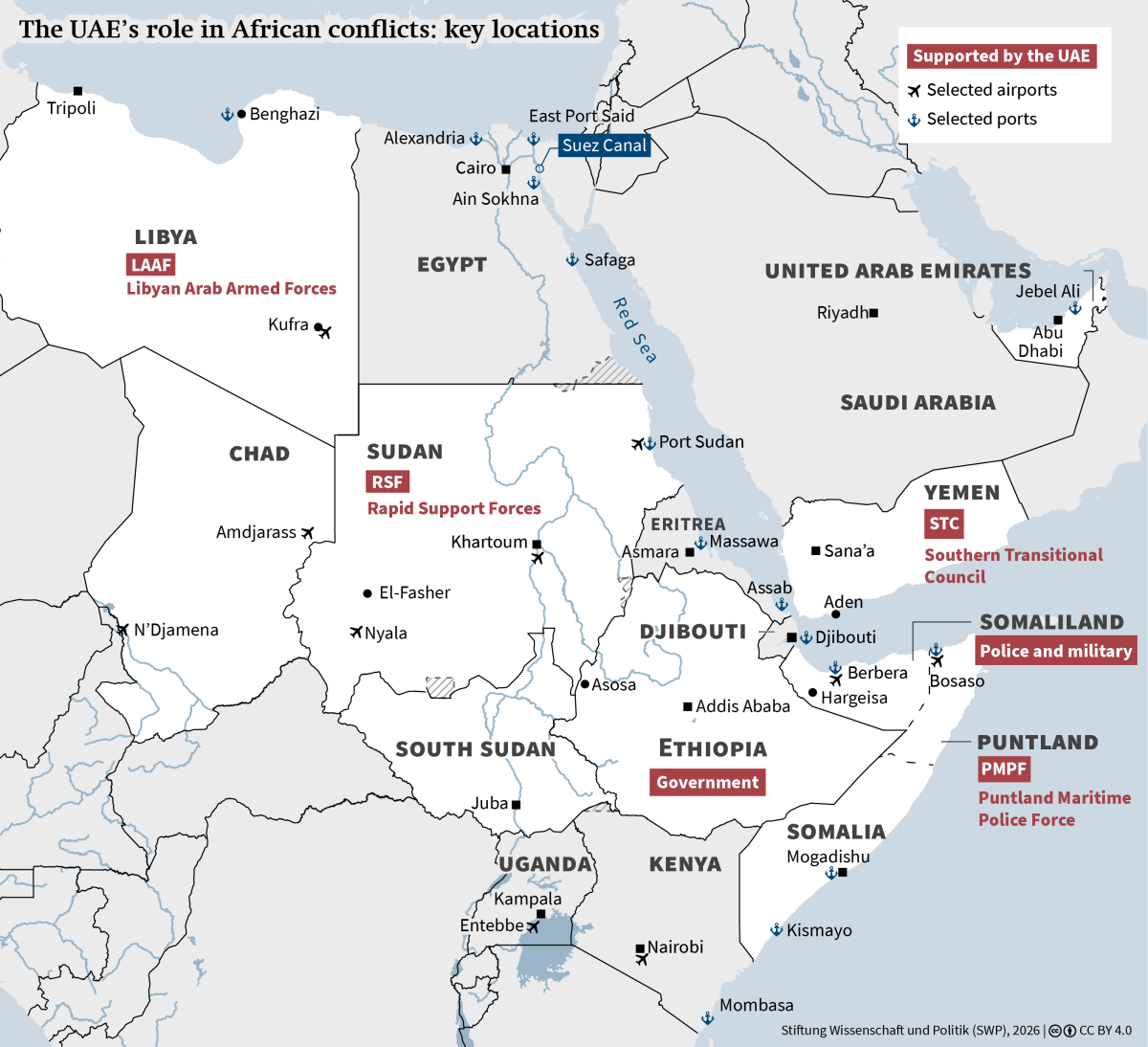
Derweil geht die militärische Unterstützung aus dem Golf für die Konfliktparteien am Horn offenbar weiter. OSINT-Analyst Rich Tedd hat seit Beginn des Irankriegs mehr als 20 „verdächtige“ Cargo-Flüge mutmaßlich mit Rüstungsgütern aus den VAE nach Äthiopien gezählt. Empfänger sind vermutlich die Rapid Support Forces (RSF) in Sudan, für welche die VAE seit Ende 2025 ein Trainingscamp im Westen Äthiopiens aufgebaut haben. Ende März 2026 gelang es den RSF zudem, die sudanesische Grenzstadt Kurmuk im Bundestaat Blue Nile zu erobern, laut sudanesischen Offiziellen mit äthiopischer Unterstützung. Der äthiopische Ministerpräsident Abi Ahmed war derweil der erste ausländische Staatschef, der Abu Dhabi seit Beginn der iranischen Angriffe besuchte. Als Investor und militärischer Unterstützer (z.B. mit Drohnen) nehmen die VAE seit Abiys Amtsantritt 2018 eine zentrale Rolle für Äthiopien ein. 

Umgekehrt bemühte sich die Führung der sudanesischen Armee (SAF) darum, sich öffentlich von Iran zu distanzieren, nachdem es eine Solidaritätskundgebung eines Kommandeurs der islamistischen Al-Bara ibn-Malik Milizen für Iran gegeben hatte. Port Sudan hatte noch im Juli 2024 diplomatische Beziehungen mit Iran wiederaufgenommen und iranische Drohnen erhalten, die wahrscheinlich von Beratern der iranischen Revolutionsgarden begleitet wurden. Die Sudanesische Islamische Bewegung ist ein wesentlicher Teil der SAF-geführten Koalition, wurde aber wegen ihrer Beziehungen zu Iran mittlerweile von den USA sanktioniert

Die Vermittlungstätigkeiten der Golfstaaten in den Konflikten am Horn von Afrika leiden unter der Iran-Krise. Um einen Waffenstillstand zwischen der sudanesischen Armee und den RSF zu erreichen, ist eine Verständigung zwischen ihren wichtigsten Unterstützern – Ägypten und Saudi-Arabien auf der einen, die VAE auf der anderen Seite – weiterhin essentiell. Ob es dem US-Sondergesandten Massad Boulos, der mit diesen drei Staaten zusammen die Quad bildet, gelingt, die hochrangige Zustimmung und aktive Unterstützung dieser Staaten für einen Waffenstillstand zu gewinnen, ist derzeit eher fraglich. Saudi-Arabien, das vor dem 28. Februar noch versuchte, zwischen Äthiopien und Eritrea zu vermitteln, wird derzeit weniger in diese Diplomatie investieren. Es ist einerseits denkbar, dass diese arabischen Staaten sich noch auf gemeinsame Parameter einigen könnten, um zur Entspannung am Roten Meer sowie in Sudan und Äthiopien beizutragen. Es ist allerdings ebenfalls wahrscheinlich, dass sie weiterhin auf ihre etablierten Partner in diesen Ländern setzen, um ihre Interessen in der Region durchzusetzen.

Der Iran-Krieg als Präzedenzfall

Die US-israelischen Angriffe und der internationale Umgang damit fordern sowohl das internationale System insgesamt als auch das System der internationalen Konfliktbearbeitung durch Mediation heraus. Die Angriffe erfolgten während einer laufenden Vermittlung durch Oman, wie bereits beim 12-Tage-Krieg 2025. Dies stellt die Glaubwürdigkeit der USA als Mediator in Frage, die auch der einflussreichste Vermittlungsakteur am Horn von Afrika sind. Den USA wird es vor diesem Hintergrund außerdem schwerfallen, bei den VAE, Saudi-Arabien und Ägypten auf mehr Zustimmung zu stoßen, dass diese die Unterstützung der sudanesischen Konfliktparteien einstellen und diese zu einer Waffenruhe bewegen könnten. 

Vielmehr bietet das US-Narrativ zu Iran als Bedrohung ihrer nationalen Sicherheit durch die Unterstützung bewaffneter Gruppen in der Region Anknüpfungspunkte für Dritte. Es passt zu dem äthiopischen Narrativ über Eritrea, dessen Regierung Addis Abeba vorwirft, bewaffnete Oppositionsakteure in Äthiopien zu unterstützen. Beide Erzählungen sind nicht von der Hand zu weisen, aber die Verknüpfung mit dem Bruch völkerrechtlicher Grundregeln wie dem Gewaltverbot und der territorialen Integrität von Staaten durch die USA und Israel strahlt auf andere Staaten aus. Die USA schaffen mit der Gefangennahme des venezolanischen Präsidenten Nicolas Maduro in Januar und nun dem Iran-Krieg Präzedenzfälle, die den Einsatz von Gewalt zur Verfolgung nationaler Sicherheitsinteressen auch ohne unmittelbare Bedrohung eines bewaffneten Angriffs von Seiten anderer Staaten legitimiert. Europäische Akteure sollten dies ebenfalls in ihrem Umgang mit dem US-israelischen Krieg gegen Iran bedenken. Bei ihrer Positionierung geht es auch um die Aufrechterhaltung internationaler Normen, die bereits jetzt stark unter Druck stehen.

Inauguration of the Grand Ethiopian Renaissance Dam

I spoke about the inauguration of the GERD in Ethiopia in several programmes of ZDF including the evening news.

The discourse surrounding the dam serves the leaders of both Ethiopia and Egypt.
Eygpt is certainly highly dependend on the Nile, but highlighting the threat posed by the GERD serves to externalize the government’s responsibility to ensure water security for its vast population, whereas in most cases, water will continue to flow, indeed the operation of the GERD depends on that. Prolonged drought would present a real risk, but that is not imminent.

For Ethiopian PM Abiy Ahmed, the GERD serves to show the country’s aspiration to become a major power, the government’s investment in essential services, and national unity in times of deep divisions. At the same time, the GERD at the moment produces much more electricity than the Ethiopian economy could normally absorb. Fully one third of all of the country’s electricity production this year is likely to be used by (mainly Chinese) cryptomining companies. Only slightly more than half the population has even access to electricity at the moment, with government plans to expand this reach in the next few years.

The building of the GERD is not just about water security, electricity or economic growth though. It is about regional hegemony, with Ethiopia trying to reclaim its position as a major Nile power, whereas Egypt used to see itself as the main power on the Nile and reserve a veto on upstream development. Ultimately, all riparian countries’ interests would be best served by multilteral cooperation.

Der Krieg im Nahen Osten und seine Folgen für Ostafrika

Online-Veranstaltung der Friedrich-Naumann-Stiftung, 27.August 2025

Gäste:

Dr. Gerrit Kurtz ist Wissenschaftler in der Forschungsgruppe Afrika und Mittlerer Osten der Stiftung Wissenschaft und Politik. Er hat am King’s College London in Friedens- und Konfliktforschung promoviert.

Dr. Hans-Jakob Schindler ist Senior Director des Counter Extremism Project (CEP) in New York und Berlin, Co-Vorsitzender des Advisory Board des Global Diplomatic Forum in London sowie Lehrbeauftragter der ASW Akademie AG in Essen.

“Das Korridorprojekt ist ein gewaltsames Modernisierungsprogramm der Städte zugunsten der Elite um Abiy Ahmed”

Zitate beim Redaktionsnetzwerk Deutschland, 2.Juli 2025

„Das Korridorprojekt ist ein gewaltsames Modernisierungsprogramm der Städte zugunsten der Elite um Abiy Ahmed (Äthiopiens Ministerpräsident, Anm. d. Red.) und zugunsten der Unternehmen, die mit ihnen zusammenhängen“, sagt Gerrit Kurtz, Ostafrika-Forscher der Stiftung Wissenschaft und Politik. „Das Projekt geht zulasten insbesondere der armen Menschen, die vertrieben werden.“ Zwar seien manche Umzüge freiwillig erfolgt und manche der neuen Wohneinheiten besser, aber Anspruch hat nur, wer legal gelebt und gearbeitet hat. Und das sind die wenigsten.

..

Dass Arme keine große politische Lobby in Äthiopien haben, ist nicht neu. Im Fall des Korridorprojekts erfuhren viele erst kurz vor der Räumung überhaupt davon, was dort entstehen soll, wo sie wohnen. „Bisher waren Vertreibungen häufig im ländlichen Raum, nach Dürren oder in von Konflikten betroffenen Gebieten“, sagt Kurtz. „Aber jetzt geht es um die Umgestaltung der Zivilgesellschaft und den sozialen Zusammenhalt.“

Äthiopien ist auf dem Weg zum Polizeistaat

Für Leute, die umziehen müssen, bricht das gesamte soziale Netzwerk und die Existenzgrundlage weg. „Informelle Netzwerke sind gerade da wichtig, wo es keine ausreichenden sozialstaatlichen Umgebungen gibt“, sagt Kurtz. Man hilft sich, man kümmert sich, wenn einer krank wird, arbeitslos wird, wenn ein Kind geboren wird.

„Bei Initiativen von Abiy hat man häufiger das Gefühl, dass da schon etwas Gutes dabei ist, aber dass es eben nicht gut gemacht ist, den falschen Zwecken dient und zu mehr Problemen führt“, sagt Kurtz. Kritiker monieren etwa, dass das Projekt so schnell umgesetzt wird – während 28 Millionen Äthiopier, die dauerhaft auf humanitäre Hilfe angewiesen sind, auf Handlungen der Regierung warten.

„Rückblickend gesehen“, sagt Gerrit Kurtz, „hat ihn der Friedensnobelpreis ermutigt, entschlossener gegen seine Feinde oder Gegner vorzugehen und war damit eher kontraproduktiv. Abiy Ahmed ist keine Friedensfigur, er ist eine komplexe Figur.“ Selbst für Experten ist der Politiker kaum durchschaubar, unklar, was ihn antreibt. Mal verbündet er sich mit der einen, mal mit der anderen Gruppe. Und hat gleichzeitig doch große Visionen für sein Land.

„Es ist ein zentrales Problem, dass die Entscheidungsfindung so auf das Büro des Premierministers zentralisiert wurde“, erklärt Kurtz, „das Regierungshandeln hat somit an interner Rechenschaft eingebüßt“. Bedeutet: Abiy Ahmed und seine Verbündeten können machen, was sie wollen. Es gibt kaum Gegenwind. Und wenn doch, kommt es zu Verhaftungen. „Äthiopien“, sagt Gerrit Kurtz, „ist eben keine Demokratie.“

Horn von Afrika: Die Zivilgesellschaft wird weiter geschwächt

Beitrag in: Nadine Biehler (Koord.), US ohne AID?, Berlin: Stiftung Wissenschaft und Politik, 04.04.2025 (360 Grad)

Am Horn von Afrika sind die USA bislang der größte Geber gewesen, sowohl in der klassischen Entwicklungszusammenarbeit als auch in der humanitären Hilfe. 45 Prozent der Mittel für die von den Vereinten Nationen (UN) koordinierte Hilfe für Sudan, die weltweit größte humanitäre Krise, kamen im vergangenen Jahr aus den USA. 

Hilfsorganisationen berichten, dass sie zwar Ausnahmen von den Kürzungen erhielten, die Mittel jedoch nicht bei ihnen ankommen, weil das Zahlungssystem von USAID nicht mehr funktioniert. Die Konsequenzen bekommt vor allem die Zivilbevölkerung zu spüren. Diese steht in einer von Konflikten, Klimaveränderungen, schwacher Infrastruktur und Repression geprägten Region ohnehin unter massivem Druck. Drei zentrale Folgen lassen sich identifizieren: 

Erstens wird die extreme humanitäre Not weiter steigen. In Sudan herrscht bereits jetzt in wahrscheinlich zehn Gebieten eine Hungersnot. Ohne zusätzliche Mittel dürfte sich die Hungersnot auf weitere Teile des Landes ausbreitenRund 30 Millionen Sudanes:innen sind auf humanitäre Hilfe angewiesen, aber nur ein Teil wird sie bekommen. Dies betrifft nicht nur Lebensmittel. In der äthiopischen Region Tigray zum Beispiel musste eine Organisation ihre psychosoziale Hilfe für Opfer sexueller Gewalt abrupt einstellen. Dies kann das Trauma der Überlebenden verstärken.

Zweitens drohen die US-Kürzungen, den zivilgesellschaftlichen Sektor am Horn von Afrika massiv zu schwächen. Dies betrifft nicht nur Organisationen in Feldern wie Gesundheit und Ernährung, sondern auch solche, die sich für Frieden, Menschenrechte und Demokratie einsetzen. So mussten in Äthiopien 85 Prozent aller zivilgesellschaftlichen Organisationen ihre Arbeit einstellen. In den vergangenen Monaten standen diese ohnehin unter Druck: Einigen wurde die Lizenz entzogen, andere wurden zeitweise verboten oder ihre Führung ausgetauscht. In Südsudan könnten 60 Prozent des Mediensektors kollabieren, einschließlich der Radiosender in lokalen Sprachen. Dies verschärft die ohnehin unzuverlässige Nachrichtenlage in einer Situation, in der falsche Gerüchte schnell bewaffnete Auseinandersetzungen anheizen.

Drittens könnte der Ausfall internationaler Unterstützung zwar langfristig die dringend nötige Lokalisierung humanitärer Hilfe beschleunigen – kurzfristig ist jedoch das Gegenteil der Fall. So mussten rund 80 Prozent der Gemeinschaftsküchen im Sudan, die von Selbsthilfenetzwerken mithilfe von US-Mitteln betrieben wurden, schließen. Die Diaspora unterstützt diese Netzwerke ebenfalls, kann den Wegfall aber kurzfristig nicht kompensieren. Europäische Geber, die ebenfalls ihre Mittel zurückfahren, sollten sich darauf konzentrieren, solche Selbsthilfenetzwerke und lokale Helfer stärker zu unterstützen. 

Kommen Kriegsverbrechen in Tigray vor ein deutsches Gericht?

Zitate in einem Artikel der Deutschen Welle, 28.März 2025

Gerrit Kurtz, Äthiopien-Experte bei der Stiftung Wissenschaft und Politik (SWP) in Berlin, dämpft die Erwartungen: “Es soll eine Aufarbeitung geben, aber es kommen ständig neue Verletzungen hinzu, weil es ja gerade insbesondere in Amhara und Oromia weitere aktive Konflikte gibt, wo weiterhin massive Menschenrechtsverletzungen passieren. Und die äthiopische Justiz ist da nicht ausreichend hinterher.”

Schon die Strafverfolgung einfacher Täter ist damit nicht gewährleistet. Doch bei Entscheidungsträgern – wie in der LAW-Strafanzeige – ist sie noch unwahrscheinlicher, räumt Kurtz im DW-Interview ein: “Am einfachsten ist es natürlich immer, wenn es einen klaren Cut gibt nach einem Krieg, und andere Menschen, andere Parteien an der Regierung sind, die nicht für den Krieg verantwortlich waren. Nur dann kann es im eigenen Land zu einer glaubwürdigen Aufarbeitung kommen – und selbst dann gibt es immer noch größere Probleme. Aber das ist ja überhaupt nicht der Fall in Äthiopien.” Weil das effektivste Rechtsmittel, nämlich inländische Strafverfolgung, demnach nicht zur Verfügung stehe, zeigt Kurtz Verständnis für die Entscheidung, das sogenannte Weltrechtsprinzip zu bemühen.

Dass Äthiopien oder Eritrea hingegen ihre eigenen Staatsbürger nach Deutschland ausliefern würden, gilt als ausgeschlossen. Aus Sicht von SWP-Wissenschaftler Kurtz ist aber hierbei wichtig, dass die Namen aus der Strafanzeige nicht veröffentlicht wurden. “Das heißt: Bestimmte Menschen, die in dieses Raster reinfallen könnten in Äthiopien und Eritrea, die hochrangige Funktionen in Militär oder Staatsapparat haben, können sich nicht ganz sicher sein, ob sie betroffen sind oder nicht”, sagt Kurtz. Wenn es zu Ermittlungen kommt, müssten diese Menschen also beim Reisen vorsichtiger sein

Horn of Africa: Time for preventive diplomacy

In both Ethiopia and South Sudan, conflicts are escalating again. To prevent further regionalisation of the conflict landscape, Europe should support high-level diplomacy, says Gerrit Kurtz.

SWP Point of View, 21 March 2025. Also available in German.

In the Horn of Africa, two peace processes are in acute danger: Local power struggles in South Sudan and Ethiopia’s Tigray region are at risk of escalating into regional crises. In South Sudan – as in 2013 at the beginning of the last civil war – a power struggle is raging over the possible successor to 73-year-old President Salva Kiir. He is already positioning his son-in-law as a potential replacement. At the same time, clashes between the White Army – a Nuer militia – and the South Sudanese army in the Upper Nile region are causing a stir after a United Nations helicopter was shot down and a high-ranking army general was killed.

During the civil war from 2013 to 2018, the White Army fought on the side of the main rebel group, the Sudan People’s Liberation Army/Movement-in Opposition (SPLA/M-IO) under today’s First Vice President Riek Machar. Tensions between Kiir and Machar are intensifying once again – a dangerous déjà vu for the country, which has barely had time to recover after decades of conflict.

Ethiopia: Split within the TPLF and growing tensions with Eritrea

In Ethiopia, a local power struggle in the Tigray region threatens to escalate into a regional crisis between the federal government in Addis Ababa and Eritrea. The Tigray People’s Liberation Front (TPLF) – once Ethiopia’s ruling party and the Ethiopian government’s opponent in the war between 2020 and 2022 – is divided: A faction led by chairman Debretsion Gebremichael is opposed by a reformist faction under the president of the Tigray Interim Regional Administration, Getachew Reda. 

The Debretsion faction has large parts of the Tigrayan military on its side and has been taking over local administrative structures for months, sometimes violently. In the meantime, it has also brought media and parts of the administration in the provincial capital, Mekelle, under its control. The TPLF’s Debretsion faction is said to have good relations with Eritrea, whereas Getachew is counting on Ethiopian Prime Minister Abiy Ahmed. Bilateral relations between Ethiopia and Eritrea have cooled markedly since the Pretoria Agreement, which ended the war between the TPLF and the government in 2022. Both countries are accused of supporting opponents of the other’s regime.

Due to the increasing tensions, there is a risk that there will be a regionalisation of the conflict landscape. Uganda has already sent troops to support the South Sudanese government, as it did in 2013. Similar to previous clashes, Sudanese actors are also intervening. Over the weekend, militias of the Rapid Support Forces in South Sudan were already fighting against units of the SPLA/M-IO, which were apparently on their way to receive weapons from the Sudanese Armed Forces.

Failure of the peace agreements – fragmented international engagement

The current escalations are no coincidence. The respective agreements to end the civil wars in South Sudan and Ethiopia have only been implemented to a limited degree. Unilateral deviations by both governments from their obligations have de facto prevailed. Kiir rapidly replaced cabinet members and had high-ranking generals of the SPLA/M-IO arrested. In Ethiopia, important measures of the Pretoria Agreement, such as the demobilisation of militias and the withdrawal of Eritrean and Amharic troops from Tigray, have largely failed to materialise. 

International engagement with the region is increasingly fragmented – as are the states of the region themselves. In Ethiopia, for example, there is a lack of credible guarantors for the peace process. At the recent extraordinary summit of the Intergovernmental Authority on Development (IGAD) on South Sudan, only two countries took part at the level of their president. Whereas the United States used to be the most important international partner for peace in the region, countries such as the United Arab Emirates, Saudi Arabia, and Turkey are now influential, but they tend to support certain sides rather than mediate in internal conflicts.

In view of the deteriorating situation, it is now time for high-level preventive diplomacy. A coordinated international approach could contain the escalation. An informal division of tasks would be conceivable: Influential countries such as Turkey and Saudi Arabia could defuse tensions at the intergovernmental level, while European actors could support IGAD and the African Union in local mediation processes.

Picture: In better times in 2019, President Salva Kiir met the head of the SPLA/M-IO, Riek Machar, in Juba, to prepare the government of national unity. Source: UN Photo/Isaac Billy

Horn von Afrika: Geopolitische Folgen

Erschienen in: Nicolai von Ondarza, Azadeh Zamirirad (Koord.), Perspektiven auf Trump II aus Europa, Nahost und Afrika, Berlin: Stiftung Wissenschaft und Politik, 20.01.2025 (360 Grad)

Am Horn von Afrika erhoffen sich einige Akteure, die Gunst der kommenden US-Administration für ihre jeweilige Agenda zu gewinnen. Transaktionale, kurzfristig orientierte Politik, die Donald Trump oft zugesprochen wird, ist hier bereits weit verbreitet. Dabei dürfte die neue US-Regierung diese Region primär vor dem Hintergrund ihrer globalen Konkurrenz mit China sowie als Fortsetzung der eigenen Nahostpolitik betrachten. Das schließt die enge Zusammenarbeit mit Ländern wie den Vereinigten Arabischen Emiraten (VAE), Ägypten und Saudi-Arabien ein, die eine zentrale Rolle am Horn von Afrika spielen. Die VAE haben beispielsweise massiv in Äthiopien, Somaliland und die sudanesischen Rapid Support Forces (RSF) investiert.

In Äthiopien unterstützten die USA während der ersten Präsidentschaft von Trump den damals neuen Premierminister Abiy Ahmed so klar, dass dieser sich ermutigt fühlen konnte, kompromisslos gegen die frühere Regierungspartei der Tigray People’s Liberation Front (TPLF) vorzugehen. Die von den Golfmächten geförderte Zusammenarbeit zwischen Abiy und Eritrea spielte dabei ebenfalls eine wichtige Rolle. Unter Biden spielten die USA eine wesentliche Vermittlungsrolle, um den Krieg zwischen der TPLF und der äthiopischen Regierung zu beenden und den Friedensprozess zu begleiten. Diese könnte jetzt zurückgefahren werden.

Somaliland hofft, von der neuen US-Regierung als völkerrechtlich unabhängig von Somalia anerkennt zu werden. Mehrere Republikaner befürworten einen entsprechenden Schritt. Eine Passage im »Project 2025« konservativer Organisationen verweist ebenfalls auf die Möglichkeit, Somaliland anzuerkennen. Eine größere militärische Zusammenarbeit mit Somaliland sollte in dieser Argumentation dem wachsenden chinesischen Einfluss im benachbarten Dschibuti Rechnung tragen, wo sowohl die USA als auch China eine Militärbasis betreiben. Gleichzeitig gibt es im republikanischen Lager Vorbehalte gegenüber der bisherigen militärischen Unterstützung der somalischen Regierung in Mogadischu. 

Die sudanesischen Streitkräfte, die sich seit April 2023 im Krieg mit den RSF befinden, bemühen sich um die Anerkennung als legitime Regierungsvertretung durch die USA. Auch hier gibt es Sympathien im republikanischen Lager. Allerdings müssten sich die Streitkräfte dafür wahrscheinlich von ihren aktuellen Verbündeten Iran, Russland und der Sudanesischen Islamischen Bewegung distanzieren. In jedem Fall müsste Washington die gegensätzlichen Einflüsse seiner Partner in Kairo und Abu Dhabi ausbalancieren. Die mangelnde Rücksichtnahme und teilweise offene Parteinahme der neuen Trump-Administration könnten somit die Spannungen am Horn von Afrika weiter verschärfen. 

Escalations Risks in the Horn of Africa

Threats from Egypt, Ethiopia, and Somalia Exacerbate Local Conflicts

SWP Comment 2024/C 50, 28.10.2024, together with Stephan Roll and Tobias von Lossow

In recent months, relations between Ethiopia, Egypt, and Somalia have deteriorated significantly. Previously separate disputes have become intertwined: namely the conflict between Egypt and Ethiopia over the use of Nile waters and the disagreement between Ethiopia and Somalia regarding the recognition of Somaliland. The three countries use threats to improve their respective positions in these conflicts. While an inter-state military escalation does not seem imminent at present, regional ten­sions are likely to rise, which could further empower the jihadist Al-Shabaab militia in Somalia. Germany and the European Union (EU) should recognise the highly com­plex interdependence of these lines of conflict, remind the countries concerned of their common interest in stabilising Somalia, and continue to advocate for dialogue in the Nile dispute. At the same time, it is also important to hold other influential actors more accountable to contribute to regional stability.

The immediate trigger for the current ten­sions is the supply of weapons from Egypt to Somalia as a result of a security agreement signed by the two countries in August 2024. In addition, there were reports that Egypt, with agreement from Somalia, is planning to send several thousand soldiers to the Horn of Africa to fight Al-Shabaab and replace the Ethiopian troops that have been stationed there thus far as part of the African Union (AU) mission, which expires at the end of this year. In response, Ethio­pian Prime Minister Abiy Ahmed warned that his country would “humiliate anyone who dares to threaten us”. Apparently as a deterrent, the Ethiopian military deployed heavy weapons at the border with Somalia.

In Somalia, the foreign minister threat­ened to support armed groups in Ethiopia if Addis Ababa did not stop its steps towards diplomatic recognition of Somaliland. Somalia has received support not only from Egypt, but also from Eritrea: At a tripartite summit in October in Asmara, the presi­dents of the three countries agreed to inten­sify their security cooperation. At almost the same time, Egypt lodged a complaint with the United Nations Security Council (UNSC), accusing Addis Ababa of jeopardising its water security by commissioning the Grand Ethiopian Renaissance Dam (GERD). Ethiopia, in turn, claimed that Egypt had repeatedly threatened it with violence. It is apparent that two central conflicts in the Horn of Africa are becoming increasingly interlinked and are therefore intensifying.

Egypt’s water worries

Egypt’s conduct in the Horn of Africa can also be explained by its long-standing dis­pute with Ethiopia over the use of the Nile’s water. This past summer, the conflict has once again intensified with the fifth phase of filling the GERD’s reservoir. For Egypt, which meets over 90 per cent of its water needs from the Nile, the construction of the gigantic dam since 2011 at the upper reaches of the Blue Nile poses a significant threat to its own water supply and there­fore to national security. For years, Ethiopia has been vigorously pushing ahead with the completion of the dam project, which is intended to significantly contribute to meet­ing the country’s immense energy needs. In contrast, Egypt insists on its right to veto construction projects on the upper Nile and on a bilaterally agreed water shar­ing formula with Sudan. Cairo attributes both rights to treaties from the colonial era, which Ethiopia and the other upstream riparians reject as they were not part of these treaties.

Diplomatic efforts to resolve the water dispute, including the GERD negotiations in which external actors such as the United States of America (USA), the AU, and the United Arab Emirates (UAE) mediate, have largely stalled. The same applies to coopera­tion within the framework of the Nile Basin Initiative (NBI), which was established in 1999. In recent years, Cairo’s negotiating position has increasingly deteriorated. On the one hand, construction on the dam is significantly advanced, with the project nearing completion and electricity produc­tion already underway. The third and fourth turbines were connected to the grid in August 2024, with the rest of the 13 tur­bines due to follow in the coming months. On the other hand, Egypt has lost its key ally in the water conflict. Sudan, which long supported Egypt and pursued its own water interests, has effectively withdrawn from the negotiations as an independent actor due to its ongoing civil war. Khartoum also benefits from the GERD, particularly from protection against regular flooding.

In addition, with South Sudan’s ratification in July, the Nile Basin Cooperative Framework Agreement (CFA) came into force in October 2024. This agreement establishes the permanent Nile River Basin Commission (NRBC), which initially includes six upstream riparian states, albeit exclud­ing Egypt and Sudan. Concluding a frame­work agreement between all 11 riparian states, which sets out the principles, struc­tures, and institutions for joint, basin-wide water management, was one of the main objectives of the NBI. However, since up­stream and downstream riparian states failed to agree on such an accord for over ten years, Egypt and Sudan were ultimately left out when the CFA was signed in May 2010 by Ethiopia, Tanzania, Uganda, and Rwanda – followed soon after by Kenya and Burundi. After all signatories except Kenya had ratified the agreement, South Sudan became the sixth state that needed to implement the CFA.

Egypt’s attempts to bolster its negotiating position on the Nile through security agree­ments with various states in the region, such as South Sudan, the Democratic Republic of the Congo, Uganda, and Rwanda, have thus far been proven unsuccessful. Even after President Abdelfattah al-Sisi and Prime Min­ister Abiy agreed at a face-to-face meeting in Cairo in July 2023 to resolve the outstand­ing issues within four months, no progress was made. As a result, Egypt has started to intervene in the conflict between Ethiopia and Somalia to also exert pressure on Addis Ababa.

Ethiopia’s port ambitions

While Ethiopia and Somalia had previously maintained close diplomatic relations for several years, bilateral relations have rapidly gone downhill since the beginning of 2024. The reason? The Memorandum of Understanding (MoU) signed by Prime Minister Abiy and President Muse Bihi Abdi of Soma­liland in January. The MoU, the text of which has not been published, stipulates that Ethiopia will lease a 20-kilometre coastal strip for 50 years to establish a naval base there. In addition, Ethiopia is to be given economic access to a harbour of the de facto state. In return, Ethiopia promised Somali­land a stake in Ethiopian Airlines and held out the prospect of considering the recog­ni­tion of Somaliland as an independent state.

To date, no UN member state has recognised Somaliland’s independence, which the autonomous region proclaimed in 1991. Nevertheless, various states maintain pri­marily economic relations with Somaliland. For example, the UAE has invested several hundreds of million USD in the expansion of the port of Berbera, which is operated by the Emirati company DP World since 2017, as well as in logistical infrastructure with Ethiopia on both sides of the border. At the time, Ethiopia and DP World signed an agreement under which Addis Ababa was to contribute 19 per cent of the port expan­sion. However, Ethiopia lost this claim in 2022 after the war-torn country failed to provide the promised funds.

With the MoU, Ethiopia is now taking a different approach to achieving its goal of its own access to the sea. Abyi’s government sees this as compensation for a “historical mistake” made by his predecessors when they granted Eritrea independence in 1993 and thus gave up access to the sea. As a result, Ethiopia is now the most populous country without a coastline. Around 95 per cent of all Ethiopian imports and exports currently pass through the port of Djibouti. The annual fees for this are up to around US$1.5 billion, which Ethiopia must pay in scarce foreign currency.

The leadership in Mogadishu firmly rejected the MoU. Somalia views the recog­nition of Somaliland by Ethiopia, which could be followed by other states, as a vio­lation of its sovereignty. In April 2024, Somalia expelled the Ethiopian ambassador from the country and withdrew its own representative from Addis Ababa. Meanwhile, Ethiopia appointed an ambassador to Somaliland in August 2024.

Somali President Hassan Sheikh Mohamud successfully sought diplomatic support, both in the region and from international players, including the G7 states. In this con­text, Somalia and Egypt concluded a secu­rity agreement in August 2024. It was on this basis that Egypt delivered weapons to Mogadishu two weeks later.

Risk of war between Egypt and Ethiopia

Military threats from Egypt in its water dis­pute with Ethiopia are not new. However, a direct Egyptian attack on the GERD con­struction site was long considered unrealistic due to the limited range of Egypt’s Air Force. Furthermore, Egypt, as a downstream state, would not achieve its main objective through military action, as Ethiopia could then deliberately reduce the Nile water flow at the dam to exert pressure on Egypt. Now that the reservoir is filled, such an attack also harbours unpredictable risks for the water flow of the Nile and would trigger a catastrophic flood in Sudan. Nevertheless, the deployment of Egyptian troops in Soma­lia could increase the risk of a direct mili­tary conflict between the two countries.

Should hostilities actually occur, Cairo would undertake considerable risk. Al­though the country has by far the largest armed forces in Africa and an extensive arsenal of weapons, this does not necessarily translate into actual military power. For example, the armed forces suffered heavy losses in the fight against insurgent groups in the Sinai Peninsula after 2013. It was only in the past two years that the security situation was gradually brought under con­trol. Despite having troops stationed in Soma­lia, a military operation outside its own borders would be much more chal­lenging, not least due to the distance, while Ethiopia could act from its own territory. Should armed action by Egypt result in massive losses or even failure, this could lead the Egyptian population to openly ques­tion the role of the armed forces in the country’s politics and economy. Civil society is already critical of the army’s pre­occupation with managing a vast, inefficient economic empire.

There is also no conceivable international and regional backing for military action. Cairo is heavily dependent on the Gulf States and the USA. The UAE, in particular, has become Egypt’s most important state creditor in recent years. Meanwhile, the USA provides around US$1.3 billion annually in military aid, which makes up an integral part of Egypt’s defence budget. As both coun­tries also maintain close relations with Ethiopia, an Egyptian military move could jeopardize this critical financial support.

Cairo’s actions are therefore unlikely to aim at a direct military confrontation with Addis Ababa. Rather, the threat of escalation is intended to persuade external actors to become more involved in the Nile water dispute on Egypt’s behalf. There has been no such internationalisation of the conflict to date, although Cairo has sought this for years. Above all, Cairo would like to see Ethiopia’s regional opponents strengthened militarily.

In addition to local groups in Somalia and Ethiopia, Cairo is likely to focus on Eritrea. Asmara’s relations with Ethiopia have deteriorated significantly since 2022 when Eritrea fought alongside Ethiopian troops against the Tigray People’s Liberation Front (TPLF). Eritrea opposes the Pre­toria Agreement between the Ethiopian government and the TPLF, which ended that war, as it thwarted Eritrea’s goal of destroying the TPLF once and for all. Border disputes and Ethiopia’s quest for direct access to the sea, possibly again in Eritrea, are further exacerbating tensions. As a result, Asmara has emphatically intensified its relations with Cairo. The summit be­tween Egypt, Eritrea, and Somalia in Octo­ber is a visible sign of that rapprochement. Nevertheless, Eritrea is unlikely to simply become Egypt’s stooge. Instead, it would rather pursue its own interests in the medium term, namely the establishment of a buffer zone on Ethiopian territory. The Ethiopian federal government currently appears to tolerate the presence of Eritrean troops in northern Tigray.

Nevertheless, a direct clash between Egyptian and Ethiopian troops cannot be completely ruled out should Cairo actually station a significant number of soldiers in Somalia. This risk increases all the more if Ethiopia refuses to withdraw its troops from Somalia. Egypt could cite the defence of So­mali interests and create a naval blockade of Somaliland, or in the worst-case scenario, attempt to expel Ethiopian troops.

A “game of chicken” between Ethiopia and Somalia

Two factors significantly mitigate the risk of an armed conflict between Ethiopia and Somalia: the military balance of power and shared interest in fighting Al-Shabaab.

While Ethiopia’s army is strongly in­volved in fighting several insurgencies and weakened by the 2020–22 war in the north of the country, it remains one of the largest military powers in the region. It possesses drones, helicopters, fighter planes, and heavy weaponry, among other equipment. In contrast, the Somali security sector remains a work-in-progress. It is not even able to effectively protect Mogadishu from attacks by Al-Shabaab. The Somali security forces are divided between units under dif­ferent commands of the federal government, the federal member states, and clan militias that operate incoherently. Despite successes in training some units, the Somali security forces remain heavily dependent on international military and financial sup­port, including from the AU, EU, USA, Turkey, Kenya, and Ethiopia.

Ethiopia and Somalia have long been united in the fight against Al-Shabaab. Addis Ababa wants to contain the jihadist group’s capabilities in its neighbouring country, maintain a buffer zone, and thus prevent it from attacking Ethiopia. In July 2022, hundreds of Al-Shabaab fighters crossed the border and advanced around 150 kilometres into the Ethiopian interior until they were repelled. The invaders are said to have included many Ethiopian nationals from the Somali and Oromia regions.

Due to this threat situation, Ethiopia is currently deploying around 10,000 of its own soldiers in Somalia. Only about a third so far have been part of the AU Transition Mission in Somalia (ATMIS). Addis Ababa has deployed the rest on its own initiative. These troops co-operate closely with those of the respective Somali federal member states and local militias. The Somali federal government had tolerated these troops for years (similar to Kenyan units in the south of Somalia) because they serve to provide security in their areas of operation.

The threatening behaviour of Ethiopia and Somalia reflects this unequal balance of power. Ethiopia is calculating that Soma­lia cannot afford to expel the Ethiopian troops from the country because they are making a decisive contribution to the fight against Al-Shabaab. In this logic, Somali re­actions to the MoU with Somaliland would thus fizzle out. Conversely, the Somali gov­ernment has now announced that if Ethio­pia does not withdraw the MoU then Ethiopian troops need to leave the country by the end of December 2024 when ATMIS ends. Somalia is counting on the fact that Ethiopia cannot afford to withdraw. The question is who will give in first.

Escalation of internal conflicts as the real danger

While direct conventional armed conflict between the states involved is currently rather unlikely, both Ethiopia and Somalia are susceptible to both intentional and un­intentional escalations due to their internal divisions.

The biggest risk is that the Ethiopian-Somali disagreements could further boost Al-Shabaab. The group has already been able to benefit from the partial withdrawal of ATMIS because Somali security forces thus far have been unable to fill the gap. In addition, the so-called Islamic State is spreading in Puntland.

It is still unclear what exactly the successor mission to ATMIS, whose mandate ex­pires at the end of December 2024, will look like. In August 2024, the AU Peace and Security Council adopted an operational plan for a new mission under the name AU Support and Stabilisation Mission in Soma­lia (AUSSOM), which is supposed to replace ATMIS in January 2025. However, it has not yet been clarified which countries will pro­vide troops or how the mission will be financed. Egyptian troops could take the lead, along with a presumably smaller con­tingent offered by Djibouti. However, it remains to be seen who will provide the rest of the planned 12,000 soldiers (ATMIS cur­rently has around 12,600). More troops from the current contributors, namely Kenya and Uganda, are possible. In principle, AUSSOM is planned to continue for five years, grad­ually handing over increasing responsibility to the Somali security forces.

If the Ethiopian troops do indeed withdraw and are replaced by Egyptian troops, the latter are likely to have difficulties con­trolling the security situation, at least dur­ing the transition period. The Ethiopian armed forces have built up local networks over more than a decade and have equipped and trained local militias. Egypt would first have to painstakingly establish these con­tacts. Meanwhile, Al-Shabaab could con­tinue to spread both in Somalia and pos­sibly on the border with Ethiopia. Furthermore, it cannot be ruled out that weapons destined by Egypt for the Somali government could find their way to Al-Shabaab.

The AU is hoping for funding through a new mechanism created by the UNSC in December 2023. Under this mechanism, 75 per cent of future AU missions could be paid for from UN compulsory contributions. However, this requires approval by the UNSC. The UN and AU are scheduled to present a plan for the design and financing of AUSSOM by mid-November. The decision could come too late to guarantee a seamless transition from the current to the successor mission. For this reason, bridge financing is already being discussed, for which attention focusses on the most important source of funding to date: the EU. However, currently the EU opposes continued funding of an AU deployment.

Another dimension of the conflict is the relationship between the Somali federal government and Somali member states. There have already been several demonstrations in the Somali South-West State calling for the continued presence of Ethiopian troops. The President of the South-West State, Abdiaziz Laftagareen, also spoke out against the deployment of Egyptian troops and in favour of keeping the Ethiopian con­tingents deployed in his state.

Relations between Mogadishu and the federal member states are already strained. At the end of March, Puntland announced that it would withdraw from the country’s federal system after the federal government had pushed the first chapters of a constitutional reform through parliament. A few days later, Puntland representatives met with an Ethiopian state secretary. Ethiopia could continue to offer an open door to dis­satisfied political stakeholders in Somalia in the future and thus influence the politi­cal situation there. There have been armed clashes between Somali federal member states and the government in Mogadishu at various times in the past. Somalia’s foreign ministry has already accused Ethiopia of sup­plying weapons to Puntland.

Conversely, Ethiopia is exposed to the risk that armed groups in the country could be supported from outside. For example, external support for the Ogaden National Liberation Front (ONLF) in Ethiopia’s Somali State would be conceivable. Although the ONLF declared a ceasefire with the govern­ment in 2018, the movement complained in September 2024 about Ethiopian troop deployments, which it saw as a “militarisation” of the state and threat to peace.

Other intervention possibilities exist in Amhara, Oromia, Benishangul-Gumuz (where the GERD is located), and Tigray. In the past, the Ethiopian government has repeatedly accused Egypt of supporting various armed groups in Ethiopia. These in­clude Gumuz militias, which tried to block the main road to the GERD a few years ago, as well as the TPLF during the war in the north.

The currently most active centres of con­flict in Ethiopia are the regions of Amhara and parts of Oromia. The Fano militias in Amhara have benefited from past training by Eritrean forces– a support that may still be ongoing. In August 2024, Ethiopian and Kenyan intelligence services reported a co­operation between the Oromo Liberation Army, which is fighting the Ethiopian gov­ernment, and Al-Shabaab in Somalia.

Policy options for Germany and the EU

Germany and its European partners should take the geopolitical tensions in the Horn of Africa seriously and ensure that they are not exacerbated by one-sided positioning or ill-conceived financial incentives. Although an inter-state war is currently unlikely it cannot be completely ruled out due to mis­understandings, ill-considered missteps, and emotional responses on all sides. In any case, the tensions are making further regional cooperation more difficult at a time when there are already major chal­lenges in the region: the war in Sudan, the Houthis’ attacks on shipping in the Red Sea, and the strengthening of Al-Shabaab and the so-called Islamic State in Somalia.

It is important that Germany and the EU think about the complex conflicts in the region together and not in isolation. Euro­peans should not allow themselves to be tempted by the power games of Egypt, Ethiopia, and Somalia to support unilateral agendas in the name of dubious promises of stability.

Regarding Somalia, the Europeans should make it clear that transitional financing of AUSSOM from the European Peace Facility must not play to the hands of Egypt’s threat against Ethiopia. A possible compromise could be that if Somalia insists on Egyptian military involvement, such troops could be stationed in Mogadishu to train security forces there, while Ethiopian troops con­tinue to directly support the fight against Al-Shabaab in other states. The EU should continue to reject the unilateral recognition of Somaliland under international law.

In the conflict over the utilisation of the Nile water, Germany and the EU should work to ensure that the NRBC is not ex­ploited by individual riparian states to fur­ther weaken Egypt’s position when the CFA will be implemented. The NRBC should only be supported if its activities are truly basin-wide, comply with international legal standards, and thus implicitly protect Egypt’s Nile water interests. The Europeans should also work to maintain the NBI for the exchange of information on Nile water issues between NBRC members and other riparian states or to establish a comparable low-threshold (dialogue) platform that all Nile riparian states can join without obli­gation.

Finally, Europeans should continue to endeavour to better coordinate their overall engagement in the region. External actors with influence on the concerned governments should also be held accountable to promote conflict resolution approaches. Turkey is already serving as a mediator between Ethiopia and Somalia, albeit so far without success. The UAE has a special role to play: It has strong economic interests in the Horn of Africa, particularly through investments in harbour infrastructure and agriculture, and is one of the most impor­tant state creditors. Financial aid and – in the case of Ethiopia – military support have contributed significantly to the con­solidation of power of the current political leaderships in Cairo and Addis Ababa and increased their willingness to take foreign policy risks. Nevertheless, the UAE has lacked vision for regional order. Its con­tribution to constructive conflict resolution remains small – a fact that should be ad­dressed more assertively with Abu Dhabi.