Rethinking Mediation in Sudan

Contribution to “Ask the Experts”, Global Public Policy Institute, 27 June 2025

Any Leadership Welcome 

Gerrit Kurtz

Whether it be Saudi Arabia, the United States, Egypt, the African Union, the United Nations, IGAD, Türkiye, or Qatar – many countries and international organizations have been involved in mediation efforts in Sudan or have been suggested as potential mediators. The results: competition, forum-shopping, and ever more violence. Every mediator has weaknesses, be it their influence on, or bias toward one of the conflict parties, their lackluster approach, distraction, or lack of capacity. Ultimately, international actors (or, it seems, the Sudanese) have little influence on who will lead a peace process.

At the moment, no one party is really leading anything when it comes to Sudan. There has been a dearth of effective initiatives following frustration over the parties’ lack of commitment, the new government in the US and the battlefield advances of the Sudanese Armed Forces culminating in the recapture of central Khartoum in late March. Given the scale of the immense suffering in Sudan and the increasing regionalization of the conflict, this lack of leadership is an indictment of our current international order.

What Sudan needs in order to stop this madness is more coherent and effective international leadership. Everyone, including those in Europe, should be asking themselves what they can bring to the table and how they can contribute to shaping the mediation process. Effective mediation leadership would entail maintaining communication channels to the various parts of the armed coalitions, while being in continuous exchange with other diplomats about any openings and leads they may encounter. 

Increasing the cost (to meddle) for external sponsors can be just as essential as supporting civilian political organizing, ensuring humanitarian access, enabling mutual aid networks or establishing the documenting of human rights abuses.

No comprehensive and inclusive process is likely to emerge in the foreseeable future. In the meantime, virtually any leadership that will help stop this catastrophe is welcome to apply.

Mediation Efforts on Sudan: Beware the Pitfalls of Diplomatic Coordination

Establishing an informal but regular contact group of like-minded states and international organizations on Sudan would be an important outcome of the April 15 Sudan conference in London. It should learn lessons from the Friends of Sudan and other international coordination efforts, in the way it engages with Sudanese actors as well as external supporters of the conflict parties.

Commentary at ISPI, 15 April 2025

As the war in Sudan approaches its two-year anniversary, the conflict is set to enter a new phase. Regaining the heart of the capital Khartoum has been a major success – and a morale booster just ahead of the end of Ramadan – for the Sudanese Armed Forces (SAF). The Rapid Support Forces (RSF), for their part, still control vast swathes of Sudan’s territory west of the Nile. Military action won’t end the war anytime soon. This could be an entry point for a renewed push for a ceasefire

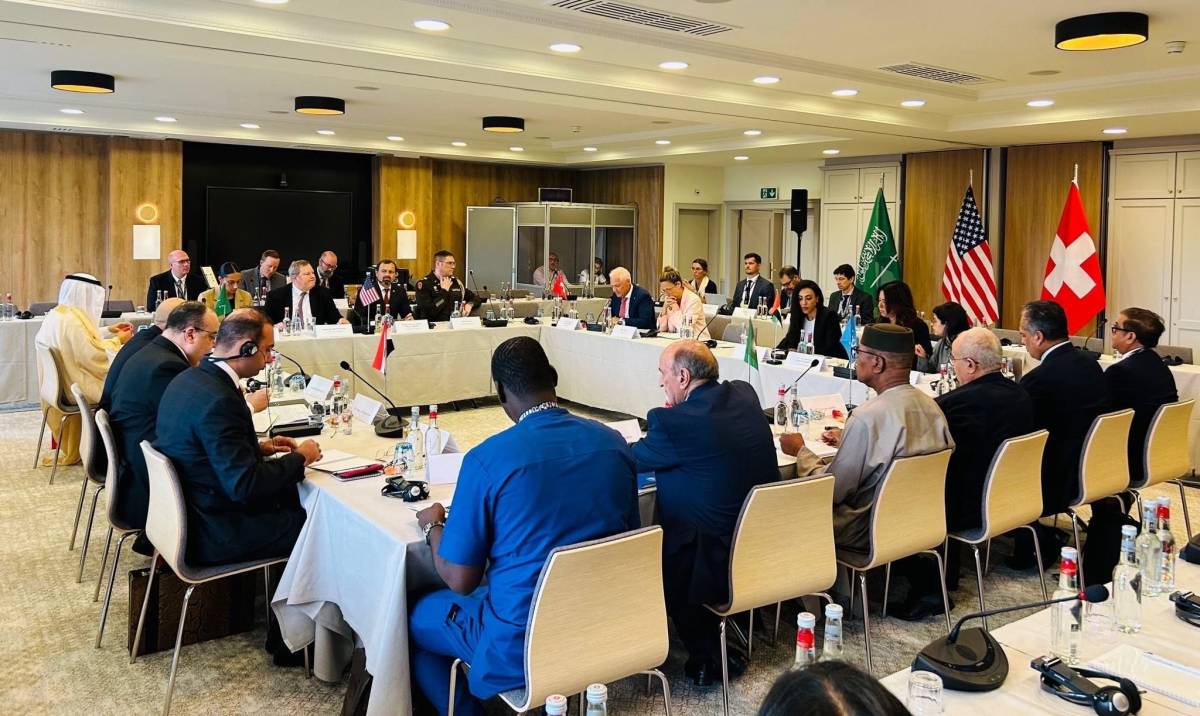
Given this prospect, more effective international coordination is essential. There is currently no unified, regular diplomatic contact group on Sudan, the biggest humanitarian crisis in the world with more than 30 million peopleneeding assistance (and much less getting it). The so-called Extended Mechanism created by the African Union (AU) in the first weeks of the war has only met infrequently and is probably also too unwieldy as a workable mechanism. Sudan special envoys have met in various configurations, including convened by the Intergovernmental Authority on Development (IGAD), the sub-regional body for the Horn of Africa, and by Ramtane Lamamra, the UN Secretary-General’s Personal Sudan Envoy. However, none of these have yet resulted in a regular mechanism. 

An overall aim of such a mechanism should be to provide regular updates of the members’ activities and create a platform to provide a modicum of coordination wherever possible. Ideally, it would also lead to more coherence, unity and sincerity in support of a negotiated end to the war, help mobilizing resources to avert (further) famine, and prevent the polarization of regional and international actors that are increasingly taking sides in the war. However, the current geopolitical context means that these objectives are probably no more than wishful thinking.

Why international efforts to end the war have failed so far

The war in Sudan is becoming increasingly protracted. SAF and RSF lead coalitions of armed actors over which they do not have complete control, but whose interests they have to consider in their political positions. Both Abdelfattah al-Burhan as head of the SAF and Mohamed Hamdan Dagalo (better known as Hemedti) as head of the RSF made clear in their respective Eid speeches at the end of March 2025 that there would be no negotiations. In contrast to previous declarations by the RSF over their readiness to talks, Hemedti now said there would be “only the language of the gun”. The roadmap for peace published by Sudan’s Ministry of Foreign Affairs includes a national dialogue and a cabinet of technocrats, but also makes the laying down of arms and withdrawal from all areas currently controlled by the RSF a prerequisite: a negotiated surrender in all but name. 

So, there is no easy opening for mediation. In view of these rejections, international efforts so far relied essentially on three different approaches: security talks focused on a ceasefire and protection of civilians; personal accommodation through a face-to-face meeting between al-Burhan and Hemedti; and mobilizing a civilian bloc as alternative “third force”.

Talks in Jeddah led by the US and Saudi Arabia in May 2023 resulted in a declaration on the protection of civiliansand a one-week ceasefire signed by SAF and RSF. Nevertheless, the parties did not adhere to their commitments, with no consequences for them. At the next round in October/November 2023, the parties did not confirm the ceasefire, and failed to follow through on their individual commitments for improved humanitarian access. Instead of a third round, the US tried to convene a slightly broader group of states and the two belligerents in Geneva in August 2024. However, the SAF delegation did not want to be treated on the same level as the RSF (and avoid exposing its internal differences) and declined the invitation. Lowering their ambition, the US-led coalition of facilitators founded in Geneva focused on improving humanitarian access instead. However, these efforts had limited success, as humanitarian access to fighting zones remained severely hampered in their search for a pragmatic approach, the US were prepared to accord the authorities in Port Sudan more legitimacy by treating al-Burhan as Head of the Transitional Sovereign Council and not just as head of the military. The supposed lead mediator, US Special Envoy Thomas Periello, was, for US security reasons, only able to travel to Port Sudan and meet al-Burhan in November 2024 though, when the result of the presidential elections signaled the foreseeable end of his term with the outgoing Biden administration, weakening the scope of this initiative.

AU and IGAD created several mechanisms for mediation, but were not fully accepted by the SAF: firstly, Sudan remains suspended from the AU because of the coup in October 2021; SAF withdrew from the IGAD initiative after a failed one-on-one meeting with Hemedti was followed by Hemedti attending an IGAD summit in Kampala in January 2024. SAF also rejected Kenya’s role as chair of IGAD’s quartet, a skepticism which only grew in light of the founding of a new RSF-led political alliance with Nairobi’s blessing in February 2025. The AU’s high-level panel on Sudan was very slow to organize talks with civilian actors, which has been its main objective, and failed to follow-up with them for months after two roundtables in the summer of 2024. The AU’s presidential ad hoc committee aims to organize a face-to-face meeting between Burhan and Hemedti, but has never met.

Competition between mediators did not help. Egypt distrusts IGAD as a mediation channel – both because it is not a member state, and because of the dominant role played in it by Ethiopia. It pushes for Sudan’s readmission to the AU (so far unsuccessfully) and organized its own initiative of Sudan’s neighboring countries (in July 2023), with no impact. Being non-African, the UAE and Saudi Arabia, major players in Sudan, are not part of the AU, and are also skeptical of pushing for a renewed civilian-led government in Sudan. When the UAE and Egypt facilitated a secret meeting in Bahrain, SAF and RSF both sent their respective deputy leaders and got relatively far. Yes, negotiations stalled again, and SAF withdrew from the talks, pointing to the RSF’s failed commitment to the Jeddah declaration. Cooperation between the AU and UN envoys remains difficult on the Sudan file. So-called “proximity talks” (i.e. indirect) talks set up by UN Special Envoy Ramtane Lamamra did not bring a breakthrough. Finally, a draft resolution in the UN Security Council co-signed by the UK and Sierra Leone, that would have asked the UN Secretary-General to develop a compliance mechanism for the protection of civilians and called for a cessation of hostilities, was vetoed by Russia in November 2024.

The fractured nature of the warring parties has been a major challenge. The mediation efforts failed to sufficiently account for the complex dynamics within the conflict parties as well as between them and their external backers, including in response to the situation on the battlefield. Competition between would-be mediators allowed Sudanese warring parties to decline invitations, withdraw from negotiations, and to avoid making compromises that could fracture their coalitions of militias, regular forces and mercenaries.

Learning from the Friends of Sudan experience

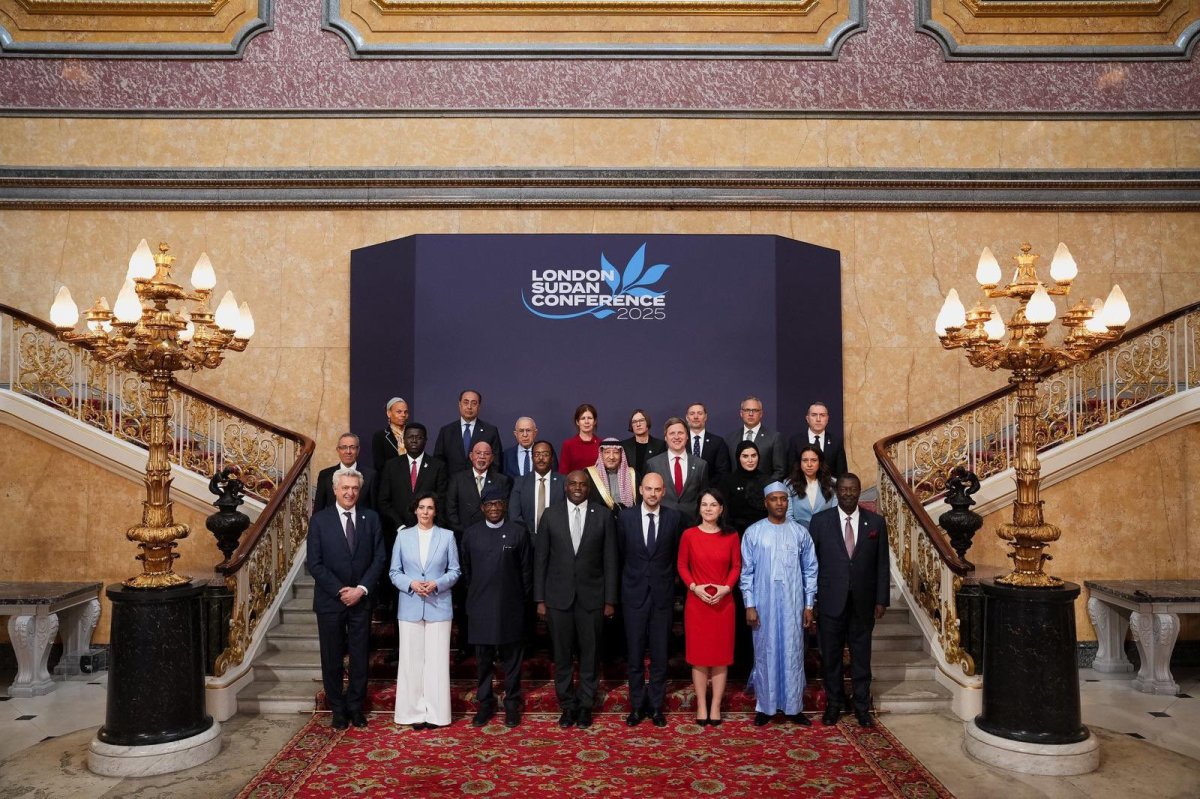
On April 15, 2025, British Foreign Secretary David Lammy is hosting a ministerial conference on Sudan in London, organised with Germany, France and the European Union. Lammy has vowed to make Sudan a foreign policy priority. The conference is billed as a follow-up to a similar conference in Paris a year earlier, which was co-hosted by the EU, France and Germany, all three of which will co-convene the London meeting with the UK as well. In contrast to Paris, there won’t be a humanitarian pledging element, nor will there be a parallel meeting of Sudanese civilian actors. Instead, the UK will convene around 20 foreign ministers and representatives of international organizations. Better coordination among this group is a central objective.

In doing so, the UK should reflect on the experience of previous coordination mechanisms on Sudan. For decades, the UK was itself part of the Troika (with the US and Norway), which supported negotiations to end Sudan’s Second Civil war and South Sudan’s path to independence in 2011, among other issues. However, the Troika doesn’t appear to be an appropriate grouping on Sudan any longer, given the drastic aid cuts by the US and the Trump administration’s disregard for multilateralism and preference of optics over lasting results.

After the fall of Sudan’s thirty-year dictator Omar al-Bashir in 2019, the UK was also part of the Friends of Sudan. This was an informal diplomatic group, co-founded by Germany and the US, whose primary purpose was to support Sudan’s transition process. Notably, it included also Egypt, the UAE, Saudi-Arabia, Qatar and the AU, among others. For a while, the Friends of Sudan met regularly at the level of Sudan envoys or senior officials, focusing mainly on coordinating the economic and financial support to the transitional government, including debt relief and setting up a cash transfer program for the parts of the population hit hard by the withdrawal of subsidies and high inflation. After the coup in October 2021, it lost its civilian Sudanese counterpart, and it petered out once the war started and the Sudanese authorities pushed out the UN mission – which had taken over a regular convening role of the Friends of Sudan – a few months later.

Key issues going forward

None of the mediation initiatives so far did have any major impact. Four points will be critical if any new diplomatic coordination mechanism is to even have the chance to influence events in Sudan. 

First, any high-profile conference on Sudan needs to have a link to Sudanese civilian actors. UK diplomats held meetings with Sudanese civil society in the Horn of Africa and the British Director General of African Affairs spoke with the authorities in Port Sudan to collect their perspectives. Still, Sudanese will always question the legitimacy of an international Sudan conference without any Sudanese present. The Paris conference organized a roundtable of around 50 people that represented different types of stakeholders, not just one civilian coalition. Attendees told me that they found it useful, because it had been rare for those diverse perspectives to be in the same room since the start of the war.

Second, any coordination mechanism resulting from the London conference should be nimble and relatively informal. There needs to be some agreement on who to include and how frequently to convene them, but perhaps not much more. It is unlikely to develop strong agency for joint actions. The main multilateral organizations – the UN, the AU, IGAD, perhaps the EU – should be in the lead, if they can be made to act jointly. Like-minded actors need to focus on tangible support to the Sudanese population, especially in light of the massive aid cuts by the US and other countries. While they won’t be able to fill all gaps, they should concentrate on stepping in to fully support the appeal of the Emergency Response Rooms, mutual aid networks. To function, this initiative would need 12 m USD per month, hardly any of which they have received so far. This won’t be enough – the UN appeals for Sudan and the neighboring countries are around 6 bn USD for 2025 – but the ERRs work particularly in areas hardly reached by international aid, where the risk of starvation is among the greatest.

Third, a new diplomatic group as well as the London conference should refrain from normalizing external interference. The Paris conference included a joint communiqué that urged “all foreign actors to cease providing armed support or materiel to the warring parties”. Egypt and the UAE signed this statement – yet, they have continued their support to SAF and RSF. If they were able to sign onto a similar statement, they could do so confident that a lack of commitment would remain without consequences. The foreign ministers present at the meeting should hold these foreign sponsors accountable for supporting warring parties. They should single out the UAE in particular because of their support to the RSF, as described by U.S. Senator Chris Van Hollen and Representative Sara Jacobs, citing a US government briefing. Just this weekend, the RSF captured Zam-Zam camp, Sudan’s biggest displacement camp, after besieging it and neighbouring El-Fasher for many months. The RSF operates advanced drones and artillery to attack El-Fasher and Zam-Zam camp, which it most likely acquired from abroad. 

Finally, those international actors that have not picked a side in Sudan’s devastating civil war should not do so now. Normalizing relations with SAF-led authorities in Port Sudan won’t help people trapped in RSF-held areas nor will it help end the war. Assembling in London, foreign ministers will call global attention to the catastrophe that is the war in Sudan. Outrage without any of these actions would just underline their collective weakness. It is time to take responsibility. 

Peace in Sudan: a fresh mediation effort is needed – how it could work

Published on The Conversation Africa, 28 January 2025

Intense fighting has ravaged Sudan since 15 April 2023. The war between the Sudanese Armed Forces and its erstwhile comrades-in-arms, the paramilitary Rapid Support Forces, has created one of the worst humanitarian crises in the world. Famine, displacement and mass atrocities are wreaking havoc in the country.

International mediation efforts have been lacklustre and fruitless. The United Nations security council has been preoccupied with other crises and blocked by its own divisions. The African Union has created diplomatic groups, a high-level panel and a presidential committee, none of which has been particularly active. It has been very slow in tackling the political process it wanted to lead.

The US and Saudi Arabia convened several rounds of talks, first in Jeddah, then in Switzerland. The Sudanese Armed Forces delegation failed to turn up in Switzerland. The Rapid Support Forces expressed willingness to talk peace, while simultaneously committing sexual and gender-based violence on a massive scale. The Biden administration only lately slapped sanctions on the top leaders of both forces, Abdelfattah al-Burhan and Mohamed Hamdan Dagalo (also known as Hemedti).

I have studied civil wars, mediation and peacebuilding for more than 12 years, with a focus on Sudan, including regular visits to the country and the region in the past five years. Based on this experience I have identified five reasons why mediation has failed. These are: the resistance of the conflict parties based on the dynamic nature of the war; continued military and financial aid by their external sponsors; as well as mediation attempts that were too narrow, not viewed as impartial, and lacking in coherence.

Clearly, a new approach to mediation is needed, not simply a new mediator. Turkey has recently offered to lead talks between the Sudanese Armed Forces and the United Arab Emirates, the main backer of the Rapid Support Forces, but Egypt, Kenya and several multilateral organisations also keep looking for opportunities.

Any new initiative will have to have certain components if it’s going to succeed:

  • political parameters, ideally set by a parallel civilian political process, of what might come next for Sudan should guide mediators
  • negotiations should take place in secret so that trust can be established
  • back channel communications networks must be established with potential spoilers without ceding undue legitimacy to them
  • a gender- and youth-inclusive approach
  • more effective international coordination
  • consistent pressure on the conflict parties and their external backers.

Why previous mediation efforts failed

Firstly, neither the Sudanese Armed Forces nor the Rapid Support Forces have shown significant willingness to stop hostilities.

The military fortunes of the two sides has waxed and waned. As long as either side feels successful militarily, they are unlikely to commit to sincere negotiations. Outright military victory leading to control of the whole territory (and its borders) remains out of reach for all.

Secondly, their respective allies have not shown any particular interest in peace.

External actors have provided military support to the warring parties, and helped finance them. The UAE is the main sponsor of the Rapid Support Forces. The Sudanese Armed Forces cooperates with Egypt, Eritrea, Iran and Russia, for arms deliveries and training. The UAE promised the US to stop supporting the Rapid Support Forces, but the arms flows continued.

Thirdly, some conflict management efforts were based on a flawed conflict analysis. There were attempts to organise a face-to-face meeting between Hemedti and Burhan, by the Intergovernmental Authority on Development and the African Union. But the war is not primarily a contest of “two generals”. Neither Hemedti nor Burhan has full control of their forces. Nor is a renewed military government acceptable to large parts of Sudan’s vibrant civil society.

Fourth, mediation efforts suffered because some of the parties saw them as lacking impartiality. Sudanese Armed Forces leaders don’t trust Kenya, whose President William Ruto is closely aligned with the UAE and has, until recently, allowed the Rapid Support Forces to conduct meetings and a press conference in Nairobi. Kenya was supposed to lead the Intergovernmental Authority on Development quartet of mediators, which never really got off the ground. Similarly, Sudan remains suspended from the African Union.

Finally, there was a competition of mediation platforms, allowing the warring parties to shop for the most convenient forum for them.

What a path to a ceasefire might look like

International attention is currently focused on Turkish president Recep Erdogan, who has offered to mediate between the Sudanese Armed Forces and the UAE. The Sudanese Armed Forces has harshly criticised the UAE for its support to the Rapid Support Forces. The offer, then, is based on the assumption the UAE might actually cease that support.

Any new approach should differ from previous efforts.

  • Mediators should provide a broad sense of political parameters for a post-war (interim) order, ideally with strong input from Sudan’s civilian groups. Those could include a conditional amnesty as well as assurances of personal safety for the top military leaders and of some stake in a transitional period, without promising any blanket impunity or renewed power-sharing.

But international mediators should grant the warring parties political recognition and legitimacy only in exchange for feasible concessions.

  • Negotiations should take place in secret, allowing confidential exchanges between declared enemies. This is particularly important for the Sudanese Armed Forces given the rivalry among its leadership.
  • Back channel communications should be established to all actors with real constituencies in Sudan, without empowering them unnecessarily. Turkey is well-placed to reach out to senior members of the previous (Bashir) regime who have found exile there. They control large parts of the fighting forces on the side of Sudanese Armed Forces and could prove to be a major spoiler. The armed groups in the so-called “joint forces” would also need to feel somewhat included.
  • Mediators should find ways to include a broad array of civilian actors, in particular women and youth groups. Instead of only targeting “men with guns”, a peace process should be gender-inclusive.
  • Any lead mediator should keep other interested parties such as the EU, the UK, Norway, and the other countries and organisations already mentioned, informed and engaged.
  • Pressure should be kept up by the US, UK and EU on external backers of the two main warring parties, and target both military and financial flows. Policies, including further targeted sanctions, should be as aligned as possible.

Preparing for a window of opportunity

There’s no guarantee that the violence would cease even if these conditions were met. The main belligerents are likely to continue their current offensives. The Sudanese Armed Forces will try to oust the Rapid Support Forces from central Khartoum completely. The Rapid Support Forces will keep trying to take El Fasher, the only capital in Darfur not under their control.

The impending re-capture of Khartoum by the Sudanese Armed Forces may provide an opportunity for a new round of talks, if it comes with consistent international pressure. Mediators should be ready to push for an end to the fighting.

Everybody’s Business

The War in Sudan as a Threat to International Peace and Security

This article was published by Verfassungsblog on 21 December 2023.

War has devastated Sudan since it first broke out on 15 April 2023. What started as a power play between the country’s two most powerful armies, the Sudanese Armed Forces (SAF) and the paramilitary Rapid Support Forces (RSF), has since metastasized into a major civil war. International actors have not paid this war the high-level attention it requires and deserves. On 1 December, the UN Security Council decided to terminate the mandate of the UN International Transition Assistance Mission in Sudan (UNITAMS), a political mission originally tasked with supporting Sudan’s transition to democracy. While the Council acted on a short-term request by the Sudanese authorities (controlled by SAF), it has not been able to agree on a substantive resolution since the war started. Driven by divisions, it has abdicated its responsibility under the UN Charter.

In this blog post, I explain why international actors need to pay more attention to what is happening in the strategically located country at the crossroads between the Red Sea and the Sahel, between the Arab and African worlds. The war threatens Sudan’s integrity as a state, displaces millions and draws in neighbouring and other regional countries, all in a region already in turmoil because of coups, insurgencies and violent extremism.

A War within the Security Sector

The conflict originates in a competition between the regular armed forces, the SAF, and the paramilitary force, RSF, for control over the security sector and ultimately the state as a whole. Having dislodged long-term ruler Omer al-Bashir from power in the face of broad public protests in April 2019, SAF and RSF agreed to share power with civilian parties a few months later. In October 2021, they felt the civilians were overreaching, arrested the civilian prime minister and declared a state of emergency. Since then, they have not been able to agree on forming a new government, trying instead to seize power yet again, this time from each other. This has led to the current hostilities.

While the conflict parties increasingly appeal to ethnic and racial identities to mobilize support, many Sudanese do not consider themselves truly represented by either armed force. The SAF, whose leadership comes from the riverine region of Central and Northern Sudan, are supported by elements of the former Islamist government as well as some armed groups. SAF generals look down on the RSF, whose commanders they consider uneducated. The RSF was created out of informal Arab militias, called “Janjaweed”, who embraced an ideology of Arab Supremacy already during the genocidal violence against non-Arab groups such as the Masalit and Zaghawa in Darfur in the West of Sudan twenty years ago. Since then, the RSF have recruited widely among Sudan’s peripheral communities, drawing on citizens of other Sahelian states (such as Chad) and co-opting units from SAF and other armed groups.

The Destruction of a Major African Capital

The war has wreaked havoc on Khartoum and the adjoining cities of Omdurman and Bahri. The RSF have captured most of the tri-state capital area, as they continue to engage in fierce artillery battles with the SAF. RSF troops occupy residential areas and loot vehicles and other valuables on a large scale. Around 37% of Khartoum state’s pre-war population of 9.4 million have left their homes. This will be the bulk of the country’s political and economic elite, its upper and middle class and others with means to make the journey. With records of their properties being deliberately destroyed, they will struggle to return. This is by design: Many RSF fighters, coming from the country’s poor peripheries, feel that the riverine elite that has dominated Sudan for decades has marginalized and instrumentalized them. Thus, while successive Sudanese governments have equipped and supported some Nomad communities, for example, to fight insurgencies for them, Nomad children go to primary school far less often than their peers from displaced communities. For those RSF fighters sensing a lack of respect, this is payback time. The result: a major African capital is falling apart in an effort to reshape the country. In time, this could lead to the split of Sudan into several territories, as the SAF-controlled ministries have already moved their administration to Port Sudan on the Red Sea coast.

The World’s Largest IDP Crisis

Sudan now also presents the world’s largest internal displacement crisis. Since the war started, out of a total population of around 49 million, 5.4 million people have been internally displaced, while more than 1.4 million have crossed into other countries (mainly Chad, Egypt and South Sudan). When fighting broke out, Sudan already had around 3.7 million IDPs, mainly in Darfur, and 800,000 Sudanese were already refugees in third countries. Sudan was also hosting more than a million refugees from other countries such as South Sudan. Many of the latter have now sought to return home (or make their way to third countries). All told, there are likely more than ten million Sudanese that have left their homes both before and after the war started. With every new offensive, there are going to be more people fleeing from one place to the next.

The Commission of International Crimes

What is more, the conflict parties are likely committing international crimes. SAF engages in indiscriminate bombing, killing civilians in the process. RSF fighters and allied Arab militias loot properties, engage in sexual and gender-based violence and kill members of non-Arab groups, in particular Masalit. 68 villages in the greater Darfur area showed signs of fire damage, some were burnt down almost completely.

Many of these atrocities have taken place in West Darfur, where most Masalit used to live. Now around half a million have fled over the border to Chad. A detailed Reuters investigation based on interviews with survivors and open-source information found that the SAF officers had deserted the base in Ardamata in early November when they could no longer defend it. The remaining SAF rank and file and members of an allied Masalit armed group negotiated a surrender with the dominant RSF troops and gave up their weapons in exchange for promises to be spared. Instead, the RSF ordered the men out of the houses and started shooting them, targeting mainly the Masalit. Perhaps 1300 people were killed within two or three days.

Several international actors have classified these and other acts by the belligerents as international crimes, i.e. as erga omnes violations of international law. This means that all states have an obligation to prevent them. On 6 December, the US State Department issued an “atrocity determination”, where it formally found that the SAF and the RSF had committed war crimes and the RSF had committed also crimes against humanity and ethnic cleansing as laid out above. Previously, Alice Wairimi Nderitu, the UN Special Advisor on the Prevention of Genocide, observed after a visit to refugee camps in Chad that many risk factors of genocide were in place. “In Darfur, innocent civilians are being targeted on the basis of race,” she said earlier.

Adding Fuel to Fire

Regional actors further fuel the conflict by delivering arms or allowing those deliveries to take place via their respective territories. The UAE supports the RSF with weapons and vehicles through Chad. Libya (under Haftar), Kenya, Uganda, the Central African Republic and more recently Ethiopia also seem to be involved in facilitating such shipments, as have been Russian mercenaries in Libya and CAR. In contrast, Egypt supports the SAF with weapons and other military support, including guns for tens of thousands of newly recruited SAF soldiers as well as Turkish Bayraktar drones. There have also been reports about Ukrainian drones and special forces supporting SAF, although the sourcing was relatively thin.

Insofar as they enter Darfur, many of those arms deliveries are a violation of the UN Security Council arms embargo on Darfur originally imposed in 2005. Even though it was never very effective as it only applied to one region within a larger country, it still provides ground for in-depth investigations by the UN Panel of Experts whose next report is due in early 2024.

The Threat of Spill Over

The war in Sudan is likely to spill over to neighbouring countries in various ways. Currently, the most-watched case is Chad. President Deby plays a risky balancing game by allowing the UAE to use Chadian territory for arms supplies to the RSF. The RSF have incorporated a significant number of Chadian Arabs and are increasingly getting into conflict with the Zaghawa in Darfur, the same ethnic group of Deby’s governmental elite. Unrest within the Chadian elite may lead to a military coup, or returning Chadian Arab fighters may strengthen armed opposition groups and ignite a civil war.

South Sudan’s transitional government may also feel the heat from the war in Sudan. Angelina Teny, South Sudan’s interior minister, confirmed that South Sudanese have joined both SAF and RSF. These might later return to their home country with their military equipment and join any number of armed opposition groups. Furthermore, small arms are flooding informal markets in Sudan at cheap prices.

Moreover, the hostilities threaten to disrupt the export of oil from the South to markets via the pipelines to Port Sudan. This might bankrupt South Sudan’s kleptocratic government at a time this money is needed to smooth over differences resulting from planned but likely flawed elections in December 2024.

Flawed Mediation Efforts

Mediation efforts by international and regional actors have not succeeded in halting the violence so far. Their response has been lacklustre, with no sustained high-level commitment. Mediators also continue to follow a deeply flawed approach. They focus excessively on SAF and RSF as well as their respective leaders, General Abdel Fattah al-Burhan, SAF’s commander-in-chief, and General Mohamed Hamdan Dagalo, called Hemedti, RSF’s commander.

For example, on 9 December, an extraordinary summit of the Intergovernmental Authority on Development (IGAD), the regional organisation in the Horn of Africa, heard pledges from both Burhan and Hemedti for a personal one-on-one meeting as well as for an “unconditional ceasefire.” This ignores that neither of them appears capable of controlling the war on their own anymore, given the significant role of elements of the former regime, ethnic militias as well as other armed groups, some of which have increased the territory under their control in the Nuba mountains and in Central Darfur. Moreover, IGAD and AU member states lack leverage in holding the belligerents accountable. Within a week after these pledges, the SAF bombed Nyala, the capital of South Darfur, and the RSF started a major offensive in Al Jazeera state in central Sudan, a major humanitarian hub and breadbasket of the country. The RSF captured the state capital Wad Madani within four days.

What is urgently needed is a multi-stakeholder dialogue, something that a joint AU and IGAD team has been preparing for months. However, there are disagreements regarding the participation of the conflict parties as well as representatives of the former Bashir regime, which some civilian parties reject out of hand. It remains to be seen whether the Coordination of Civil Democratic Forces or “Taqaddum”, a new civilian coalition whose preparatory committee was founded in Addis Abba in October, can prove more effective. They are in touch with the conflict parties based on their own roadmap.

A Threat to International Peace and Security

The war in Sudan poses a threat to international peace and security, requiring European actors including Germany to engage more forcefully. Encouraging regional actors to convene a credible multi-stakeholder and potentially sequenced dialogue is one way. States such as the UAE and Egypt that are fuelling the war with arms deliveries should also be held accountable, at least by calling them out. The EU should also start adding names to the sanctions regime on Sudan that it created in October and ensure that companies active in its common market do not interact with the RSF, SAF and their respective economic entities.

Mobilising diplomatic and political capital to stop the war in Sudan is not just the right thing to do, it should be everybody’s business given the high stakes involved.

Friedensabkommen in Sudan: Der Ertrag von Juba

Dieser Beitrag erschien am 16. Oktober 2020 bei Zenith.

Das Abkommen von Juba soll dem Krieg in Darfur und anderen Regionen Sudans ein Ende setzen. Die Aussicht auf Frieden bleibt trotzdem unsicher – doch die Machtverhältnisse in Khartum werden neu gemischt.

Ein Friedensvertrag zwischen Rebellengruppen und einer Regierung setzt der organisierten politischen Gewalt ein Ende und verbessert so die Leben jener Menschen, die von dem Konflikt betroffen sind – soweit die Theorie. Diese Hoffnung äußerten auch die sudanesischen Konfliktparteien und internationalen Beobachter, als sie das Friedensabkommen von Juba am 3. Oktober 2020 unterschrieben. Die Stimmung war emotional. Während der Zeremonie in Südsudans Hauptstadt, dessen Regierung das Abkommen vermittelt hatte, verkündete Abdel Fattah Al-Burhan, der Vorsitzende des Souveränitätsrats, feierlich: »Sudan ist unser Land und wir sind alle Brüder.«

Worte der Aussöhnung sind schön, dürfen aber nicht von den Schwächen des Abkommens und von drohenden Unruhen ablenken. Immerhin: Verglichen mit früheren Abkommen ist das Vertrauen zwischen Regierung und Rebellen deutlich größer, nach der Revolution im letzten Jahr. Trotzdem wird das Juba-Abkommen allein nicht die allgegenwärtige Gewalt in Regionen wie Darfur oder Ost-Sudan beenden.

Denn: Die Unterzeichner repräsentieren nur einen Bruchteil der Bevölkerung, einige marginalisierte Gruppen waren nicht an den Verhandlungen beteiligt, die Ursachen der Spannungen wurden nicht ausreichend behandelt und die im Abkommen festgelegten Sicherheitsmaßnahmen könnten zu erneuten Gewaltausbrüchen führen. Dennoch ist das Abkommen wichtig, denn es verändert die Machtverhältnisse in Khartum und wird sich somit maßgeblich auf den politischen Übergangsprozess auswirken.

Hohe Ziele und neue Spannungen

Das Friedensabkommen beinhaltet mehrere Protokolle, die sich auf fünf geographische Schwerpunkte und verschiedene Mitgliedsgruppen der »Sudanesischen Revolutionsfront« (SRF) beziehen. Neben Vereinbarungen zum Osten, Norden und Zentrum Sudans betreffen die detailliertesten Vereinbarungen mit der Übergangsregierung in Khartum Darfur, Süd-Kordofan und den Blauen Nil – Gebiete, die in den letzten zwei Jahrzehnten unter verheerenden Kriegen litten.

Die Inhalte der Protokolle erinnern an frühere Vereinbarungen zu Macht- und Vermögensteilungen, jedoch beinhalten sie auch Verpflichtungen zur Übergangsjustiz (wie beispielsweise die Kooperation mit dem Internationalen Strafgerichtshof), Reparationszahlungen, Land- und Weiderechte sowie zur Rückkehr von Geflüchteten und Binnenvertriebenen.

Die Vereinbarungen umfassen somit mögliche Lösungen für einige der vielen Missstände in Sudan. Doch die mangelnde Einbeziehung lokaler Gruppen könnte erneut Ängste und Spannungen verursachen, etwa bei der Landverteilung. Solche Auswirkungen werden im Osten Sudans bereits sichtbar, wo Demonstranten Teile der Hafenstadt Port Sudan für mehrere Tage blockierten, um gegen die Bedingungen des Friedensabkommens in der Region zu protestieren.

In Darfur gehen die Kriegshandlungen weiter

Die zwei wichtigsten Rebellengruppen Sudans, die nach wie vor relevante Gebiete im Süden und Westen des Landes kontrollieren, haben das Abkommen nicht unterschrieben. Allerdings wächst nun der Druck auf diese Gruppen, sich an Friedensverhandlungen zu beteiligen.

Im Jebel Marra-Plateau in Zentral-Darfur bleibt die »Sudanesische Befreiungsarmee« unter Abdelwahid Al-Nur, kurz SLA-AW, der hartnäckigste Gegner der Friedensverhandlungen. Die Rebellengruppe befindet sich in einem Konflikt mit den sudanesischen Streitkräften, noch Ende September wurde gekämpft. In ihrem aktuellen Bericht identifizierte die gemeinsame Mission der Vereinten Nationen und der Afrikanischen Union in Darfur (UNAMID) 48 Sicherheitsvorkommnisse und 115 Tote allein zwischen Juni und August.

Da sie kaum Zugriff auf das Mobilfunk- oder Satellitennetz haben, sind die von Rebellen kontrollierten Gebiete in Jebel Marra fast vollkommen vom Rest des Landes abgeschnitten. Abdelwahid Al-Nur hat immer wieder eine eigene Friedensinitiative und eine Rückkehr aus seinem Exil in Paris nach Sudan angekündigt. Genauere Einzelheiten zu diesem Vorhaben bleiben jedoch vorerst im Unklaren.

Die andere der beiden Gruppen, die Fraktion der »Sudanesischen Volksbefreiungsbewegung – Nord« unter der Führung von Abdel-Aziz Al-Hilu, kurz SPLM-Nord (al-Hilu), kontrolliert Teile der Bundesstaaten Süd-Kordofan und Blauer Nil. Mögliche Spannungen ergeben sich unter anderem durch den Anspruch einer anderen Fraktion der SPLM-Nord unter der Führung von Malig Agar, die Gebiete in den Friedensverhandlungen zu vertreten, obwohl sie selbst praktisch keine Truppen dort unterhält.

Al-Hilu zweifelt an der Aufrichtigkeit der an der Übergangsregierung beteiligten Sicherheitskräfte, echten Wandel in Sudan einzuleiten. Dennoch unterzeichnete er am 3. September 2020 eine gesonderte Grundsatzerklärung mit Premierminister Abdalla Hamdok in Addis Abeba. Das Übereinkommen verlängert den Waffenstillstand in Süd-Kordofan und dem Blauen Nil und erlaubt der SPLM-Nord (al-Hilu) vorübergehend den Besitz ihrer Waffen.

Als wichtigster Erfolg gilt die in der Erklärung festgelegte Trennung von Religion und Staat. Diese Formulierung ist als Kompromissformel gedacht, um den umstrittenen Fokus auf einen säkularen Staat, den al-Hilu anstrebt, zu vermeiden. Am Tag vor der Unterzeichnung des Friedensabkommens trafen sich Hamdok und al-Hilu nochmals und beschlossen, die genaue Bedeutung dieses Kompromisses als Vorbereitung für offizielle Friedensverhandlungen weiter auszuhandeln.

Die Konfliktlage hat sich seit der Revolution gewandelt

Seit dem Sturz von Präsident Omar Al-Baschir im April 2019 ist die Anzahl der gewalttätigen Auseinandersetzungen in Darfur und Süd-Kordofan wieder deutlich gestiegen. Die bewaffneten Bewegungen, die das Juba-Friedensabkommen unterzeichneten, wie die SLA-Fraktion unter Führung von Minni Minawi, die »Bewegung für Gerechtigkeit und Gleichheit« (JEM) unter Jibril Ibrahim oder die SPLM-Nord-Fraktion unter Malik Agar, sind jedoch nicht für diese Entwicklung verantwortlich.

Vielmehr treiben irreguläre Milizgruppen und paramilitärische Gruppen die Gewalt an. Sie sind ein Nebenprodukt der staatlichen Aufstandsbekämpfung, die jahrzehntelang auf die Bewaffnung von Hirten setzte. Obwohl die bewaffneten Milizen in Darfur oft als Kollektiv mit dem Sammelbegriff »Dschandschawid« beschrieben werden, agieren diese Einheiten oft autonom und teilweise auch gegen staatliche Sicherheitskräfte.

Eine Analyse des »Armed Conflict Location Event Data Projects« (ACLED) kam im August zu dem Schluss, dass das Konfliktumfeld in Sudan in den letzten Jahren vielschichtige Veränderungen durchlaufen hat. Zwischen 2014 und 2016 vertrieb die Baschir-Regierung einen Großteil der Rebellengruppen im Rahmen ihrer Aufstandsbekämpfung. Zeitgleich nahmen jedoch die Konflikte zwischen Bauern und Hirten zu und halten immer noch an.

Binnenflüchtlinge, die zu ihren Feldern zurückkehren, treffen auf bewaffnete Viehhüter auf ihrem Land. Verhandlungen zwischen diesen Gruppen zum Schutz von Feldern können gelingen, aber ohne funktionierende staatliche Mechanismen und effektive Sicherheitskräfte sind gewalttätige Auseinandersetzungen zu häufig das Ergebnis. Die Viehhirten fürchten den Verlust ihres privilegierten Status, den sie durch die neue Machtverteilung in Khartum in Gefahr sehen, und reagieren daher oft gewaltsam.

Zunehmend finden Auseinandersetzungen in dicht bevölkerten städtischen Regionen statt, da Flüchtlingscamps oft in der Nähe von Städten errichtet wurden. Angesichts scharfer ethnischer Identitätsunterschiede als Ergebnis von Baschirs Politik eskalieren kleinere Streitigkeiten leicht.

Wie die nun verabschiedeten Protokolle für Landnutzung und Weiderechte belegen, spielte diese Konfliktdynamik durchaus eine Rolle in den Verhandlungen in Juba. Dennoch könnten die für Darfur vorgesehenen Sicherheitsmaßnahmen den Boden für neue Gewalt bereiten. Die Unterzeichner vereinbarten die Gründung eines gemeinsamen Einsatzverbands mit 12.000 Soldaten, bestehend aus Truppen der staatlichen Sicherheitskräfte und Rebellengruppen.

In Darfur verfügen die Unterzeichner jedoch über keine eigenen Kämpfer. Berichten zufolge werben sie nun neue Mitglieder für den gemeinsamen Einsatzverband sowie den Abrüstungs-, Demobilisierungs- und Reintegrationsprozess an. Das ist nicht nur teuer, sondern verfehlt auch den Zweck des Abkommens. Die zusätzliche Rekrutierung fördert politische Patronage und die Militarisierung der Konfliktregion.

Ein weiteres Problem ist, dass die sudanesische Regierung die Umsetzung des Friedensabkommens nicht bezahlen kann, und auch keine internationale finanzielle Unterstützung in Aussicht hat. Im Unterschied zu früheren Abkommen vermittelte nicht das reiche Katar, sondern der arme Südsudan. Die sudanesische Regierung hat Darfur zwar jährlich 750 Millionen US-Dollar zugesagt, angesichts seiner Schwierigkeiten für andere Ausgaben wie Nahrungsmittelimporte oder Gehälter im öffentlichen Dienst aufzukommen, ist jedoch unklar, wo diese Summe herkommen soll. Ohne Friedensdividende und Entwicklungsfonds werden die Ursachen des Konflikts weiter schwelen.

Der Einzug der bewaffneten Gruppen stärkt Sicherheitsakteure in der Regierung

Es wird deutlich: Die Hauptwirkung des Juba-Friedensabkommens ist nicht, nachhaltigen Frieden in den von Konflikt zerrütteten Gebieten Sudans zu bringen. Vielmehr zielt es auf den Übergangsprozess in Khartum. Das Abkommen wird in die Verfassungserklärung integriert, die den Übergangsprozess im August 2019 einleitete.

Zudem wird der Übergangsprozess um ein Jahr verlängert und die Vertreter der SRF werden den Übergangsinstitutionen beitreten. Sie erhalten drei zusätzliche Sitze im bisher elf Mitglieder umfassenden Souveränitätsrat (Sudans kollektiver Präsidentschaft während des Übergangsprozesses), sowie 25 Prozent der Sitze im Übergangsparlament, sobald dieses eingerichtet wird.

Fünf Sitze stehen den Rebellengruppen in einem erweiterten Kabinett von insgesamt 25 Ministerposten zu. Zudem dürfen die Vertreterinnen und Vertreter der Unterzeichner des Friedensabkommens bei zukünftigen Wahlen antreten, anders als noch in der Verfassungserklärung vorgesehen.

Die Integration bewaffneter Gruppen in die Politik wird die Machtverhältnisse in Khartum maßgeblich verändern. Es ist anzunehmen, dass Vertreter der bewaffneten Gruppen mit den Sicherheitskräften zusammenarbeiten werden, die sie als die wahren Machthaber ansehen. Dies wird zulasten der zivilen » Kräfte der Freiheit und des Wandels« (FFC) gehen. Die FFC als Koalition politischer Parteien und zivilgesellschaftlicher Organisationen sind ohnehin geschwächt und verlieren immer mehr ihren Anschluss an die Widerstandskomitees, die die Revolutionsbewegung 2018/2019 anführten.

Auch das Verhältnis zwischen den FFC, dem zivilen Kabinett und den Sicherheitskräften ist angespannt. Angesichts breiter Demonstrationen wegen der anhaltenden Wirtschaftskrise und fehlender Fortschritte des Reformprozesses deutete Burhan bereits Ende August eine vollständige Machtübernahme durch das Militär an. Diese Befürchtung äußerte damals auch ein Kontakt vor Ort mir gegenüber.

Die bevorstehende Eröffnung des Übergangsparlaments, die bislang aufgrund der Friedensverhandlungen aufgeschoben worden war, ist ein positiver Schritt für Partizipation während des Übergangsprozesses. Idealerweise wird sie Transparenz, Rechenschaft und Inklusion stärken. Die FFC haben versprochen, Abgeordnete aus allen Teilen Sudans zu ernennen. Öffentliche Beratungen im Übergangsparlament könnten ein Gegenmodel bilden zu den Ad-hoc-Kommissionen, welche die FFC, der Souveränitätsrat und das Kabinett in den letzten Monaten gegründet haben.

Außerdem haben die bewaffneten Gruppen und die FFC sich dazu verpflichtet, mindestens 40 Prozent weibliche Abgeordnete zu ernennen. Dies wäre ein wichtiger Schritt weg von der männlicher Dominanz im Friedens- und Übergangsprozess. Insgesamt muss das Übergangsparlament ein Ort werden, an dem die Übergangsregierung wieder Anschluss an die Widerstandskomitees und die Zivilgesellschaft findet, bevor diese sich ganz von dem Übergangsprozess verabschieden.

Internationale Partner sollten ihre finanzielle Unterstützung umsichtig anpassen

Die internationalen Partners Sudans sollten ihre Unterstützung bei der Umsetzung des Friedensabkommens gewissenhaft ausrichten. Obwohl das Abkommen alles andere als perfekt ist, stellt es doch einen wichtigen Meilenstein in Sudans Übergangsprozess dar. Finanzielle Förderungen dürfen keine Anreize für Neuanwerbungen seitens der Rebellen schaffen und sollten sich stattdessen auf die Fortbildung der bewaffneten Gruppen in demokratischen Prozessen, lokale Friedenskonsolidierung und Versöhnungsmaßnahmen konzentrieren.

Zusätzlich sollten die internationalen Partner ihre Zusagen für humanitäre Hilfe erhöhen. Momentan sind nur 47 Prozent des humanitären Plans der Vereinten Nationen für Sudan für das Jahr 2020 gedeckt.

Obwohl der Einfluss der Friedensmission von AU und UN auf die Sicherheitslage begrenzt ist, bleibt sie zumindest in den nächsten Monaten ein wichtiger Akteur für den Schutz der Zivilbevölkerung, die Sicherung humanitären Zugangs und die Umsetzung des Friedensabkommens. Der Sicherheitsrat der Vereinten Nationen sollte sein Mandat für UNAMID über den 31. Dezember 2020, dem momentan geplanten Missionsende, verlängern.

Den seit Jahren eingeleiteten UNAMID-Rückzug in dieser Situation zu vollenden würde die von Ungewissheit und Ängsten lokaler Gruppen geprägte Situation in Darfur noch verschärfen. Die sudanesische Regierung hat sich zwar zu dem Schutz der Zivilbevölkerung verpflichtet, schafft es derzeit jedoch nicht, dem ausreichend nachzukommen, wie die Vorfälle der letzten Monate zeigen. Die UN Integrated Transition Assistance Mission in Sudan (UNITAMS), welche die Umsetzung des Friedensabkommens unterstützen soll, befindet sich derzeit noch in der Planungsphase und wird erst allmählich seine Arbeit im Januar 2021 aufnehmen.

Die UN-Mitgliedstaaten sollten eine ausreichende Ausstattung der neuen Mission mit genügend Expertinnen und Experten in den laufenden Haushaltsverhandlungen in New York sicherstellen. UNITAMS sollte die sudanesische Regierung unterstützen, auch lokale Friedensinitiativen in den peripheren Gebieten des Landes im Westen, Süden und Osten voranzutreiben.

Zuletzt bietet der Abschluss der aufwändigen Friedensverhandlungen in Juba eine Chance für die sudanesische Regierung und ihre internationalen Partner, die letztes Jahr vereinbarten Regierungs- und Wirtschaftsreformen mit neuem Schwung zu verfolgen. Denn nur wenn der Übergangsprozess einen Weg hin zu mehr Stabilität und Legitimität zeichnen kann, wird Sudan nachhaltigen Frieden finden.