SWP Comment, 8 July 2025 (available in German, too)
The war in Sudan, which broke out on 15 April 2023 between the Sudanese Armed Forces (SAF) and the paramilitary Rapid Support Forces (RSF), has triggered the largest humanitarian crisis in the world. Civilians are being directly attacked by the warring parties. The violent actors are destroying civilian infrastructure and blocking humanitarian aid as part of their war strategy. Some are also targeting members of specific identity groups, including on an ethnic basis. At the same time, the parties to the conflict claim to be protecting the civilian population. International efforts to protect the civilian population or particularly vulnerable groups have so far been largely unsuccessful. Calls for military intervention have little chance of success in the current global situation. In fact, the committed efforts of Sudanese citizens to protect themselves and others around them deserve more attention and support. Protection efforts can help alleviate the suffering of the civilian population, even if an end to the war remains out of reach.
On Sunday, 13 April 2025, the RSF captured the Zam-Zam IDP (internally displaced persons) camp in North Darfur. Until then, it had been the largest camp for IDPs in Sudan, containing at least half a million people. Some of them had been living there for more than 20 years, since the time they had fled from the RSF’s predecessors. According to the United Nations (UN), around 400,000 people fled the camp in just two days following its capture by the RSF, and more than 400 civilians were killed in or near the camp. One survivor told Reuters that the RSF killed 14 people who had taken shelter in a mosque. Mohammed, another survivor, said in an online press interview that the RSF had labelled the residents as “slaves”. He said that armed young people from the camp had continued to resist the RSF until their ammunition ran out. “Without them, many more people would have been killed”, he said.
Conversely, the RSF said on their official Telegram channel that they had saved the people in Zam-Zam from the “mercenaries” in the “military base”. Abdelrahim Hamdan Dagalo, deputy leader of the RSF, was there himself and had ordered the “securing” of the camp, according to the RSF. Its leader, Mohammed Hamdan Dagalo, Abdelrahim’s brother, announced the formation of a government for “peace and unity” in a speech two days after the camp was captured. This government is supposed to serve all Sudanese, especially those who “have ever felt forgotten, marginalised or excluded”, said RSF leader Dagalo, who is also known as Hemedti.
At the Sudan conference in London on 15 April 2025 – the same day as Hemedti’s speech – the states and international organisations present were unable to agree on a joint final declaration. Egypt and Saudi Arabia, both supporters of the SAF, and the United Arab Emirates (UAE), supporters of the RSF, were able to block an agreement. Less than one-sixth of the required international aid for Sudan and the neighbouring states was pledged at the conference.
The protection of civilians has long been politicised in Sudan. All parties to the conflict claim not only to be fighting in the interests of the civilian population, but also to be taking specific measures to protect them from violence. These claims are in stark contrast to their actual behaviour.
Civilians as a target
Violence against the civilian population is not a mere by-product of warfare in Sudan, it is an intrinsic aspect of the behaviour of the warring parties and their respective allies. Both the UN as well as national and international non-governmental organisations (NGOs) have presented numerous detailed reports on the human rights situation in Sudan. At the same time, difficulties in accessing certain regions and the sometimes severely restricted telecommunication services mean that many incidents are unlikely to appear in the reports. As a result, there are no exact figures on how many people have already died in the war. However, it is likely that the number of direct and indirect victims has passed six figures.
The danger to the civilian population is first and foremost due to the type of military action: When using artillery, barrel bombs or other explosive weapons in cities, the warring parties do not differentiate sufficiently between combatants and non-combatants. The RSF shell hospitals with artillery and strike power stations and other civilian infrastructure with drones; the army shells schools, markets and residential areas. Both parties arrest, torture and kill humanitarian personnel, volunteers and human rights defenders, who they accuse of cooperating with the other side. These are the findings of the Fact-Finding Mission on Sudan set up by the UN Human Rights Council.
The RSF are looting and pillaging in the places they conquer. Instead of receiving adequate pay, their troops are given a licence to loot. In addition, the RSF use sexual violence across the board, destroy agricultural equipment and rob warehouses, which jeopardises the food supply. In the Zam-Zam camp, RSF units killed the last remaining medical staff belonging to the NGO Refugees International before capturing it.
According to the UN panel of experts, 10,000 to 15,000 people are said to have been killed in attacks by the RSF between June and November 2023 in El Geneina, the capital of West Darfur. As a result of these attacks, a large part of the Masalit community fled across the border to Chad – their expulsion was obviously a goal of the RSF. The US State Department formally categorised the RSF’s actions as genocide.
The warring parties also benefit from massive external support – military, logistical, financial and political. The RSF are primarily supported by the UAE, with Chad, South Sudan, Uganda, Kenya and the Somali region of Puntland making their respective contributions. The SAF cooperate primarily with Egypt, Russia, Turkey, Eritrea and Iran.
However, the violence against the civilian population is not only being committed by the RSF and the SAF. Although the war began as a war between these military units, it has now spread to segments of society. Both sides use ethnically connoted rhetoric to mobilise and recruit. Some units are recruited on a tribal basis; they see the fight as an opportunity to realise their own goals against hostile groups.
Events in the state of Al-Jazeera illustrate the complexity of the violence: The RSF controlled the central Sudanese state – to which many people had also fled from Khartoum – between December 2023 and January 2025. The Sudan Shield Forces militia – under the leadership of Abu Aqla Kikel, a former SAF officer – played a key role in this. Under his leadership, the RSF captured the state capital, Wad Madani. In October 2024, however, Kikel defected back to the army and secured the recapture of the state a few months later.
Armed conflicts had not affected Al-Jazeera in the past. It was home to the country’s most important granary. In prior decades, seasonal labourers from other parts of the country – and from what is now South Sudan – went there. They settled there and were known as “Kanabi”. Many of them lived in camps outside the villages of the local population. The state did not provide these camps with public services such as schools and health centres, which were available in the established villages. The RSF knew how to capitalise on the resulting latent tensions by using the language of the disenfranchised. However, many Kanabi came from so-called “African” ethnic groups from the west of the country and were not treated equally by either the RSF or the Shield Forces, as a women’s rights activist from Al-Jazeera described. The RSF attacked villages they suspected of being close to Kikel after he rejoined the army. Conversely, Shield Forces attacked the Kanabi after recapturing Wad Madani for the army in early 2025.
Although many displaced people are now returning to Al-Jazeera, their relations with other ethnic groups and their confidence that the state will protect them have been severely damaged. The violence against the civilian population is also a consequence of the practice of outsourcing violence to militias and an exploitative state, which Sudan has known for decades.
Calls for international protection
At the international level, the brutal violence against the civilian population in Sudan is a recurring theme of official bodies. Both the UN Security Council and the Peace and Security Council of the African Union (AU) took up the issue in 2024, but they were unable to take effective action. In June 2024, the UN Security Council passed a resolution that demanded that all warring parties protect the civilian population and that the RSF end its siege of El-Fasher, the capital of North Darfur. In October 2024, UN Secretary-General António Guterres presented a report on the protection of civilians in Sudan, but it contained hardly any measures that the UN Security Council could take itself. A draft resolution submitted by the United Kingdom and Sierra Leone failed in November 2024 due to Russia’s veto; it would have instructed the Secretary-General to work with the warring parties to develop a mechanism to implement their previous voluntary commitments.
On 11 May 2023, shortly after the start of the war, the SAF and the RSF had already agreed on the Jeddah Declaration of Commitment to Protect the Civilians of Sudan after mediation by the United States and Saudi Arabia. It lists in detail existing obligations arising from international humanitarian law and international human rights law. This declaration remains one of the few common reference documents on the protection of civilians in Sudan. However, it does not contain a mechanism to monitor compliance with these obligations, review incidents or penalise violations. The United States exerted considerable pressure on the warring parties in 2024 and steadily increased the sanctions on senior leaders, including RSF leader Dagalo and SAF leader Abdelfattah al-Burhan. This pressure appears to have temporarily reduced the number of RSF attacks on El-Fasher.
The European Union (EU) is working towards an agreement between the warring parties on the protection of civilian infrastructure. This should explicitly serve as a starting point for further talks. However, in view of the widespread attacks on markets, hospitals and power stations, no agreement has yet been reached.
The idea of a military or civil-military mission to protect the civilian population has attracted international attention. The US administration under Joe Biden fuelled the discussion about a mission led by African states or the AU – but the proposal was met with little enthusiasm from the latter. Representatives of the Intergovernmental Authority on Development (IGAD) spoke of a task force of up to 4,500 soldiers to monitor the implementation of the Jeddah Declaration. The UN Fact-Finding Mission on Sudan called for a protection mission, as did the then civilian Sudanese coalition Taqaddum, whose chairman, Abdallah Hamdok, also demanded a no-fly zone and security zones that would gradually expand.
However, these demands were strictly rejected by the parties to the conflict. Furthermore, practical problems were hardly discussed, such as how a large number of troops could be deployed to secure the most important combat zones and how such a mission could be financed. Even during the joint UN-AU mission in Darfur (UNAMID), which was withdrawn at the end of 2020, the security forces obstructed the mission’s active protection measures. Without the consent of the parties to the conflict and without a ceasefire, a new military mission in Sudan would effectively mean entering the war. So far, nobody seems willing to do this.
Local protection measures
At the local level, Sudanese actors are involved in protecting segments of the population. At the beginning of the war in particular, there were a whole series of successful efforts to achieve local ceasefires, not least due to indications that the decisive battle would be fought in the centre and would not be decided in a provincial capital.
The best known – and longest lasting – efforts were those of the Elders and Mediation Committee in El-Fasher, the capital of North Darfur state. High-ranking and committed citizens of the town took the initiative on the third day of the war to at least ensure the proper and speedy burial of the bodies. They quickly agreed with the local representatives of the SAF and the RSF on a ceasefire and the deployment of police forces between their respective districts in the city. The committee monitored the ceasefire, clarified the movement of troops and handled any incidents. To do this, it was able to build on a long tradition of collective conflict management as well as its relationships and social capital with local commanders and the population. The governor of North Darfur supported the initiative. A few months later, the committee also integrated representatives of armed groups from Darfur, whose leaders held government positions (in a government controlled by the SAF) but were still militarily neutral at the time.
Similar efforts were also made in other towns, for example in Ed-Daen, the capital of East Darfur – where merchants in particular campaigned for peace in order to retain access to the market – or in An-Nuhud in West Kordofan. The UN Development Programme (UNDP) Sudan commissioned a study on these local peace efforts that has been made available to the author and will be published soon.
A central lesson of this revealing study is that, in Sudan, protection and peace efforts at the local level always originate from local social structures. These were often traditional authorities and religious leaders, who sometimes worked together with lawyers, merchants and young activists. Humanitarian negotiations could often serve as a gateway for further talks: Negotiations on medical access or the burial of war victims developed into a dialogue with the parties to the conflict, thereby improving the situation of the civilian population as a whole. According to the study, this shows how important the peace aspect is in the triple nexus of humanitarian aid, development cooperation and peace-building. It was also essential for the local peace efforts to affect and include all of the relevant social groups on the ground, as long as this did not jeopardise their impartiality.
Nevertheless, each of the initiatives analysed also exhibited considerable weaknesses, which are also known from other contexts (see below). Another finding from the study is that areas with a longer experience of armed conflict were often better prepared to negotiate with marauding gangs and militias than the populations in those parts of the country that had been spared fighting for decades.
That said, protection should not be equated with peace measures. If there is no ceasefire, people take measures to protect themselves and those closest to them. The most important measure is to take flight. Sudan is currently experiencing the largest displacement crisis in the world. People are fleeing within the country (or to other countries) not only because of the immediate war, but also because of the danger of attacks by the armed actors, hunger, and because food production and basic supplies have collapsed.
The population movements are of strategic importance for the parties to the conflict: If a warring party conquers an area and subsequently holds it, it makes a big difference to its legitimacy as to whether the civilian population flees, stays or even returns. Time and again, civilians had placed their hopes for protection in the army, which then retreated before the RSF captured a town.
Taking up arms themselves
Some people in Sudan do not want to run away, but to confront the danger to themselves and their communities. They join the army, the RSF or one of the numerous militias, armed groups and self-defence units. Of course, widespread recruitment serves the strategic goals of the warring parties. There are often few other opportunities for young men to earn money, especially in areas where the economy has been severely damaged. There are also reports of forced recruitment and the use of minors. For some, however, the motivation to protect themselves and others also plays a role.
According to a leaked internal report by the Sudanese Islamic Movement, more than 650,000 people were “mobilised” and more than 2,200 training camps were set up in the first year of the war alone. These figures refer to the areas under the control of the army.
Armed groups from Darfur have at times been involved in the protection of humanitarian supplies, refugee movements and segments of the civilian population. However, as these armed groups came under increasing fire from the RSF, they ended their impartiality and declared their full support for the army in November 2023. In January 2025, the Sudan Liberation Army (SLA-AW) under Abdel Wahid al-Nur and the Gathering of Sudan Liberation Forces (GSLF) under Tahir Hajar founded a so-called neutral protection force, which was also intended to protect deliveries of civilian goods, but which in turn came under fire from the RSF. In addition, the GSLF’s alliance with the RSF from February 2025 called into question the impartiality of this protection force.
Humanitarian protection
Protection is a core task of humanitarian aid. Nevertheless, humanitarian actors do not necessarily agree as to what exactly constitutes humanitarian protection. The generally accepted definition of humanitarian protection, as established by the Inter-Agency Standing Committee, is not easy to grasp at first glance. Its core message is that humanitarian actors should ensure – at least in their own emergency relief work – that they protect vulnerable groups and respect the civilian status of the population.
At a local level in Sudan, networks of mutual aid – the Emergency Response Rooms (ERRs) – also fulfil protection functions. The ERRs, of which there are hundreds throughout the country, are best known for their soup kitchens, which they use to ensure the food supply of neighbouring communities, primarily in areas that are rarely accessible to international actors. The ERRs are based on the Sudanese concept of nafeer, a traditional practice of mutual support in the community. The regular joint activities of people from different backgrounds contribute to social cohesion and thus defy the polarisation caused by the war to a certain extent.
However, the ERRs go even further. In Khartoum, for example, they maintain safe spaces for women and children and also offer psychosocial support for the many traumatised people. Finally, the ERRs’ protection committees help those affected to move from high-risk areas to other parts of the country. To this end, they carry out their own risk assessments in order to prioritise the evacuation of particularly vulnerable people. They also continually research which routes are currently safe and accessible. According to their own statements, the ERRs have helped around 200,000 people to relocate from the capital region alone since the start of the war.
Sudan has a nationwide structure for the coordination of mutual humanitarian aid, the Localisation Coordination Council. ERRs from 13 (out of a total of 18) federal states, 9 national NGOs and, as observers, 6 international NGOs participate in the arrangement. For example, the Council helped volunteers in Al-Jazeera to set up ERRs and evacuate people after the state was captured by the RSF.
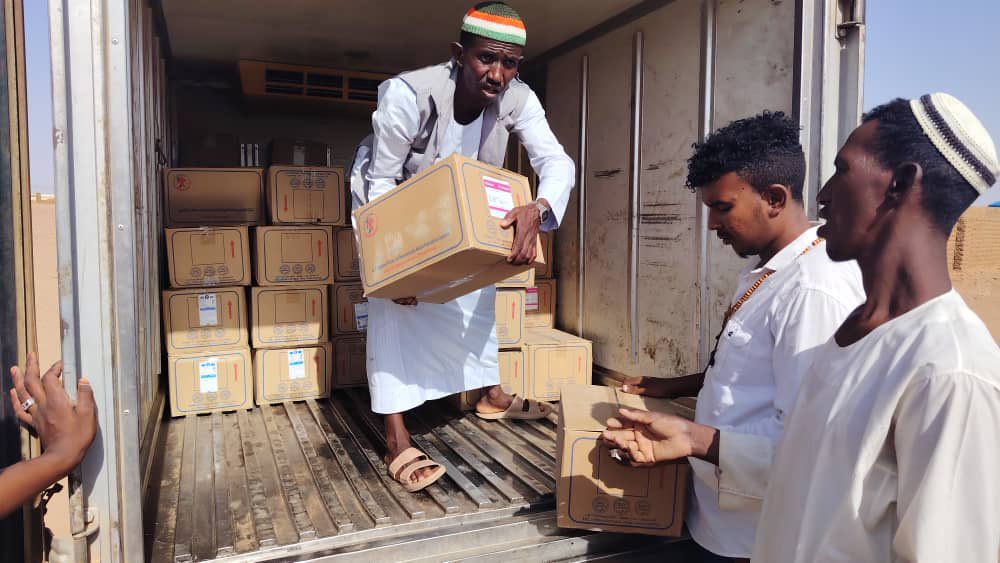
International aid organisations, NGOs and the UN support the ERRs and can also improve the protection of vulnerable groups in Sudan through their own measures. The presence of international aid organisations in an area can, in principle, help to ensure the non-discriminatory distribution and organisation of aid. However, the authorities in Port Sudan have not yet allowed the UN to maintain permanent bases in the areas controlled by the RSF in the west, which is why international aid organisations only come to these areas on a temporary basis. Their work is made more difficult by the significant bureaucratic, logistical, financial and security challenges. It can take weeks for lorries from the Chadian border or from Port Sudan to arrive in parts of Darfur. The first UN convoy from Port Sudan to El-Fasher in a year was bombed near Al-Koma in June 2025, killing five humanitarian workers.
In August 2024, high-level UN humanitarian diplomacy succeeded in reopening the border crossing to Chad in Adré, which has remained open ever since. However, the bureaucratic obstacles of the Humanitarian Aid Commission (HAC) on the SAF side and the Sudan Agency for Relief and Humanitarian Operations (SARHO) on the RSF side are massively hampering the work of international aid organisations. On the ground, armed militias are making money from every vehicle passing through the numerous checkpoints.
In areas where aid organisations have been active for some time, they can support local protection networks, many of which were set up before the war. For example, there were protection committees in all of Darfur’s federal states that brought together both civilian and local security authorities with representatives of the civilian population. However, even then the security forces did not always take part in meetings or showed no interest in reaching agreements. Some networks for the protection of women or for resolving tensions between farmers and herders are anchored locally and continue to function.
Finally, access to telecommunication services is important so that people can inform themselves and exchange information in order to make their own decisions about their protection. In the areas controlled by the RSF, there is no mobile phone network available because the authorities in Port Sudan have banned Sudanese mobile phone companies from operating there. Instead, people use smuggled Starlink terminals, access to which is expensive and usually controlled by the RSF or people close to them. The collapse of the electricity supply, the lack of availability of cash and the high cost of living make mobile communications difficult everywhere in Sudan, not to mention the damage to the telecommunications infrastructure caused by the war, not least in the Khartoum area.
Risks of and experiences with protective measures
Many political demands for the protection of the civilian population frequently refer to the idea of protection zones that are either protected or monitored by different mechanisms: by an international mission (civilian or military), through agreements with the conflict parties, the presence of humanitarian actors, or through remote monitoring with satellites and other methods. According to one proposal, humanitarian partners should offer assistance in these zones and local administrations should ensure basic supplies.
Experiences with local ceasefires such as in El-Fasher show the enormous difficulties of such an approach. All local ceasefires collapsed sooner or later. Even when there were agreements with the local commanders of the conflict parties, the respective leadership groups at the national level insisted on military operations. Conversely, the conflict parties’ lack of an effective command and control structure makes local agreements more difficult. Although such agreements can reduce violence in one region, this then allows the parties to the conflict to intensify their offensives elsewhere. For example, when the RSF advanced into the state of Sennar, the violence in the previously occupied state of Al-Jazeera decreased because the troops were preoccupied with the offensive in the neighbouring state.
The concentration of the civilian population in protected zones that are supposedly safe places – where they may also have better access to humanitarian aid – can also benefit the strategies of the parties to the conflict: whether it is to drive out segments of the population or to bring them under their own control, and thus increase their own legitimacy. If attacks do occur – such as in Wad Madani in December 2023, when hundreds of thousands fled from Khartoum, or in El-Fasher in May 2024 – displaced people are particularly at risk because they have few resources of their own and lack local connections. Explicitly declaring protection zones should therefore go hand in hand with a comprehensive local conflict analysis.
Entry points for international actors
As long as the war continues, all efforts to protect civilians in Sudan will have limitations. Nevertheless, there are certainly opportunities to strengthen civilian protection measures from the outside without a ceasefire. Given the divisions between the conflict actors and the polarised society, a ceasefire could even lead to its own wave of mass atrocities if it is not accompanied by such preventive measures.
Sudanese actors themselves have identified a need for support that includes further capacity-building and training for local mediators as well as financial support for ERRs. UNDP could expand existing regional mediation networks and create a national coordination platform, as recommended by the study that it commissioned. International support for the establishment of local monitoring and verification mechanisms for local agreements, including in the form of digital platforms, is crucial. The ERRs, with their local networks, have significant experience and are offering to become cooperation partners.
Sudanese media platforms need support and can help to combat disinformation and discriminatory language. UN member states can also assist national human rights organisations and continue to support the UN Fact-Finding Mission on Sudan.
NGOs also make an important contribution and need international support. For example, Geneva Call organises training and workshops with armed actors in Sudan. Nonviolent Peaceforce still has a team in Sudan that supports the civilian population in negotiating with the warring parties on issues of daily survival, and it helps with early warnings about renewed attacks and possible displacement.
The German government should make a strong case to the conflict parties and ensure that international aid organisations have unrestricted access and can be permanently situated throughout the country, including in areas controlled by the RSF. In addition, humanitarian aid should be more decentralised.
The German government should publicly and explicitly denounce particularly brutal attacks on the civilian population, such as during the takeover of the Zam-Zam camp for displaced persons by the RSF and the bombing of markets by the SAF. The EU should impose further sanctions against both the Sudanese perpetrators of these human rights violations and their international supporters. Reports of foreign mercenaries travelling to Sudan via European airports such as Paris and Madrid, and Emirati companies bringing these mercenaries to Sudan via Libya together with weapons – including European-made arms – demonstrate the need for action.
Despite the deadlock in the conflict, there are numerous starting points for Germany and its European partners to contribute to the protection of the civilian population in Sudan.
Dr Gerrit Kurtz is an Associate in the Africa and Middle East Research Division at SWP. He would like to thank all interviewees in Nairobi, Kampala and online (also in Sudan) as well as Wibke Hansen and Judith Vorrath for their helpful comments.
Photo: Mutual aid kitchen in Khartoum, June 2025. Published by Khartoum Aid Kitchen on X