Navigating shifting power relations in Sudan – implications for the aid response

Aid and peace efforts need to consider the sustained civilian mobilisation, the rise of the RSF and the fractious nature of the warring parties.

Blog Post, Conflict Sensitivity Facility, 30 July 2024

Sudan’s recent history has been marred by wars and military coups. Since the lowering of the British flag and the creation of independence in 1956, there have only been eleven years without war and thirteen without a military government. Nonetheless, the war between the Sudanese Armed Forces (SAF) and the Rapid Support Forces (RSF) that broke out on 15 April 2023 is different from the past. In contrast to previous wars, it started in Sudan’s centre Khartoum, not the periphery, and within the security sector, not between government and rebel forces. One might say that the ways in which successive Sudanese governments have fought wars in the periphery have reached the centre, with the RSF claiming to fight on behalf of the down-trodden against their exploitation by the elites of Sudan’s post-independence state and the RSF using similar methods of looting, raping and killing in the centre that have previously been largely reserved to the periphery.

While the war has deep roots in Sudan’s militarised history, it also reflects important shifts in Sudanese politics in recent years. These shifts mean that the previous transactional pattern of conflict management no longer works. Understanding these dynamics is crucial for aid actors to avoid feeding into the conflict.

Dominance of the security sector

In one sense, the war is the culmination of a highly militarised political settlement. Since colonial times, central governments in Sudan have exploited the peripheries for their resources. As some people from those marginalised peripheries joined armed groups, the government delegated counter-insurgency to militias and government-aligned armed groups outside the formal security sector (already in the late 1980s). The RSF emerged from Darfuri militias in 2013, and grew to become the strongest infantry in the country. The RSF leadership became rich by loaning their services not just to the government but to the Saudi-Emirati coalition in Yemen and by using their forces to protect their own business interests.

In the centre, governments remained highly vulnerable to coup plotters that were dissatisfied with the distribution of rents and power resulting from the exploitation of the periphery. Sudan has been the most coup-prone country in Africa. In 1964, 1985 and 2019, military coup-leaders sided with civilian uprisings to establish civilian governments. In 1958, 1969 and 1989, military coup leaders allied with a political party to interrupt democratic governance, using them as civilian façade.

Civilian politics has been warped by the authoritarian context. Mainstream political parties such as the National Umma Party and the Democratic Unionist Party at several points cooperated with the government of President Bashir. Given their experience with infiltration, betrayal and co-option, many civilian policymakers espouse a zero-sum mentality, which made trusted cooperation among the parties difficult.

In sum, the legacy of Sudan’s militarised political settlement meant that any civilian transition process was going to be fragile. Political parties would fight for their own visibility rather than focus on the establishment of institutions. It also meant that the threat of a renewed coup would be ever present, especially since the transitional government aimed to dismantle the dominance of the security sector in politics and in the economy.

Power shifts

In the past five years, there have been two major shifts in Sudan’s political order. Starting with the December 2018 revolution, Sudanese civil forces proved that they could sustain protests and grassroots opposition despite violent repression. As a result, both military and political elites faced obstacles to continuing exclusive deals. It is worth remembering that the military failed in its attempt to retain the monopoly of power after removing President Bashir. A few weeks after violently dispersing the sit-in in front of the military Headquarters in central Khartoum, protestors came out in droves in the “millions march”. When the military seized power yet again in October 2021, they tried to resort to old-style co-option tactics with an agreement between Abdel Fattah al-Burhan, the head of the military, and Abdalla Hamdok, the prime minister who was under house arrest at that time. Yet political parties ultimately rejected the agreement of 21 November 2021, faced with mass protests and strikes organised by resistance committees. The military’s efforts to create a civilian façade failed also in the following weeks.

The second shift has been the rise of the RSF as a parallel army, major economic network and political actor. With the ousting of Bashir, Hemedti became deputy chair of the transitional military council and retained that position in the Sovereign Council that was created with the formation of the civil-military transitional government in August 2019. During the transition process, the RSF grew significantly in size and influence to rival the SAF. Initially, Burhan was a willing accomplice in this as were mainstream political parties, both trying to use the rise of the RSF to guard against the resurgence of loyalists of the defunct National Congress Party (NCP), Bashir’s party. Hemedti became a major interlocutor for the armed groups that negotiated the Juba peace agreement with the new government. He also conducted his own foreign policy in the region, notably in Ethiopia, South Sudan and the UAE. At the same time, with its origin as a tribal militia-turned into paramilitary force, the RSF did not fit well with the political and security class from riverain Sudan that dominates Khartoum politics.

From coup to war risk

As a consequence, the division in the security sector was the greatest threat to the transition since its start, as I show in my recent study on power relations since the fall of Bashir. Many observers had expected a military coup when it happened in October 2021, but the security forces did not sufficiently prepare for the changed political environment. With no credible civilian partner willing to join them, RSF and SAF had to manage ruling the country on their own. Their mutual suspicions and mistrust only increased though when both reached out to different sections of the civilian sector. The SAF brought back loyalists of the NCP into public service, while Hemedti tried to present himself as an ally of the democracy movement and began openly saying that the coup had failed. Both prepared for an armed confrontation.

When the conflict escalated on 15 April 2023, either side failed to quickly seize power. The RSF had brought in massive troops in the weeks leading up to the war, but the SAF had the advantage of an air force, more heavy weapons, and heavily fortified garrisons (the RSF still have not managed to take the military HQ in Khartoum). The RSF dispersed, looting and occupying civilian residences as war booty and to protect themselves against air strikes. The highly mobile and adaptive RSF forces were able to capture significant parts of Sudan’s territory, as SAF remained focused on defending fixed positions and withdrew when they felt they could no longer hold their position.

Three implications for the aid response

Aid actors need to navigate the shifting power relations in Sudan carefully. The integrity and stability of the Sudanese state is severely challenged. As things stand, it is unlikely that the country will soon see a return of any of the power-sharing models among the SAF and the RSF or between civilians (technocrats or political parties) and the security forces of the past five years. Plausible scenarios include a formally civilian government with strong interference from the security forces and NCP loyalists in the background or a de facto split of the governance of the country according to the effective control of the warring parties with different configurations in each territory.

More specifically, aid actors should draw three broad lessons from the shift in power relations. One, they need to consider the sustained civilian mobilisation, including by further pursuing the localisation of aid and working more with community efforts such as emergency response rooms and communal kitchens, where they are available. In mid-July, the emergency room in Khartoum’s South Belt announced the closure of 25 community kitchens because of lack of funds, for example. Supporting these community-led service providers not only helps mitigate the famine but can also strengthen social cohesion and gender equality. At the same time, outside actors should avoid creating too high expectations for these local civilian actors. In particular, they should look out for the most vulnerable sections of society which may fall through the cracks if engagement happens more within smaller circles of well-established groups.

Two, aid organisations and humanitarian policy-makers should explore more ways for cross-border and cross-line deliveries in RSF-held and non-aligned territories (such as Jebel Marra and the Nuba mountains). The authorities in Port Sudan currently hold sway over visa, travel permits and access procedures even in areas that they do not control; which is all the more problematic as many of the greatest humanitarian needs are in RSF-held territories, including most of the hotspots identified as at risk of famine.While there is no unfettered right for humanitarian access across borders, conflict parties violate International Humanitarian Law when their refusal “results in starvation of civilians”. Member states can support aid organisations in more robust negotiations with the SAF-controlled authorities and by making clear that those authorities lack legitimacy to represent Sudan. In some cases, cash programming may enable private sector actors to scale up activities in areas that are hard for international actors to reach.

Third, aid actors should prepare for further shifts in Sudan’s power relations. The longer the war goes on, the more the main conflict parties will fragment and the more people are likely to join armed factions to protect themselves and to ensure an income for their families. Already, three quarters of the fighting force on the army side are volunteers, according to Burhan. Relations between the popular resistance forces (quickly mobilised and trained volunteer forces responding to Burhan‘s June 2023 call to arms), Islamist brigades, formal military and associated armed groups such as the Sudan Liberation Army-Minni Minnawi could weaken. In practical terms, the relative efficiency of top-down decisions in SAF-controlled territories that aid organisations have experienced so far may come to resemble more the fractious relations between different armed units already known in RSF-controlled areas. As a result, more access expertise for local-level negotiations may become necessary.

In the end, all outside actors, humanitarian, peace and diplomatic ones alike, should avoid undue deference to the priorities of military actors.  Instead, they should hold themselves accountable to the Sudanese civilian population as much as possible.

Friedensgespräche in der Schweiz: Was passiert gerade im Sudan?

Interviews zur Einladung der USA an die SAF und RSF für Waffenstillstandsgespräche in der Schweiz, die am 14.August 2024 beginnen sollen.

News Plus Podcast, SRF Radio, 24.07.2024

Tagesschau, SRF Fernsehen, 24.07.2024

Krieg im Sudan : Sind die verfeindeten Generäle jetzt zum Waffenstillstand bereit?, Tagesspiegel, 26.07.2024

Die engen Grenzen von Äthiopiens nationalem Dialog

Äthiopien befindet sich seit Längerem in einer Umbruchphase, die von massiver Gewalt gekennzeichnet ist. Die Beziehungen zwischen den größten Volksgruppen sind in Bewegung ebenso wie deren Verhältnis zur Regierung. Dem Staat mangelt es in zentralen Regionen des Landes an Legitimität, sein Gewaltmonopol ist umstritten und er verfügt kaum über finanzielle Ressourcen, um die Bevölkerung flächendeckend zu versorgen. Der nationale Dialog soll dazu dienen, den Wandel Äthiopiens zu beglei­ten und den Rückhalt des Staates unter der Bevölkerung zu erhöhen. Allerdings sind die Voraussetzungen für eine vertrauensbildende Aussprache nicht vorhanden an­gesichts bewaffneter Aufstände in den beiden bevölkerungsreichsten Bundesstaaten Amhara und Oromia, einer stark begrenzten Medien- und Meinungsfreiheit sowie der Dominanz der Regierungspartei in Parlament und Gesellschaft. Ein zusätzlicher strukturierter Dialog auf der Ebene der wichtigsten politischen Player könnte eine Hauptschwäche des Prozesses abmildern. Internationale Akteure, die wie Deutschland den nationalen Dialog unterstützen, sollten darauf achten, sich nicht für eine autoritäre Konsolidierung einspannen zu lassen.

In seiner derzeitigen Form kann der Prozess kaum zur Bearbeitung der strukturellen Probleme des Landes beitragen.

SWP-Aktuell 2024/A 40, 25.07.2024, doi:10.18449/2024A40

Am 4. Juni 2024 endete in Addis Abeba die erste Veranstaltung jener Phase des natio­nalen Dialogs, die auf der Ebene der Bundes­staaten und eigenständigen Stadtverwaltun­gen stattfindet. Das Ziel des Prozesses ist, die wichtigsten Themen zu identifizieren, die das Land auseinandertreiben, Lösungsansätze zu ermitteln und Repräsentanten für den letzten Teil der Konsultationen auf nationaler Ebene zu bestimmen. Allein an der Veranstaltung in Addis Abeba nahmen mehr als 2.000 Personen teil, die ihrerseits von vorherigen Versammlungen auf lokaler Ebene in der Stadt Addis Abeba delegiert worden waren. Weitere Veranstaltungen in den anderen Bundesstaaten sollen folgen.

Der nationale Dialog ist ein zentrales Projekt der Regierung von Premierminister Abiy Ahmed. Die Regierung hofft, dass der Dialog einen entscheidenden Beitrag dazu leisten kann, das Land zu befrieden, die Legitimität des Staats in der Breite der äthiopischen Gesellschaft zu erhöhen und damit auch die wirtschaftliche Entwicklung anzukurbeln. Das übergeordnete Ziel ist, die Bevöl­kerung hinter Abiys Vorstellung von nationaler Einheit zu versammeln. Der Dialog kann somit nur in den engen Gren­zen der fortgesetzten Hegemonie der Regie­rung stattfinden.

Staat und Gesellschaft unter Stress

Abiy ist es in den vergangenen Jahren nicht gelungen, Äthiopien zu einen. Vielmehr sind sein Regierungsstil, die Art der Auf­standsbekämpfung und verzögerte wirt­schaftliche Reformen mitverantwortlich für Konflikte, Gewalt und existenzielle Not in Teilen des Landes. Die Krise des äthiopischen Staats, die Abiy ins Amt gebracht hat, ist durch einige seiner Handlungen weiter verschärft worden.

Entgegen Abiys panäthiopischer Rhetorik prägt die Orientierung an den Volksgruppen, an deren Spitze ethnisch-nationalistische Politikunternehmer stehen, weiterhin das Land. Der in der Verfassung von 1995 ver­ankerte ethnische Föderalismus spielt für den Zugang zum Staat weiterhin eine wich­tige Rolle. Ein neues nationales Narrativ konnte sich bislang nicht durchsetzen. Vielmehr prägen Polarisierung und Null­summen-Mentalität die Politik, wie selbst Äthiopiens nationaler Sicherheitsrat be­merkt. Eine größere Rolle einer Volks­gruppe wird von anderen als Minderung des eigenen Einflusses gesehen. Dies zeigt sich vor allem beim Aufstieg von Angehörigen der Oromos in der Politik nach Abiys Amtsantritt, den traditionelle Eliten aus Amhara und Tigray kritisch sehen.

Doch Abiys Regierungsstil basiert weniger auf der Hegemonie einer ethnischen Gruppe (auch wenn ihm einige die Bevorteilung von Oromos in Regierung und Staatsunternehmen vorwerfen), sondern auf wechselnden Partnerschaften, entsprechend seinem Verständnis von pragmatischer Macht­politik. In einem Kontext, der von Nullsummen-Mentalität und mangelnder natio­naler Identität geprägt ist, führt Abiys trans­aktionale Politik jedoch zur Entfremdung von einstigen Unterstützern, insbesondere in Amhara und Oromia. Sie befördert auch den Konflikt innerhalb ethnischer Gruppen zwischen denen, die mit der Regierung ko­operieren, und solchen, die sich enttäuscht abwenden. Abiy selbst warf Anfang Juli der Opposition Putschpläne vor.

Sowohl Regierung als auch Teile der Oppo­sition sehen Gewalt als legitimes Mittel der Konfliktaustragung an. Ausdruck dieser Haltung sind und waren nicht nur der Krieg im Norden des Landes zwischen 2020 und 2022, sondern auch die Auf­stände in Oromia und Amhara. Zwar hat die Regierung erkannt, dass sie auch auf Verhandlungen mit den bewaffneten Gruppen setzen muss; sie will dies aber stets aus einer Position der militärischen Stärke heraus tun. So wurde das Pretoria-Abkom­men mit der Tigray People’s Libera­tion Front (TPLF) im November 2022 unter­zeichnet, als die Armee bereits kurz vor Tigrays Hauptstadt Mekelle stand.

Gleichzeitig befeuert die Art und Weise, wie die Regierung Aufstände bekämpft, Kon­flikte eher noch. Im Krieg gegen die TPLF kämpfte die Regierung im Verbund mit para­militärischen Kräften und irregulären Fano-Einheiten aus Amhara. Als diese Regio­nalmilizen Amharas nach dem Pretoria-Abkommen demobilisiert und entwaffnet werden sollten, weigerten sich viele der Einheiten, weil sie ihre Interessen durch die Vereinbarung verraten sahen. Die Fano-Rebellen konnten einen erheblichen Zulauf von diesen gut ausgebildeten paramilitäri­schen Kämpfern verzeichnen, der es ihnen erlaub­te, gegen die Regierungsarmee zu be­ste­hen. Seither kontrollieren die Aufständischen weite Teile der ländlichen Gebiete und dringen ab und zu in Städte wie die amharische Regionalhauptstadt Bahir Dar oder die UNESCO-Welterbestätte Lalibela vor.

Die Regierungseinheiten sind eine erheb­liche Gefahr für die Zivilbevölkerung in die­sen Konfliktgebieten. Das UN-Hochkommis­sariat für Menschenrechte macht sie für 70 Prozent der im Jahr 2023 dokumentier­ten Menschenrechtsverletzungen in Äthio­pien verantwortlich. Die äthiopische Men­schenrechtskommission kritisiert extralegale Tötungen durch staatliche Sicherheitskräfte und massenhafte willkürliche Verhaftun­gen in Amhara, Oromia und Addis Abeba. Außerdem ist der Einsatz von Drohnen, bei dem teilweise hohe Zahlen an zivilen Opfern zu verzeichnen sind, in der Kritik. Berichte sprechen davon, dass die Armee immer wieder willkürlich Zivilisten tötet, wenn sie der Fano-Rebellen in Amhara nicht habhaft werden kann. All dies schürt weitere Gegen­wehr der betroffenen Bevölkerung.

Die Regierung investiert zwar in Prestige­projekte in Addis Abeba, lässt aber weite Teile der Bevölkerung zurück. Mehr als 21 Millionen Menschen in Äthiopien sind auf humanitäre Hilfe angewiesen. In eini­gen Teilen des Landes herrscht eine akute Nahrungsmittelunsicherheit als Folge von Dürre, Konflik­ten und schlechten makroökonomischen Bedingungen. Die Inflation ist zwar seit letztem Jahr gesunken, bewegt sich aber gerade für Nahrungsmittel mit 22,7 Prozent weiter auf einem hohen Niveau (19,9 % insgesamt). Getrieben von steigenden Prei­sen, hoher Arbeitslosigkeit und Einschränkungen der Bewegungs­freiheit breitet sich kriminelle Gewalt aus. Aus einigen Kon­flikt­gebieten haben sich staatliche Institu­tionen zurück­gezogen. In der Umgebung von Addis Abeba ist es so gefährlich, Opfer von Entführungen zu werden, dass viele es nicht mehr wagen, die Hauptstadt auf dem Landweg zu verlassen.

Wirtschaftliche Entlastung könnte eine Vereinbarung mit dem IWF und der Welt­bank bringen, die sowohl eine direkte Unterstützung als auch einen Schulden­erlass von Gebern beinhalten würde. Doch trotz jahrelanger Verhandlungen konnten die Regierung und die internationalen Organisationen sich bisher nicht auf das geplante Unterstützungspaket von 10,5 Mil­liarden Dollar einigen. Die Anpassung des Wechselkurses ist das wichtigste Streit­thema. Die Regierung ist besorgt, dass eine zu schnelle Liberalisierung des Wechselkurses die Inflation anheizen könnte. Der Mangel an Devisen schwächt die heimischen Produktionskapazitäten. Gleichzeitig profitieren primär staatliche Importeure von dem parallelen Wechselkursregime.

Sehr hohe Ambitionen für den nationalen Dialog

Grundsätzlich kann das Format eines natio­nalen Dialogs tiefgreifende politische Ver­änderungsprozesse begleiten und voranbringen. In einem Kontext, der von Gewalt und Repression geprägt ist, kann der Dialog einen Weg aufzeigen, Differenzen auf fried­liche Weise zu verhandeln. Zudem kann er den Prozess einer demokratischen Öffnung be­gleiten, indem er eine breitere Beteiligung der Zivilgesellschaft ermöglicht als reine Elitenverhandlungen. Die Zielsetzung spielt dabei eine wichtige Rolle. Geht es darum, einen Kon­sens zu übergreifenden Fragen zu erzielen oder einen Mechanismus zu schaf­fen, um die tief in Geschichte und Identität verankerten Gegensätze konstruktiv oder zumindest friedlich auszutragen? Die Ein­richtung eines nationalen Dialogs kann einer Gesellschaft dabei helfen, den Rahmen für ihre Konflikte zu finden, ohne diese bereits aufzulösen.

Die ersten Initiativen zur Herbeiführung eines solchen Dialogs nach dem Amtsantritt Abiys im April 2018 deuteten in eine kon­struktive Richtung. Politische Gefangene wurden freigelassen, die Gesetzgebung für Nichtregierungsorganisationen gelockert und Oppositionspolitiker kehrten auf Ein­ladung der Regierung aus dem Exil zurück. In der Zivilgesellschaft gab es Bemühungen, einen inklusiven Dialog zu organisieren. Dazu fanden 2019 und Anfang 2020 infor­melle und vorbereitende Seminare und Workshops statt. Es gab weitere Aktivitäten, die auf die Unterstützung der Regierung trafen. Im Oktober 2020 wurde eine Multi-Stake­holder Initiative for National Dialogue (MIND) gebildet, an der neben der Destiny Ethiopia Initiative, die als Sekretariat fun­gier­te, eine Reihe zivil­gesellschaftlicher Dialog­initiativen, die äthiopische Versöhnungskommission, das Friedensministe­rium als Regierungsvertretung sowie der Joint Coun­cil of Political Parties (d. h. die Oppo­sitionsparteien) teilnahmen.

Anfang November 2020 brach der Krieg in Tigray aus. Der militärische Konflikt ging mit einer erheblichen Polarisierung der Gesellschaft und Beschneidungen des öffent­lichen Raums einher. Dennoch trieb die Regierung das Dialogprojekt weiter voran. Am 29. Dezember 2021 beschloss das House of People’s Representatives, die untere Parlamentskammer, eine Proklamation, die gleichzeitig das Mandat für die Ethiopian National Dialogue Commission (ENDC) dar­stellte. Diese nahm im Februar 2022 ihre Arbeit auf. Ihre Amtszeit währt drei Jahre. Das Mandat sieht drei übergreifende Ziele vor: einen »nationalen Konsens« über die »tiefgreifendsten Themen« des Landes her­zustellen, Vertrauen unter den Bevölkerungsgruppen und zwischen diesen und dem Staat zu schaffen sowie den Weg für eine Kultur des Dialogs zu bereiten. Die Ambition könnte kaum höher sein, sollen doch »interne Probleme, die seit Jahr­hunderten schwelen«, so die Erklärung des Parlaments, durch eine neue Kultur des Dialogs gelöst werden.

Die Regierung betont selbst, welch ein Wandel ein erfolgreicher nationaler Dialog für die Art und Weise bedeuten würde, in der bisher grundlegende politisch-gesell­schaftliche Differenzen bearbeitet wurden. Abiy sprach davon, dass eine Kultur des Dialogs die strenge Trennung von »Siegern und Verlierern«, wie sie bisher in Äthiopien vorgeherrscht habe, auflösen könne. Aller­dings passt das Bild eines Friedensstifters und Versöhners der Nation, das Abiy selbst von sich zeichnet, nicht mit dem Verhalten seiner Regierung zusammen.

Vorgehen der Kommission

Die Nationale Dialogkommission brauchte eine Weile, um sich zu finden, ihre Arbeit zu definieren und Vertrauen bei zen­tralen Stakeholdern aufzubauen. Dazu trat die logistische Herausforderung, Anhörungen im ganzen Land abzuhalten. Dies sei auch ein Lernprozess für die Kommission ge­wesen, heißt es von Seiten Beteiligter. Einziger Out­put soll ein öffentlicher Abschlussbericht sein, wobei die ENDC auch ein System ent­wickeln soll, um die Umsetzung der zu er­wartenden Empfehlungen zu überwachen.

Das grundsätzliche Design sieht ein drei­stufiges Verfahren vor. Zunächst soll es Veranstaltungen in allen der 769 Distrikte (Woreda) geben, dann auf der Ebene der zwölf Bundesstaaten und der beiden Städte, die sich selbst verwalten (Addis Abeba und Dire Dawa), und schließlich den eigentlichen Dialog auf nationaler Ebene. Bei ihrer Arbeit wird die ENDC von einem Beratungs­ausschuss und einem Sekretariat unterstützt. So sollen den Ver­anstaltungen Expert:innen in Verfassungsfragen beiwohnen, um die Teilnehmer:innen in den Stand zu setzen, eine informierte Diskussion zu führen.

Die Anhörungen auf Woreda-Ebene ver­liefen nach einem einheitlichen Muster. Ko­operationspartner luden einen Querschnitt der Bevölkerung ein, rund 3.000 Per­sonen, die sich in Räumen zu je 50 Diskutant:in­nen austauschten. Nach einer Einweisung bestimmten diese kleineren Gruppen selbst, wer moderiert, berichtet und wer für die nächsthöhere Ebene nomi­niert wird. Die Gruppen wurden nach zehn demografischen und sozioökonomischen Kriterien eingeteilt, also beispielsweise nach ihrer Eigenschaft als Frauen, Jugend­liche, Ver­triebene, Lehrer, Vertreter der Privatwirtschaft, des öffentlichen Sektors oder der Subsistenzwirtschaft (Hirten und Bauern). Kommissionsmitglieder begleiteten diese Sitzungen, die protokolliert und aufgezeich­net wurden zwecks weiterer Aufbereitung.

Auf diese Weise erreichte die ENDC nach eigenen Angaben rund hunderttausend Personen (ursprünglich waren 1,5 Millionen geplant). Bis auf Amhara und Tigray waren demnach alle Bundesstaaten vertreten. Aus 679 Distrikten seien laut Regierung 12.294 Teilnehmer:innnen für die regionalen Kon­ferenzen nominiert worden. Diese Ge­sprächs­runden auf lokaler und regio­naler Ebene dienen lediglich dazu, Agendapunkte zu sammeln und Repräsentant:innen der sozioökonomischen Gruppen für den eigent­lichen Dialog auf nationalem Level zu nominieren. Dabei ist es grundsätzlich die Vorstellung der ENDC, dass nur Themen auf die regio­nale oder nationale Stufe gehoben werden, die nicht bereits in dem jeweils darunter­liegenden Format angegangen werden kön­nen. Außerdem hört die ENDC Mitglieder der äthiopischen Diaspora über Video­konferenzen an und wertet schriftliche Ein­gaben aus.

Eine Herausforderung für die ENDC ist, die Spreu vom Weizen zu trennen. »Manch­mal wissen wir gar nicht, wo wir starten sollen«, sagte der ENDC-Vorsitzende Mesfin Araya in einem TV-Interview. Es gebe »tonnenweise Agendapunkte«. Einen trans­parenten Mechanismus, wie die vielen Themen gefiltert und aggregiert werden sollen, konnte kein Gesprächspartner nen­nen. Allerdings soll es um Sachfragen von grundsätzlicher Bedeutung gehen, die um­stritten seien. Aus dem regionalen Dialog in Addis Abeba kondensierte die ENDC bei­spielsweise die wichtigsten zehn Themen. Zu diesen gehörten unter anderem der Föderalismus, die nationale Flagge, Streitig­keiten um Land­ansprüche sowie der verfas­sungsrechtliche Status von Addis Abeba.

Erfolgsbedingungen nicht erfüllt

Der nationale Dialog hat derzeit geringe Chancen, seine Ziele zu erreichen. Wenn man die Kriterien für den Erfolg solcher Formate anlegt, die die vergleichende Forschung erarbeitet hat, wird deutlich, dass Äthiopien die meisten nicht erfüllt.

Zentral für das Gelingen eines natio­nalen Dialogs ist die Unterstützung der Initia­tive durch die Bevölkerung und die politi­schen Eliten. Dafür sollte der Prozess in­klusiv und transparent sein und die Kom­mission als unparteiisch wahr­genommen werden. Außerdem sollte er in einem Um­feld stattfinden können, das einen einiger­maßen offenen Aus­tausch und auch Kritik an Staat und Regierung erlaubt, ohne Angst vor Repression haben zu müssen.

Die Glaubwürdigkeit des Dialogs in Äthio­pien leidet darunter, dass einflussreiche politische Kräfte nicht an ihm teilnehmen. Dazu zählen die Oromo Liberation Front (OLF) und der Oromo Federalist Congress (OFC) sowie die TPLF. Insgesamt kooperiert zwar die Mehrheit der oft sehr kleinen Oppositionsparteien in der einen oder anderen Form mit der ENDC, aber andere boykottieren sie. Eine Koalition von elf Oppositionsparteien warf der ENDC im Mai 2024 vor, für »politische Zwecke« in­strumen­talisiert zu werden.

Viele Beobachter:innen haben die Unparteilichkeit der ENDC in Frage gestellt und das Prozedere bei der Ernennung der Kommissar:innen kritisiert. Zwar konnten für diese Posten Vorschläge beim Parlament ein­gereicht werden, aber die Bedin­gung einer akademischen Qualifikation schloss von vornherein lokale und religiöse Füh­rungspersönlichkeiten, junge Menschen und viele Frauen aus. Auf dieses Manko hat beispielsweise die Strategic Initiative for Women in the Horn of Africa, eine regio­nale Frauenrechtsorganisation, hingewiesen.

Die Prosperity Party (PP), die Regierungspartei von Premierminister Abiy, dominiert den Staat auf allen Ebenen. Bereits die Grün­dung der PP 2019 aus drei der vier Parteien (alle außer der TPLF) der EPRDF-Koalition, die Äthiopien seit 1991 regiert hatte, sowie aus Parteien aus anderen Bundesstaaten sollte der Fragmentierung der Bevölkerung entgegenwirken. Die PP ist deutlich zentra­listischer als die EPRDF aufgestellt. Nach eigenen Angaben ist die PP mit 14 Millionen Mitgliedern die größte Partei Afrikas – viele Mitglieder sol­len auch die Konsul­tationen des natio­nalen Dialogs dominiert haben. Die PP stellt mehr als 96 Prozent aller Sitze im Parlament. Einige der Führer der winzigen Oppositions­fraktionen im Parlament arbeiten noch dazu mit der Regierung zusammen, nicht unbedingt zur Zufriedenheit ihrer Mitglieder.

Entsprechend groß ist die Sorge in der Opposition, dass die Regierung den natio­nalen Dialog dazu nutzen könnte, Verfassungsänderungen durchzudrücken oder weitere moderate Flügel von Oppositionsparteien zu kooptieren. Die föderalen Rechte der ethnischen Gruppen und Bundesstaaten könnten eingeschränkt werden und ein Präsidialsystem das derzeitige parlamen­tarische System ablösen. Angesichts der Mehr­heitsverhältnisse ist augenfällig, dass das Parlament als Aufsichtsorgan der ENDC kaum als unabhängig gelten kann. Ein Ver­treter einer Menschenrechtsorganisation begrüßte daher Pläne für ein Präsidial­system, da dieses eine größere Distanz zwischen gesetz­gebender und ausführender Gewalt schaf­fen könne.

Ein Klima für offenen, freien Austausch besteht im Land kaum. Die Pressefreiheit ist stark eingeschränkt, die Medienöffentlichkeit polarisiert und anfällig für Desinforma­tionskampagnen. Personen mit unliebsamen Meinungen aus Medien und Politik werden entweder ver­haftet oder sogar getötet.

Zivilgesellschaftliche Organisationen haben seit einer Gesetzesänderung von 2019 zwar mehr Rechte, müssen aber wei­terhin mit erheblichen Einschränkungen ihrer Arbeit umgehen. Die für sie zuständige Bundesbehörde gab im Mai 2024 bekannt, dass sie plane, fast der Hälfte der bisher regis­trierten Organisationen die Lizenz zu entziehen, weil sie die gesetzlichen Anforde­rungen nicht erfüllten oder keine Berichte eingereicht hätten. Menschenrechtsorganisationen kritisieren Einschränkungen und Drohungen der Sicherheitskräfte auch bei Auslandsreisen.

Die anhaltende Gewalt in Amhara und Teilen Oromias und die Folgen der Zer­störungen des Kriegs in Tigray beeinträch­tigen die Möglichkeiten des nationalen Dia­logs ebenfalls. Die ENDC hat zwar bewaffnete Gruppen wie die Oromo Liberation Army (OLA) und die Fano in Amhara dazu aufgerufen, sich zu beteiligen, wenn nötig auch über Proxies oder durch Treffen in Drittstaaten. Direkter Kontakt scheint aber schwierig zu sein. Die OLA nannte ihrer­seits konkrete Bedingungen, um an dem Prozess teilzunehmen, insbesondere mehr politische Freiheiten, Friedensverhandlungen und eine unabhängigere Kommission. Genauso wie andere Oppositionskräfte stört sich die bewaffnete Gruppe daran, dass die von der PP dominierten Institutionen den Dialog über­wachen und eventuelle Ergeb­nisse umsetzen sollen. Sie fordern seit langem die Bildung einer Übergangsregierung. Abiy lehnte dies bei der Abschlussveranstaltung des regionalen Dialogs in Addis Abeba Anfang Juni 2024 als undemo­kratisch ab.

Vielleicht der größte Mangel des natio­nalen Dialogs ist jedoch ein fehlender be­gleitender Dialog auf politischer (Eliten)­Ebene. Die Regierung hätte mit den wich­tigsten Vertreter:innen der politisch-ethni­schen Gruppen bzw. Parteien einen Prozess initiieren können, der die Parameter für die Konsultationsverfahren des nationalen Dialogs festgelegt hätte. Das hätte dazu bei­tragen können, dass für den Dialog klarere Ziele festgelegt werden, was eben­falls eine Erfolgsbedingung für diese Art von Initiati­ven ist.

Selbst wenn bei den Veranstaltungen der ENDC tatsächliche Probleme angesprochen werden und es aus Sicht der Opposition effektive Empfehlungen zu ihrer Lösung in den Abschlussbericht der Kommission schaf­fen sollten, fehlt dem Prozess die Legitimität und Autorität, für ihre Umsetzung zu sor­gen. Es ist unwahrscheinlich, dass der nationale Dialog das Vertrauens­defizit von weiten Teilen der Bevölkerung und Eliten in die Regierung signifikant ver­ringern wird. Auch innerhalb der Bevölkerung kann die Initiative wenig Vertrauen schaffen, da er primär auf das vertikale Verhältnis zwischen Staat und sozialen Gruppen aus­gelegt ist, aber auf der lokalen Ebene Vertreter:innen unterschiedlicher Communities gar nicht zusammenbringt.

Ohne einen übergreifenden Konsens besteht jedoch ein großes Risiko, dass die Regierung den nationalen Dialog nutzen wird, um die wichtigsten oppositionellen Kräfte zu umgehen oder gar zu isolieren. Abiy soll beispielsweise die Aufsplitterung weiterer Bundesstaaten anstreben, was die größeren Volksgruppen schwächen würde. Statt einer Atmosphäre der demokratischen Auseinandersetzung könnte der Dialog auf diese Weise der auto­ritären Konsolidierung Vorschub leisten.

Risiken und Chancen für Friedensförderung

Einige, durchaus regierungskritische äthio­pische Gesprächspartner verwiesen ihrer­seits auf die beschriebenen Unzulänglichkeiten des nationalen Dialogs, äußerten sich aber auch besorgt über ein mögliches Schei­tern des Prozesses. Dieses könne erst recht zu mehr Gewalt im Land führen. Einige sprachen sich daher dafür aus, das Beste aus der Gelegenheit zu machen. Gerade im Hinblick auf das Ziel eines zu­künftig fried­lichen Zusammenlebens gilt es, zu verhin­dern, dass das Instrument des Dia­logs insgesamt Schaden nimmt und das gesell­schaft­liche Misstrauen sich weiter erhöht.

Das Ethiopia Peace Observatory, eine internationale Forschungsplattform, weist darauf hin, dass der nationale Dialog für einige Aspekte von Friedensförderung noch konstruktive Effekte erzielen könnte. Als landesweiter Konsultationsprozess er­mög­licht es der nationale Dialog der PP, Infor­mationen über lokale und regionale Miss­stände zu sammeln und auf der Basis dieser Kenntnisse das Vertrauen zwischen Mit­gliedern der PP sowie zur jewei­ligen Ver­wal­tung zu verbessern. Damit könnte die Regierung auch eher in die Lage versetzt werden, Kon­flikte vor Ort zu bear­beiten. Ähnlich verhält es sich in kleineren Regio­nen in der Peripherie, in denen es so fried­lich wie lange nicht mehr ist. Dort hat es erfolgreiche Frie­densprozesse mit bewaffneten Gruppen gegeben, die aber noch fragil sind. In Regionen wie Benishangul-Gumuz, Afar und Somali könnten parallele oder sequentielle Formate des nationalen Dia­logs die dort eingeleitete Neugestaltung der politisch-gesell­schaftlichen Beziehungen begleiten. Im Süden Äthiopiens könnten entsprechende zusätzliche Formate, die sich aus den Konsultationen der ENDC ergeben, den in den letzten Jahren neu gebildeten Regionen helfen, ihre Legitimität zu er­höhen und Konflikten vorzubeugen.

In Amhara, Oromia und Tigray könnte der nationale Dialog dann einen Beitrag zur Konfliktbeilegung leisten, wenn es glaub­würdige Friedens­verhandlungen (mit Fano und der OLA) gäbe bzw. zentrale Teile des Pretoria-Abkommens für Tigray umgesetzt würden. Zumindest Letzteres haben sich TPLF und Regierung zuletzt vorgenommen, einschließlich der geregelten Rückkehr Hun­derttausender Binnenvertriebener in die Gebiete im Westen und Süden Tigrays, die von amharischen Einheiten während des Krieges besetzt wurden. Die Konsulta­tionen könnten für die Volksgruppen der von Konflikten betroffenen Regionen ein Forum bieten, um ihre Vorstellungen von dem Zusammenleben auf nationaler Ebene einzubringen. Freilich kann dies nur gelin­gen, wenn die beteiligten politischen und bewaffneten Gruppen der Unabhängigkeit der ENDC vertrauen, beispielsweise durch die Ernennung weiterer Kommissar:innen in einer zweiten Phase.

Schließlich sollte der nationale Dialog eng mit anderen Initiativen zur Friedensförderung koordiniert werden. Der Natio­nale Sicherheitsrat, dem Abiy vorsitzt, be­kannte sich im April 2024 dazu, die ver­schiedenen Ansätze der Regierung zur Konfliktbearbeitung miteinander ab­zustim­men. Neben dem nationalen Dialog sind dies die Aufarbeitung von vergangenem Unrecht (Transitional Justice), die Demobilisierung, Entwaffnung und Reinte­gration (DDR) von ehemaligen Kombattant:innen, der Wiederaufbau von Infrastruktur in den Konfliktgebieten, die Stärkung der Straf­verfolgungsbehörden und die Bekämpfung von Desinformation. Der nationale Sicher­heitsrat erwähnte in diesem Zusammenhang aber auch, dass es manchmal not­wendig sei, die Streitkräfte »zur Wahrung des Friedens« einzusetzen. Eine Aufgabe der noch zu gründenden Institutionen der Auf­arbeitung wäre es, die unterschiedlichen historischen Deutungen und Perspektiven zu untersuchen, die wahrscheinlich bereits im Zuge der ENDC-Konsultationen zutage getreten sind.

Die Demobilisierung von Kämpfern, die Auflösung von Milizen und die Aufarbeitung des begangenen Unrechts erfordern ein Grundmaß an Vertrauen in staatliche Institutionen. All diese Maßnahmen sollten in eine integrierte Friedensarchitektur ein­gebettet werden, die auch Dialogformate auf lokaler und regionaler Ebene einschließt. Wer durch Konsultationen, Initiativen und Ankündigungen wiederholt Erwartungen bei Opfern weckt, erhöht auch den Druck, tatsächlich Verbesserungen bei den kon­kreten Lebensbedingungen herbeizuführen. Peacebuilding nur zum Schein dürfte hin­gegen den Ärger, die Frustration und Ent­täuschung in der Bevölkerung weiter schüren.

Letztlich stehen alle Instrumente der Friedensförderung vor ähnlichen Herausforderungen wie der nationale Dialog. Die Regierung, deren Vorgehen selbst maß­geblich (wenn auch nicht allein) Konflikte be­fördert, Misstrauen säht und die Zivil­bevöl­kerung gefährdet, kann die Unabhängigkeit und Effektivität dieser Vorhaben nicht garantieren. Hier gibt es Ansatz­punkte für internationale Akteure.

Implikationen für internationale Akteure

Internationale Akteure unterstützen den nationalen Dialogprozess bereits signifikant. Das UN-Entwicklungsprogramm (UNDP) koordiniert die finanzielle und technische Hilfe als Teil eines größeren Programms zur Friedensförderung. Die EU und mehrere Mit­gliedstaaten, einschließlich Deutschlands, sowie Norwegen finanzieren die Arbeit der ENDC über UNDP mit sieben Millionen Euro. Hinzu kommen technische Expertise und Trai­nings durch die Berghof-Stiftung im Auftrag des Auswärtigen Amts und weiterer inter­nationaler Partner, die bereits mehrere Jahre vor Einrichtung der ENDC begannen.

Die internationalen Akteure bemühen sich um einen schwierigen Balanceakt. Einerseits wollen sie mit dem nationalen Dialog ein Instrument der Friedensförderung in einem Kontext stärken, in dem auf Konflikte oft mit Gewalt und Repression reagiert wird. Andererseits verleiht die ex­terne Unterstützung dem Prozess zusätz­liche Legitimität, wie äthiopische Gesprächs­partner bestätigten. Die internationalen Partner sollten sich bewusst sein, dass sie damit auch eine gewisse Verantwortung für die Effektivität des nationalen Dialogs über­nehmen.

Äthiopiens Regierung zu einem konstruk­tiven Umgang mit dem nationalen Dialog und den anderen Mechanismen der Aus­söhnung und Konfliktbearbeitung zu be­wegen, erfordert eine äußerst sensible und überlegte Herangehensweise. Deutschland sollte sich bei der äthiopischen Regie­rung dafür einsetzen, Friedensverhandlungen in Amhara und Oromia voranzutreiben. Solche Bemühungen von Seiten Addis Abebas wie auch Fortschritte bei der Um­setzung des Pretoria-Abkom­mens in Tigray sollten die Voraussetzung für eine weitere internationale Unterstützung des nationalen Dialogs in diesen Regionen sein. In jedem Fall soll­ten Mittel für den Dialog und zur Friedens­förde­rung insgesamt nicht direkt an die Regierung fließen, sondern gezielt und nachvollziehbar den entsprechenden In­stitutionen wie der ENDC und deren Akti­vitäten zukommen.

Äthiopiens internationale Partner sollten den weiteren Verlauf des nationalen Dia­logs genau verfolgen. Im Hinblick auf ihre Haltung zu dem Prozess sollten sie einen engen Aus­tausch mit Oppositions- und Menschenrechtsvertreter:innen pflegen, die differen­ziert auf den Vorgang schauen. Einige Beobachter fordern bereits, den Dia­log­prozess zu pausieren, um ihn zu refor­mieren und um einen Eliten­dialog zu er­gänzen. Die Erfahrung mit anderen Län­dern wie Sudan und Jemen zeigt, dass eine übermäßige externe Unterstützung für einen fehlerhaften nationalen Dialog auto­ritäre Konfliktbearbeitung legitimieren kann. Die internationalen Förderer und Begleiter des nationalen Dialogs sollten darauf achten, zwischen dem Prozess und möglichen dar­aus folgenden Ergebnissen klar zu unter­scheiden. Sie sollten sich von der äthiopischen Führung nicht für Pro­jekte ein­spannen lassen, die keine Ver­besserung der Lebensbedingungen der Bevölkerung bringen, sondern lediglich der Imagepflege der Regierung dienen sollen.
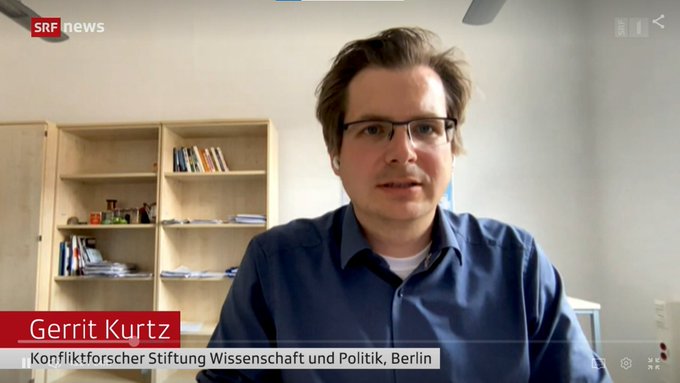
“There is a high risk of targeted attacks against civilians”

Aiyn Network, 22 June 2024

Quotes in: Experts ask for a new civilian protection force in Sudan, https://3ayin.com/en/civilprotection/

“Gerrit Kurtz, a researcher at the German Institute for International and Security Affairs, sees little chance of passing such a resolution via the UN Security Council and places more hope through regional mechanisms. “The UN Security Council is largely blocked because of the bad relations between Russia on the one side and the US, UK and France on the other among the permanent members. Therefore, only the AU Peace and Security Council or the AU Assembly could authorise an African deployment,” he said.”

“Kurtz warns of further mass atrocities perpetrated by hate speech. He expressed concern that the current polarisation is taking on a tribal dimension and that civilians arm themselves either for self-defence or to join a warring party. “There is a high risk of targeted attacks against civilians based on their ethnic identity if the RSF manage to capture El Fasher,” he said.”

“Kurtz argues that the international community could exert more influence over the warring parties, especially given the significant financial and military flows benefiting them.”

Stabilisation: Rethinking Pragmatic Conflict Management in Fragile Contexts with a Feminist Foreign Policy Lens

Contribution in: Claudia Zilla (ed.), Feminist Foreign and Development Policy in Practice. Requirements and Potentials, SWP Research Paper 2024/RP 09, 21.06.2024, doi:10.18449/2024RP09

Link to the contribution here.

Stabilisation in fragile contexts poses a particular chal­lenge for feminist foreign policy (FFP). The declared aim of stabilisation is to make constructive contributions to conflict resolution even in the most difficult situations of violent conflict and terrorist threats. This often means working with and within the existing local power structures in order to achieve short-term and pragmatic improvements in the secu­rity situation.1 In contrast, it is the essence of feminist approaches to foreign and development policy to critically examine patriarchal, neo-colonial and other power structures, and to strive for a transformation of social conditions.

The feminist critique of international efforts to­wards stabilisation problematises various aspects. Against the backdrop of a post-colonial perspective, it addresses the motives of those external actors who strive for stabilisation in other parts of the world. The rhetorical commitment to peace, democracy and human rights obscures unilaterally defined national interests, such as the containment of irregular migra­tion.2 There are also questions concerning whose security should be at the forefront of stabilisation projects if they rely on cooperation with patriarchal, exploitative local elites, whose struggle for dominance is responsible for violent conflicts.3 Gender roles and the safety concerns of women and other marginalised groups may be overlooked, despite goals to the contrary. Furthermore, feminist activists warn of a militarisation of the humanitarian space by link­ing the political goals of conflict management too closely with humanitarian support.4 The state-centric nature of stabilisation approaches is also worthy of discussion from a feminist perspective, as it is often the state that perpetrates violence, for example by deploying abusive security forces instead of protecting women and the civilian population in general.

The status quo in German stabilisation policy

Since 2017, Germany has been the world’s largest donor country in the field of civil conflict transforma­tion.5 In 2024, the Federal Foreign Office (FFO) had €400 million at its disposal for the three pillars of its integrated peace engagement: crisis prevention, sta­bi­lisation and peacebuilding.6 Other departments, in particular the Federal Ministry for Economic Coopera­tion and Development (BMZ), also support projects that serve stabilisation in fragile contexts in a broader sense. According to the Organisation for Economic Co-operation and Development (OECD), the Federal Government’s somewhat broader global expenditure on “civilian peacebuilding, conflict prevention and resolution” totalled US$960 million (around €875 mil­lion) in the last reporting year of 2022.7

Only the FFO uses the term “stabilisation” in the German context. It understands it as a contribution to “support political processes to contain violence, strengthen legitimate governance structures and facilitate initial steps towards reconciliation between conflict parties”.8 Stabilisation includes a range of instruments such as strengthening state institutions; security sector reform (SSR); disarmament, demobilisation and reintegration (DDR) programmes; rule of law; and peace mediation.9 Important partner coun­tries and regions that the FFO repeatedly mentions are Ukraine, the Lake Chad region and north-eastern Syria. The German government often works together with other donors and international organisations, for example within the framework of the stabilisation facilities of the United Nations Development Pro­gramme.

Gender issues have long played a role in German peace work.

Gender issues have long played a role in German peace work. The National Action Plan for the imple­mentation of the “Women, Peace and Security” agenda is an expression of this.10 In its guidelines on FFP, the Federal Foreign Office mentions stabilisation in the second guideline: “We systematically include women and marginalised groups in crisis Prevention, stabilisation and peacebuilding measures and take into account gender-specific risks. We want to achieve progress towards more gender-equitable societies and design our international crisis management to be gen­der transformative.”11

Specifically, the FFO primarily mentions projects to expand the rights, resources and representation of women (e.g. the training and deployment of “gender experts” by the Center for International Peace Opera­tions (ZIF)).12 In its efforts to improve the position of women and marginalised groups, the FFO thus con­tinues to operate within the existing system of con­flict resolution without fundamentally questioning its own approaches. However, the impact of experts trained in gender transformation remains limited if there is a lack of political will to embed the resulting viewpoints and perspectives within a more compre­hensive strategy.

Although both the FFP guidelines and the stabilisation concept of the FFO contain feminist principles that go beyond the 3Rs (rights, representation and resources), their practical significance is also some­times limited. One example: The stabilisation concept aims to use “gender-sensitive conflict analyses” to “help identify new approaches, scope for action and actors”. However, “conflicting goals” exist, especially where “male-dominated power players” need to be involved. Here, the FFO intends to present its prin­cipled position and “systematically weigh up short-term goals (e.g. a ceasefire) with medium- to long-term goals of societal transformation”.13 This state­ment could suggest that gender justice is a medium- to long-term task that stands in contrast to other stabilisation goals. However, the quoted paragraph also shows that the FFO explicitly acknowledges tensions between the goals of stabilisation and FFP, and that it at least makes an attempt to systematise its approach in critical situations. This is a step for­ward compared to earlier government documents, in which normative goals were given equal status and trade-offs were simply mentioned in abstract terms without specifying solutions.

In terms of resources made available for gender equality, German expenditure has fluctuated greatly in recent years. In the last reporting year of 2022, 50 per cent of official development assistance funds14 for civil conflict transformation were used for projects that pursue gender equality as a significant objective (score 1 of the OECD Development Assistance Com­mittee) and 2.8 per cent for those with gender equali­ty as the principal objective (score 2). By 2025, the FFO would like to achieve a funding level of 85 and 8 per cent, respectively, for these categories.15 Contrary to the corresponding equation of these indicators in the FFO guidelines, they are not congruent with the objec­tives of a gender-sensitive or gender-transforma­tive design. For example, a project can be aimed at women as the main target group (score 2) without questioning gender relations per se.

Some power-critical approaches of feminist research can be particularly beneficial for stabilisation projects.

Possible contributions of feminist foreign policy

A critically defined FFP can contribute to making stabilisation measures more effective, more resilient and more inclusive than before. It offers points of reference, assumptions, concepts and approaches that are already being discussed among stabilisation experts in order to examine previous practices in more detail and, in some cases, to find new answers. Some power-critical approaches of feminist research can be particularly beneficial for stabilisation projects.

FFP can help overcome one-sided liberal peacebuilding

Both in feminist research and in research on stabili­sation and peacebuilding, there is widespread criti­cism of “liberal peace”, that is, the idea that market reforms, a democratic opening and the resolution of armed conflicts are always mutually supportive.16 The focus on such long-term processes marginalises the agency of civil society,17 the political economy of the violence of wars18 and the mechanisms of exclusion that affect women in particular,19 to name just a few points of criticism.

The FFP perspective helps to identify structural aspects that lead to the continuation of violence. The one-sidedness of liberal peacebuilding can also be seen in the 3Rs in the context of peace processes: Involving women (representation), expanding their (nominal) rights by changing legislation or funding in­stitutions with a high proportion of women (re­sources) is important, but it is not enough. Women’s groups might be involved in peace processes despite their concerns not being taken into account. Often­times not even the agreed representation quotas are met. For example, the Juba Peace Agreement of 2020 stipulated a women’s quota of 40 per cent at all politi­cal levels in Sudan.20 This was never realised: The implementation of the peace agreement, on the other hand, strengthened the male-dominated secu­rity sector in Sudan and exacerbated the political crisis before the coup.21

An intersectional approach that combines feminist and post-colonial perspectives raises the question for whom and what should actually be stabilised. Exter­nal actors can only successfully pursue stabilisation if they support local efforts by legitimate authorities. The relationship between state institutions and the population is often fractured in fragile situations. State security forces in Nigeria, for example, sealed off villages because they suspected that insurgents were there; this was done instead of protecting the civilian population from looting and forced recruitment by armed groups such as Boko Haram. It is there­fore the declared aim of German stabilisation efforts in north-eastern Nigeria to strengthen the legiti­macy of state institutions, for example by en­abling communities to secure the supply of basic goods and services such as water, food, health and education.22 The feminist perspective helps to recog­nise that state institutions can only successfully imple­ment stabilisation efforts if the population accepts them as legitimate.

Analysis of power and security

Stabilisation projects require a continuous context and conflict analysis that takes account of the causes, actors and dynamics of armed violence. As experts in power-critical analyses, feminists can make decisive contributions. Gender-sensitive conflict analyses23 can reveal key dynamics that go far beyond the lack of participation of women. Moreover, some gender roles also contribute to violence,24 for example by making it easier for armed groups to recruit, as the FFO also mentions.25

A feminist understanding of security challenges the common assumptions of liberal stabilisation prac­tices. All too often, international actors pursue agree­ments with (often male-dominated) elites, even if they do not demonstrably curb violence or improve the population’s sense of security.26 “Stability and du­rabil­ity can simply mean that the men with guns continue to run the show and that the ‘trains run on time’”, writes Ní Aoláin.27

Instead of clinging to the next fragile elite deal, a feminist stabilisation policy could measure security using the concrete perceptions of women and other marginalised population groups regarding their daily lives. Surveys of those affected and other methods of regularly recording the perceptions of the local popu­lation should become important instruments for sta­bilisation projects.28 Only when all people feel safe in a place can they develop trust in local institutions and refrain from joining armed groups.

A feminist approach to conflict resolution

FFP offers alternatives to the Realpolitik of elite deals and to excessive liberal interventionism as common approaches to conflict management. Such alternatives are based on a “feminist ethic of care”, which can be helpful in the search for new approaches to conflict resolution. It stems from “care” because it combines moral action with attentive, patient listening and is open to continually balancing conflicting goals and adapting assumptions – instead of propagating a universalistic justice that is defined by its supposed contrast from presumably backward-looking local ideas.29 This ethic is feminist because it questions the (authoritarian) “script of patriarchy”.30

Feminist stabilisation based on such an “ethic of care” does not come from outside to resolve local conflicts, but instead deals with the global, regional and local relationships in which these conflicts arise. It is not just about involving women more in political processes because they would be more peaceful per se, but about questioning the hierarchisation between groups – for example men and women, elites and the population, young and old people – and the modes of action attributed to them in society in gen­eral. Feminist stabilisation policy pays particular attention to the local context and accepts that the effec­tiveness and moral clarity of measures are often fraught with uncertainty.31

Self-reflection and learning processes

Finally, feminist approaches can make an important contribution to monitoring, evaluation and learning processes through empathic self-reflection. These are particularly important in highly volatile stabilisation contexts, which need to be managed closely in order to adapt projects to rapidly changing circumstances. In the absence of a universally applicable stabilisation strategy, the constant testing and adjustment of meas­ures is crucial.32

FFP can help local and international stabilisation actors to reflect on all kinds of power structures as well as on their own roles. International stabilisation actors, for example, bring their own gender norms to fragile contexts and sometimes display an “inter­national fraternity” with local male elites.33 For exam­ple, sometimes there are ambassadors who proudly refer to their relationship with the authoritarian presi­dent of their host country during a civil war and hug him at every opportunity. However, diplomats and other stabilisation actors should not confuse their required empathy in political processes with sym­pathy for warlords. In addition, from the view of FFP, the habitual rhetorical commitment of many stabili­sation actors to cooperation with local organisations should also be taken seriously in practice – for exam­ple, by involving local grassroots organisations as early as possible in the design of projects.

FFP can provide a fresh approach, especially in contexts where it goes beyond the promotion of gender equality.

Conclusion

FFP helps to make stabilisation better, fairer and more context-sensitive by questioning traditional assumptions in the overall approach, analysis, processes, project design and impact assessment. In particular, it can provide a fresh approach, especially in contexts where it goes beyond the promotion of gender equali­ty. With its FFP guidelines, the FFO still falls short in fully embracing the possibilities of a feminist ap­proach. Feminist analyses reveal the unequal, often conflict-driven power structures that arise due to a lack of gender equality, but also the biased gender roles and mechanisms of exclusion along with other differentiating characteristics.

The further development and implementation of feminist efforts towards stabilisation is not just about normative human rights issues. Instead, the inclusion of feminist perspectives can also contribute to the pragmatic claim of stabilisation in fragile contexts34 – when it comes to placing empathy instead of arro­gance at the centre of conflict management, for example.

It is in the nature of stabilisation to focus on the status quo because situations are almost impossible to change in the short term and restoring order is the priority. Diplomats also act according to this logic, which is an expression of an intergovernmental sys­tem that often finds it difficult to build sustainable partnerships in fragile contexts that extend beyond national governments that are often detached from their populations. Implementing aspects of feminist foreign and development policy that are critical of power is therefore no easy task. However, feminist arguments can encourage ongoing processes of reflec­tion in the direction of stabilisation that is aimed at improving the relationship between the population and the government.

„Russland betreibt ein doppeltes Spiel“

IPG-Journal, 20.6.2024

Neuer Einfluss in Afrika? Gerrit Kurtz über russische Marinebasen, die Rolle Moskaus im Bürgerkrieg im Sudan und deutsche Interessen am Roten Meer. (Quelle)

Die Fragen stellte Constantin Grund.

Die Russische Föderation verstärkt durch eine neue Marinebasis ihre Militärpräsenz am Roten Meer. Wie laut schallt die russische Nationalhymne künftig über dem Roten Meer?

Das müssen wir noch sehen. Wir dürfen nicht vergessen, dass die Einrichtung einer russischen Marinebasis am Roten Meer schon seit mehreren Jahren im Grundsatz vereinbart war, allerdings wurde diese Vereinbarung bisher nicht umgesetzt. Kürzlich bestätigte der russische Vize-Außenminister laufende Gespräche, ließ aber durchblicken, dass das Abkommen noch nicht final sei. Neben Sudan verhandelt Russland auch mit Eritrea über eine Präsenz am Roten Meer. Dort scheinen die Gespräche schon sehr viel weiter fortgeschritten als mit Sudan.

Was beinhaltet das Abkommen konkret, und was steht möglicherweise auch nur zwischen den Zeilen?

Diskutiert wurde zunächst nur eine kleinere Basis für logistische Zwecke, die perspektivisch aber auch von der russischen Marine genutzt werden kann. Konkret sollen an dieser Basis bis zu 300 Soldaten stationiert werden und bis zu vier russische Militärschiffe andocken können. Dies war bereits seit längerem bekannt. Jetzt hat die sudanesische Seite als Gegenleistung für diese Basis neue Waffenlieferungen aus Russland ins Spiel gebracht, wenngleich dafür eine Bestätigung aus Moskau noch aussteht.

Die Ursprünge dieses Abkommens gehen ins Jahr 2017 zurück. Das Russland nahestehende sogenannte Afrikakorps hatte im Verlauf der aktuellen Auseinandersetzungen die Rapid Support Forces (RSF) unterstützt. Vollzieht Russland mit der neuen Kooperation jetzt einen Strategiewechsel im Sudan?

Auch vorher war schon deutlich geworden, dass Russland im Sudan ein doppeltes Spiel betreibt. Bereits vor rund einem Jahr waren führende Vertreter der sudanesischen De-facto-Regierung in Moskau und haben das Gespräch mit der russischen Führung gesucht. Der stellvertretende russische Außenminister war kürzlich in Port Sudan und hat sich dort sehr eindeutig auf die Seite der SAF, also der Armee, gestellt und mitgeteilt, dass Russland die aktuelle Regierung als die einzig legitime Regierung des Sudan anerkenne. Gegenstand der Gespräche war auch die Forderung der SAF nach einem Ende der Unterstützung des Afrikakorps für die RSF. Die russischen Vertreter haben dann die Existenz der ukrainischen Soldaten auf Seiten der SAF thematisiert. Bislang ist noch nicht klar, ob es tatsächlich zu einem Ende des Engagements des Afrikakorps im Sudan kommt.

Wenn es zu einer russischen Marinebasis käme, wäre dies dann ein Gamechanger für den innersudanesischen Konflikt? Kann man damit rechnen, dass die SAF mittelfristig die Oberhand gewinnt?

Damit würde ich nicht rechnen. Es wäre sicherlich ein Gamechanger, wenn das russische Militär selbst in den Konflikt eingreifen würde, so wie es das in Syrien seit dem Jahr 2015 getan hat. Danach sieht es momentan im Sudan nicht aus. Hier geht es vorrangig nur um die Lieferung von Waffen, von denen die Streitkräfte natürlich profitieren würden, aber am Ende braucht es nicht einfach nur bestimmte Waffentypen, sondern auch qualifiziertes Personal und taktische Fertigkeiten. An beidem mangelt es den Streitkräften bisher, um gegenüber den RSF wirklich Erfolge erzielen zu können. Von einem Gamechanger kann man daher bisher nicht sprechen.

Früher hieß es, Zentralasien sei das neue Great Game der internationalen Politik. Jetzt kann man den Eindruck gewinnen, am Roten Meer kulminierten die Interessen von sehr viel mehr Akteuren auf sehr engem Raum. Wie gefährlich wird das in Zukunft?

Ja, in der Tat. Auch über Sudan hinaus gibt es sehr viele Akteure, die sich gerade am Roten Meer konzentrieren. Die Angriffe der Houthis auf Handelsschiffe hatten Folgen, auch in militärischer Hinsicht, und führten zu einem stärkeren Engagement der US-Amerikaner und der Europäer. Es könnte noch weitere, anders gelagerte Auseinandersetzungen in der Region geben aufgrund der Bedeutung dieser geografischen Achse für den Handel zwischen Europa und Asien. Die direkten Anrainerstaaten wie Saudi-Arabien und Ägypten haben enorme Interessen, auf die andere Staaten wiederum reagieren müssen.

Sind deutsche außen- und sicherheitspolitische Interessen für die Region ausreichend definiert?

Deutschland hat am Roten Meer definierte Interessen. Dies zeigte sich deutlich an der zeitnahen Entsendung der Fregatte Hessen zum Schutz der maritimen Handelswege, die für Deutschland wichtig sind. Immerhin verfügt die Bundesmarine nur über drei solcher Schiffe. Eines davon für eine solche Mission abzustellen, und sei es nur zeitweise, ist definitiv ein commitment. Die Ergebnisse einer solchen Mission stehen immer auf einem anderen Blatt. Insgesamt bräuchte es sicherlich ein vertiefteres politisches Engagement in der Region mit einer stärkeren Schärfung unseres eigenen Interessenprofils.

Deutschland ist gerade stark mit Innenpolitik beschäftigt. Welche Bedeutung hat das für die Formulierung deutscher außen- und sicherheitspolitischer Interessen im Sudan und am Roten Meer?

Ich würde davon abraten, sich zu stark auf ein mögliches Abkommen für die Marinebasis zwischen Sudan und Russland zu konzentrieren. Der Krieg im Sudan ist an sich schon eine Bedrohung der internationalen Sicherheit und gleichermaßen eine humanitäre Katastrophe, die jeden Tag schlimmer wird. Dies ist die größte Vertreibungskrise der Welt und ich glaube, auch dort sind deutsche Interessen direkt betroffen. Deutschland hat ein Interesse an der Aufrechterhaltung einer regelbasierten Weltordnung. Zu diesen Regeln gehört auch das humanitäre Völkerrecht, gehören grundlegende Menschenrechte sowie der Zugang zu humanitärer Hilfe für Bedürftige. All dies wird im Sudan derzeit mit Füßen getreten.

Sudan-Experte: «Der Konflikt hat sich fragmentiert»

SRF Radio, Echo der Zeit, 7.6.2024

Seit über einem Jahr tobt im Sudan ein brutaler Konflikt. Es handelt sich dabei um eine der grössten humanitären Krisen der Welt. Trotzdem bleibt der Krieg weitgehend ausserhalb des Blickfelds der internationalen Öffentlichkeit. Wie die militärische Lage derzeit aussieht, schildert der Sudan-Experte Gerrit Kurz.

Power Relations in Sudan after the Fall of Bashir. From Revolution to War.

SWP Research Paper 2024/RP 05, 10.05.2024. doi:10.18449/2024RP05

Abstract

  • War has raged in Sudan since April 2023 following fundamental changes in the political balance of power in recent years. The previously dominant security sector is deeply divided and the once weakly organised civil society has mobilised.
  • Competition within the security sector made it possible to form a civil-military transitional government. Yet the continued rise to power of the Rapid Support Forces increased the risk of armed conflict, especially after the coup in 2021.
  • Since Bashir’s fall in 2019, the security forces have twice tried in vain to establish sole military rule. The civil-military transitional government also failed because the military still had considerable power resources at its disposal. Sudan’s political elite contributed to this outcome by paying too little attention to the establishment of transitional institutions and too much attention to its own visibility.
  • International actors who wanted to strengthen Sudan’s transition process could have repelled the security forces more decisively instead of reflexively accepting them. Many international as well as Sudanese efforts suf­fered from the fact that they viewed the inclusion or exclusion of the security forces as a binary issue.
  • A new non-inclusive, elitist deal with Sudan’s violent entrepreneurs will not bring peace if there are no civilian forces at the table. Instead, Sudan’s best chance lies in the social capital of its citizens’ voluntary commitment to humanitarian aid, democracy and local reconciliation.

How (Not) to Talk About the War in Sudan

Reporting about the war in Sudan is clouded by three oversimplified narratives – “forgotten conflict”, “war of two generals” and the “proxy war” classification. Gerrit Kurtz (SWP) calls for a more nuanced phrasing by journalists and policymakers.

Megatrends Afrika Spotlight 30, 22.4.2024

International reporting and political statements about the war in Sudan often echo three misconceptions about the origin, dynamics, and impact of the conflict. These biased views concern the lack of international attention, the role of the security sector and the interference of external actors – all important aspects of the ongoing conflict that should be highlighted. However, the chosen narratives often oversimplify and twist the discourse in problematic ways. It is understandable, and necessary even, that journalists and international policymakers use shortcuts to make the complex war in Sudan more comprehensible to non-experts. And, of course, there have been excellent reports and carefully considered statements. But biased narratives risk twisting the agency of national and international actors as well as their respective options to silence the guns in Sudan.

‘Forgotten conflict’

That the fighting in Sudan has received relatively scant international attention is incontestable. However, this has less to do with forgetfulness than, arguably, ignorance.

Judging from the number of high-level political statements, the amount of reporting by international outlets and how much of the target funds have been raised by the UN humanitarian appeal, the Sudan war seems marginal compared with today’s two main conflicts: Ukraine and Gaza. Over the past 12 months, for example, the German Chancellery mentioned Ukraine in 190 press releases and Sudan just three times. During the same period, The New York Times has run almost 10 times as many articles mentioning Gaza as those featuring Sudan and more than 13 times as many as articles mentioning Ukraine. And while the UN Flash Appeal for the Occupied Palestinian Territories is funded at 104 per cent, the 2024 appeal for Sudan had been funded at less than 6 per cent, according to the UN Office for the Coordination of Humanitarian Affairs (OCHA) (before the Paris conference pledged another US$2 billion on 15 April).

To be clear, there should be no competition where human suffering is concerned. All these conflicts (and others like them) demand attention as well as the resources and diplomatic capital that come with it. Discrepancies over resources and the amount of attention exist for such obvious reasons as geographical proximity, international linkages and the availability of media coverage.

But given the scale of the suffering in Sudan, the stark differences are striking. Sudan has become the world’s largest displacement crisis. Nowhere else have so many people been forced to leave their homes –  around 11 million, more than eight million of whom since the start of the war on 15 April 2023. With increasing urgency, the United Nations and humanitarian organizations are warning about an imminent famine and Sudan experiencing the “world’s largest hunger crisis”.

The source of the problem with framing the war in Sudan as “forgotten” lies elsewhere, however. The word itself implies that all we need to do is “remember” Sudan, even though many people here in Europe do not know much about it in the first place.

Furthermore, it suggests that the lack of attention is accidental, when, in reality, it results from deliberate actions by various actors – not least, the warring parties, which have clamped down on the media freedom of both Sudanese and international outlets. It was only recently that the de facto government authorities, which are allied with the Sudanese Armed Forces,revoked the licences of three Arabic-language media channels.

Donors also contribute to the ignorance, or even exacerbation, of the crisis in Sudan. Donor countries – including Germany – have slashed aid budgets in recent years. The European Union is asking Sudan’s neighbours Egypt and Libya to increase security along their borders and stem irregular migration via the Mediterranean. Sudanese people are among those trying to make their way along this route and suffering from the harmful practices encouraged under Europe’s hostile external migration policy. Indeed, it was EU support for Sudan under then President Omar al-Bashir that helped the Rapid Support Forces (RSF) grow in importance, even if the latter did not receive European funds directly.

The “forgetting” narrative relieves Western governments of their role in supporting the Sudanese security forces while marginalizing the peaceful resistance of Sudanese civil society, which continues to mobilize against militarization. In this way, this narrative ties in with a supposedly liberal-interventionist agenda that already existed in the “Save Darfur” campaign. To put it bluntly, such an agenda implies linking the problems of conflict-affected countries with local actors and finding their solutions outside these countries. In view of the current overburdening of Western actors to deal with the other major crises of this period, an excess of Western interventionism is admittedly not the greatest threat to Sudan at the moment.

‘War of two generals’

A more accurate description than “war of two generals” would be “war of militarization”, that is, a conflict which leads ever more to take up arms, reducing the space for those who seek to pursue political goals in a non-violent manner.

It is true that the leadership ambitions of both General Abdel-Fattah al-Burhan, the commander-in-chief of the Sudanese Armed Forces (SAF), and General Mohamed Hamdan Dagalo (aka Hemedti), the commander of the RSF, played a role in the outbreak of war last April. Behind the scenes, there was no love lost between the two: each wanted to be at the helm of the Sudanese security sector and perceived the other as a rival. Nonetheless, neither the origins of the war nor its evolution can be simply attributed to personal rivalry.

At the heart of the conflict is the struggle for control over Sudan’s security sector and, by extension, the state itself. Military governments have ruled the country for most of the post-independence era, exploiting the population in the peripheral areas. Whenever some members of those marginalized groups rebelled, successive Sudanese governments delegated ethnic militias and paramilitary forces to engage in the fighting. Former President Omar al-Bashir used those forces to create competition within the security sector and thereby keep the military in check and prevent it from challenging his rule.

The RSF was the most prominent – and ultimately most powerful – of the Sudanese paramilitary forces. It originated in the “Janjaweed” Rizeigat militia deployed to quell the insurgency in Darfur. Thus, the war that erupted in April 2023 has its origins mainly in the institutional competition between the SAF and the RSF for supremacy over the state.

Many civilian political leaders believe that the main responsibility for the war lies with the loyalists from the former Bashir regime’s National Congress Party (NCP). Many of the latter are now organized in the Sudanese Islamic Movement. Imprisoned, exiled or otherwise excluded from politics and public institutions by the transitional government installed in 2019, these Islamists have returned in force since the military coup of October 2021. Closely allied with the SAF, they operate from the shadows.

Perhaps more important, there are many more combatant forces which, formally, do not come under the direct command of either the SAF or the RSF. Even if they associate themselves with one or the other and fight alongside them, they still pursue their own opportunistic goals; and that may yet bring them into conflict with their current allies in the SAF or the RSF. Such forces include the Popular Defence Forces, operational units of the General Intelligence Service, individual militias, community self-defence groups, armed groups of current or former rebels, as well as foreign fighters and mercenaries. Moreover, armed groups have started new recruitment drives assisted by the SAF.

Despite this fragmentation, international mediation efforts are mainly focussed on the two main parties to the conflict and their respective leaders. In December and January, the Intergovernmental Authority on Development (IGAD) tried to arrange a face-to-face meeting between General Burhan and General Hemedti and set several dates. Less than 24 hours before a scheduled face-to-face meeting, the IGAD Chairman Djibouti had to cancel the meeting because Hemedti had other plans, namely to go on an extended regional tour to boost his international standing.

Bringing the leaders of the main warring parties to the table is a common mediation approach, but unfortunately it also excludes important third armed or unarmed parties from any peace negotiations. Previous peace processes in Sudan, including the Naivasha talks that ended the North-South war in 2005, suffered from this lack of inclusion. Perhaps most importantly, it is increasingly likely that even if Burhan and Hemedti signed a credible ceasefire agreement and sincerely intended to honour it, many of their allies would not abide by it. After all, Burhan could simply be replaced by another general who is closer to the Islamist forces that vehemently oppose an agreement with the RSF.

‘It’s a proxy war’

The third and final misconception is that the Sudan conflict can be classified as a proxy war, that is, one in which an external power indirectly engages in a conflict with another external power by supporting a warring party in a third country. This narrative risks diminishing the primary role that domestic actors are playing in the Sudan war – as well as the reasons why they are relying on international support in the first place.

It cannot be denied that there is considerable international interference in Sudan. Egypt and Iran are delivering arms (to the SAF), as is the UAE (to the RSF) via Chad. Eritrea is providing training camps for armed groups associated with the SAF. Fuel is reportedly being transported to the RSF from Libya and South Sudan, not necessarily always at the behest of the respective governments. And Ukrainian special forces are fighting against the RSF and Russian mercenaries in Khartoum, apparently in return for the SAF having supplied weapons to Ukraine.

Though probably not exhaustive, this list amply illustrates just how many external actors are interfering in Sudan and how the war cannot be reduced to a simple bipolar proxy conflict. For example, some commentators see the confrontation as being between the UAE and Saudi Arabia or the UAE and Iran, although there is no evidence that Saudi Arabia is currently providing military support to the SAF (and, if it were doing so, the RSF would have been unlikely to accept its mediation role, as the RSF has done several times by joining negotiations in Jeddah). Sudan’s most significant external military backers have been Egypt and the UAE, which, despite their differences over Sudan, have very close bilateral relations, as underscored by the recent announcement of an Emirati US$35 billion investment to develop Egypt’s coastline. Neither the SAF nor the RSF are proxies fighting on behalf of their external sponsors. They fight for their own interests.

The term “proxy war” makes it easier for outsiders to form a view about the complex conflict. It allows them to see the war as the manifestation of a rivalry between great or middle powers with which they are more familiar than with Sudan. The narrative suggests that an understanding among these external powers could be the primary means to end the war.

Similarly, a too narrow focus on the activities of external actors in Sudan could de-emphasize the interests of Sudanese civilians. If the war is predominantly about Russian and Iranian influence, for example, other international actors may seek to contain that influence by acquiescing to the demands of their Sudanese clients. Reportedly, the Sudanese authorities have so far rejected the Iranian request to build a naval base on the Red Sea, but they could use that request as a bargaining chip with the Saudis, Emiratis or Americans. For example, the SAF is demanding that civilian parties be excluded from any post-war interim government, which, they say, should be only a “technocratic” cabinet.

Faulty analysis leads to misguided policy

It matters how external observers frame political issues – especially when they mean well. A differentiated approach is important, precisely because relatively little is written about Sudan. Instead of “forgotten conflict”, observers would do better to speak of an “ignored conflict”, instead of a “war between two generals”, a “war between the main armies and their allies at the expense of the civilian population” or a “war of militarisation” of the country. And instead of “proxy war”, they would do better to speak of “external influence”.

In this way, it becomes easier to talk about effective entry points for German and European involvement in Sudan. These exist in particular where European actors have connections, influence and capacities or where they can support the existing efforts of Sudanese and regional actors. This includes revising the negative effects of European migration policy in the region, mobilising further aid funds, sanctioning the financial and military network of the conflict parties abroad more widely, reconsidering its own arms deliveries to countries such as the UAE and supporting civilian actors in Sudan and in exile with resources, expertise and mediation services.

Silencing the guns in Sudan is an extremely complex challenge to which European actors can only make a partial contribution. How they speak about what is happening in Sudan, however, lies squarely within their power.