The fall of El Fasher and mass atrocities in Darfur

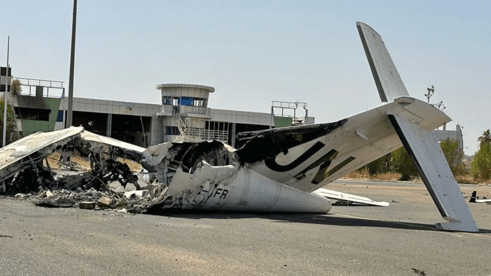
On 26 October 2025, the Rapid Support Forces captured the division of the 6th infantry division of the Sudanese Armed Forces, fully consolidating their control of El Fasher in the following days. Subsequently, reports of mass atrocities by the RSF against Zaghawa and other non-Arab people trapped inside El Fasher emerged.

I spoke to several media outlets about the fall-out and implications of these events.

Interview with DLF Kultur Studio 9, 28.10.2025

Interview with ZDF Heute Update, 28.10.2025

Interview with Phoenix Der Tag, 28.10.2025

Interview with ZDF Heute Journal, 29.10.2025

Interview with SR Kultur Bilanz am Abend, 29.10.2025 (from 3:40)

Interview with Deutsche Welle, 31.10.2025 (from 16:10) (in English)

Quotes in ZEIT Online, 05.11.2025

Interview with Deutschlandfunk, Informationen am Morgen, 08.11.2025

Quotes in Deutschlandfunk Kultur, 12.11.2025

Civilian perspectives on peace and humanitarian action in Sudan

I faciliated the kick-off panel at the conference “civilian perspectives on peace and humanitarian action in Sudan” that took place on 18 September 2025 in Berlin. The conference was organized by a coalition of 20 German civil society organizations.

Der Krieg im Nahen Osten und seine Folgen für Ostafrika

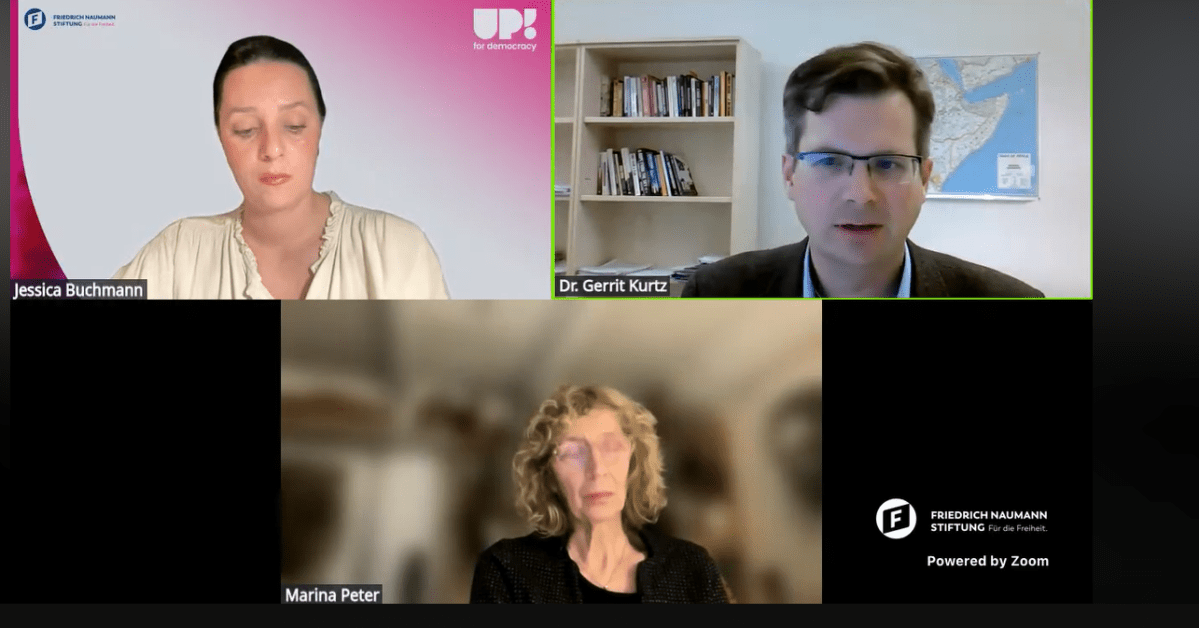
Online-Veranstaltung der Friedrich-Naumann-Stiftung, 27.August 2025

Gäste:

Dr. Gerrit Kurtz ist Wissenschaftler in der Forschungsgruppe Afrika und Mittlerer Osten der Stiftung Wissenschaft und Politik. Er hat am King’s College London in Friedens- und Konfliktforschung promoviert.

Dr. Hans-Jakob Schindler ist Senior Director des Counter Extremism Project (CEP) in New York und Berlin, Co-Vorsitzender des Advisory Board des Global Diplomatic Forum in London sowie Lehrbeauftragter der ASW Akademie AG in Essen.

Die beispielose humanitäre Katastrophe im Sudan

Zitate in Die Welt, 17.08.2025

Hoffnung auf eine baldige Beilegung des Sudan-Konflikts gebe es derzeit wenig, sagt Gerrit Kurtz von der „Stiftung Wissenschaft und Politik“ (SWP) WELT. Die USA bemühten sich zwar durchaus, doch die Trump-Regierung finde im Sudan keinen Ansatz für ihre „sehr transaktionale, ressourcenorientierte“ Diplomatie unter Präsident Donald Trump.

So wurde ein für Ende Juli in Washington geplantes Treffen der Außenminister der USA, Saudi-Arabien, den VAE und Ägypten im letzten Moment auf unbestimmte Zeit verschoben. Die RSF-Verbündeten aus den VAE und Ägypten, das traditionell auf der Seite von Sudans Armee steht, hatten sich nicht auf eine Abschlusserklärung einigen können. Es ging um eine Formulierung, die sowohl Sudans Streitkräfte als auch die RSF davon ausschließen sollte, eine führende Rolle in einer zukünftigen Regierungsstruktur zu übernehmen.

Sudan-Experte Kurtz hält es für höchste Zeit, dass der internationale Druck auf die Emirate erhöht wird, ihre Unterstützung für die Miliz einzustellen. Öffentliche Kritik bleibe weitgehend aus – auch von deutscher Seite. Als Beispiel für diese Zurückhaltung nennt Kurtz die Sudan-Konferenz in London vor einigen Monaten.

Aus Rücksicht auf den Golf-Staat hätten die Organisatoren – darunter Deutschland, Frankreich und Großbritannien – die RSF nicht einmal namentlich erwähnt, obwohl diese kurz zuvor im Zamzam-Flüchtlingslager über 1.000 Menschen getötet und rund 400.000 vertrieben habe. „Das haben viele Beobachter als ziemlichen Rückschlag empfunden“, sagt Kurtz, „und das völlig zu Recht.

Gespräch über Hintergründe zum Konfliktgeschehen in Sudan

Erschienen in UNEINS Magazin 3/2025, Juli 2025

Sudans Geschichte ist von zahlreichen Kriegen und gewaltsamen Konflikten geprägt. Können Sie uns einen Überblick zur Kolonialgeschichte des Sudan geben?

Zu Beginn des 19. Jahrhunderts war Sudan noch kein einheitlicher Staat. Das Gebiet war in unterschiedliche Sultanate und andere Herrschaftsformen unterteilt. Ab 1820 eroberten Kräfte aus Ägypten weite Teile des heutigen Staatsgebiets. Ägypten unterstand zu der Zeit der osmanischen Oberhoheit – der albanische Herrscher Muhammad Ali hatte es vorrangig auf Gold und Sklav:innen abgesehen, um seinen regionalen Einfluss zu vergrößern. Bereits unter dem turko-ägyptischen Einfluss galten dunkelhäutige Menschen aus dem Westen oder Süden als Sklav:innen, auch wenn sie Muslime wurden.

Gegen Ende des 19. Jahrhunderts setzte sich zunächst eine einheimische Widerstandsbewegung um den Mahdi durch, eine religiöse und politische Erweckungsfigur, die einen erfolgreichen Aufstand gegen die koloniale Besatzung anführte (1883-98). Dabei gerierte sich die Mahdi-Herrschaft als Verteidiger marginalisierter Gruppen – die Armee bestand überwiegend aus Menschen aus Darfur und dem Süden. 1898 besiegten britische Truppen die Mahdi-Herrschaft und dehnten damit ihre Dominanz des Nilbeckens von Ägypten bis nach Sudan aus. Den Süden des Landes erklärten die Kolonialherren ab den 1920ern zum „geschlossenen“ Gebiet, wodurch der Aufbau von Infrastruktur und Zugang für Nicht-Einheimische beschränkt wurde. Das Sultanat von Darfur wurde erst 1916 Teil Sudans.

Die britisch-ägyptische Kolonialherrschaft beutete Rohstoffe, Arbeitskraft und Land in fruchtbaren Gebieten des Sudan im Zentrum aus. Gleichzeitig hatte Großbritannien das strategische Ziel, den eigenen Einflussbereich am Nil zu erweitern. Der Nil war zur Kontrolle von Ägypten entscheidend und Ägypten wiederum für den Suez-Kanal und die Route nach Indien. 

1956 wurde der Sudan unabhängig. Mit welchen Herausforderungen war das Land in Folge konfrontiert? 

Die Geschichte des Sudan seit der Unabhängigkeit ist geprägt von Bürgerkriegen und Militärherrschaften, aber auch von zivilen Aufständen dagegen. 

Seit 1956 wurde der Sudan die meiste Zeit von Militärs, die durch Putsche an die Macht kamen, regiert. Im selben Zeitraum gab es aber auch drei zivile Aufstände, die zum Sturz der jeweiligen Militärregierungen führten. Die Oktoberrevolution von 1964, die die Militärherrschaft von Ibrahim Abboud beendete, und der Aufstand 1985, der zum Sturz von Jafa’ar Nimeiri führte, sind bis heute wichtige Bezugspunkte, auf die sich z.B. auch die Revolutionsbewegung 2018/2019 berief. 

Zwei von insgesamt drei großen Bürgerkriegen im Sudan fanden zwischen Rebellenbewegungen im Süden – dem heutigen Südsudan – und Regierungen im Norden des Sudan statt. Der erste Bürgerkrieg von 1955 bis 1972 endete mit Zugeständnissen zugunsten der Autonomie des Südsudans. Im zweiten Bürgerkrieg von 1983-2005 waren die Kämpfe zwischen der Rebellenbewegung Sudan People’s Liberation Movement (SPLM) sowie einer abtrünnigen Fraktion, die von der Regierung in Khartum unterstützt wurde, über weite Teile verlustreicher als Auseinandersetzungen zwischen SPLM und Regierungsarmee. 

Zu Beginn des 21. Jahrhunderts brach ein weiterer Bürgerkrieg aus. Welche Ursachen gab es für den Darfur-Konflikt?

Die Geschichte und Politik Sudans ist geprägt von der Ausbeutung von Ressourcen und Arbeitskräften der Peripherie durch die wechselnden politischen Akteure im Land. Dies führte zu Gegenbewegungen in verschiedenen Teilen des Landes, besonders im Westen in der Region Darfur. Anfang der 2000er bildeten sich dort Rebellenbewegungen, gegen die die Regierung einen Krieg führte. Dieser wirkte sich stark zu Lasten der Zivilbevölkerung aus. 

Für den Darfur-Konflikt sind Auswirkungen der Klimaveränderung von großer Bedeutung. Sie betreffen die Region besonders stark; die erratischen Regenfälle und die Ausweitung der Wüste nach Süden führten zu einer Veränderung der saisonalen Migrationsbewegung. Das veränderte das Verhältnis zwischen nomadischer und sesshafter Bevölkerung, die oft unterschiedlichen Volksgruppen angehören, die „arabisch“ bzw. „afrikanisch“ gelesen werden. Dieses Konfliktpotential wurde von verschiedenen Seiten weiter politisiert und instrumentalisiert. 

Die Rebellen kamen aus nicht-arabischen Bevölkerungsgruppen aus Darfur, insbesondere den Zaghawa, Fur und Masalit. Gegen diese setzte die damalige Regierung unter Omar al-Bashir bereits bestehende Milizen ein, die sich aus arabischen Volksgruppen rekrutierten. Diese Milizen wurden bewaffnet, ausgebildet und arbeiteten mit dem formalen Militär zusammen. Sie wurden lokal Janjaweed (“Teufelsreiter”) genannt. Aus einer Gruppe der Janjaweed entstand 2013 die paramilitärische Miliz Rapid Support Forces (RSF), die im aktuellen Konflikt eine große Rolle spielt. Die Janjaweed gingen oft brandschatzend, plündernd und mordend gegen die nicht-arabische Zivilbevölkerung vor. Millionen von ihnen wurden vertrieben und blieben teilweise auch 20 Jahre nach Beginn des Kriegs noch in Vertriebenenlagern.

Die RSF besiegten die meisten bewaffneten Rebellengruppen schließlich, deren Reste sich nach Libyen zurückzogen. 2020 handelten Vertreter dieser besiegten Gruppen mit RSF und der Armee ein Friedensabkommen aus, das ihnen den Zugang zur Macht brachte und den Konflikt beendete – letzteres allerdings nur auf dem Papier.

2011 wurde der Südsudan unabhängig. Was bedeutete das für den Rest Sudans?

Die Unabhängigkeit Südsudans war in dem Umfassenden Friedensabkommen von 2005 als Möglichkeit vorgesehen. 2011 entschied sich die Bevölkerung des Südsudans in einem Referendum für die Unabhängigkeit. Dadurch verlor der Rest Sudans seine wichtigste Einkommensquelle: Ein Großteil der Staatseinnahmen und des Brutto-Inlandsprodukts kam aus der Ölindustrie. Die meisten Ölquellen befinden sich jedoch im Südsudan. Auch erhebliche Transferzahlungen für den Transport des Öls über Pipelines in Sudan zum Roten Meer konnten den Verlust dieser Einnahmequelle nicht ausgleichen. Das wurde zum Problem für das Regime von Omar al-Bashir. Das Regime praktizierte ein Patronage-Modell, durch das Treibstoff, Mehl und Medikamente für Eliten und die städtische Bevölkerung stark subventioniert wurde. Im Herbst 2018 wurden diese Subventionen zurückgefahren, was zu Protesten führte, die sich zuerst gegen den daraus folgenden Anstieg von Brotpreisen richteten.

Zur Revolution 2018/2019 und der Rolle der Jugendbewegungen darin gibt es bereits einen Beitrag im vorliegenden UNEINS Impulse. Können Sie uns erläutern, was nach dem Sturz von al-Bashir geschah?

Nach monatelangen Massenprotesten kam es schließlich zum Sturz von Bashir im April 2019. Das Militär und der Geheimdienst, die Bashir in einer Palast-Revolte entfernt hatten, glaubten, durch die Entfernung dieser Führungsfigur das System bewahren zu können. Das durchschauten die Protestierenden allerdings sofort. Sie verweigerten den Abbau des großen Protestcamps vor dem Militärhauptquartier im Zentrum von Khartum und forderten: “Wir wollen eine Madaniya, eine zivile Herrschaft”. Das Protestcamp bestand mehrere Monate lang. Im Morgengrauen des 3. Juni 2019 überfielen und zerstörten Sicherheitskräfte das Protestlager, töteten über 120 Menschen, vergewaltigten und verfolgten einzelne Protestierende. Doch trotz Internetsperren schaffte es die sudanesische Zivilgesellschaft Ende Juni, eine nie dagewesene Mobilisierung auf die Beine zu stellen – nicht nur in Khartum, sondern im ganzen Land. Gleichzeitig gab es Verhandlungen auch mit Unterstützung der Afrikanischen Union und Äthiopiens zwischen politischen Parteien, Gewerkschaften, Berufsverbänden und dem Militär, die schließlich im Sommer 2019 zur Einigung auf eine zivil-militärische Übergangsregierung führten. 

Wie kam es zum Kriegsausbruch 2023?

Der Übergangsregierung kam zunächst große Unterstützung und Euphorie in Sudan und in der Welt zuteil. Zu diesem Zeitpunkt war der Staat jedoch bereits ausgelaugt. Die Ministerien waren zuvor von Personen besetzt, die oft unqualifiziert waren, weil sie nur aufgrund ihrer Loyalität zum Regime diese Posten erhalten hatten. Sie wurden breitflächig entfernt, der Staat hatte im Anschluss jedoch sehr wenige Kapazitäten, um Reformen umzusetzen. In der Folge gab es Unruhen, gleichzeitig versuchten auch Kräfte des gestürzten Bashir-Regimes – er selbst war im Gefängnis – zurückzukommen. Diese Regierung hielt sich für rund zwei Jahre, bis es zu einem Putsch kam. Die paramilitärische RSF und die Armee putschten zusammen, bzw. sie entfernten die zivilen Anteile der Regierung, da sie selbst schon in der Regierung vertreten waren. Ihr Ziel war es, eine Technokraten-Regierung ohne zivile Parteien durchzusetzen. Das wollte die Zivilbevölkerung aber nicht zulassen. Es kam erneut zu langanhaltenden Protesten.

Konsultationen in diesem Zeitraum wurden von der zivilen Mission der Vereinten Nationen UNITAMS zusammen mit weiteren Akteuren geführt. Zum Sommer 2022 zeigte sich das Militär offen für Gespräche mit den zivilen Politikern der vorherigen Regierung, die fortan überwiegend unter sich im kleinen Kreis verhandelten, um die Putschsituation zu beenden. Sie einigten sich im Dezember 2022 auf ein sogenanntes Rahmenabkommen, mit dem der Grundstein für eine ausschließlich zivile Regierung gelegt werden sollte. Zuvor sollte es zur Beilegung von Streitfragen kommen, zu der auch das Thema der Sicherheitssektorreform gehörte: Wie sollte der Sicherheitssektor konkret organisiert werden? In welchem Zeitraum sollte die RSF in die Armee integriert werden? Wem sollte die RSF in der Zwischenzeit unterstehen? Am Ende gab es keine Einigkeit. Das war der Auslöser für die Schüsse und den Ausbruch des Kriegs zwischen den RSF und der sudanesischen Armee am 15. April 2023. Gleichzeitig war es eine Gelegenheit für Kräfte des früheren Regimes von Bashir, ihre Machtbasis auf Seiten der Armee und zulasten jedweder demokratisch gesinnter Kräfte zu vergrößern.

Im Unterschied zu vorherigen Bürgerkriegen Sudans begann dieser Krieg also im Zentrum des Landes und der Macht zwischen zwei konkurrierenden militärischen Einheiten. Auch wenn viele in der Zivilbevölkerung grundsätzlich beide militärischen Lager ablehnen, reicht der Krieg mittlerweile immer stärker in die ethnisch-sozialen Differenzen der Gesellschaft hinein. Hassrede und ethnisch basierte Mobilisierung spielen auf allen Seiten eine zunehmende Rolle.

Welche Rolle spielen internationale Akteure im aktuellen Konflikt?

Die internationale Einmischung ist massiv. Ausländische Regierungen unterstützen die Kriegsparteien und verlängern dadurch den Krieg. Auf der einen Seite unterstützen vor allem die Vereinigten Arabischen Emirate (VAE) die RSF, auch wenn sie das immer wieder leugnen. Diese Unterstützung geht über viele Nachbarstaaten des Sudans weiter, wo sich die VAE Einfluss erkauft haben, insbesondere über Tschad, Südsudan, aber auch über Uganda und Kenia sowie über Teile Somalias. Auf der anderen Seite steht die Armee, die die Regierung kontrolliert und auch von den Vereinten Nationen (VN) anerkannt wird. Sie sitzt mittlerweile in Port Sudan, da Khartum zwischenzeitlich stark umkämpft war. Die Armee wird militärisch von Ägypten unterstützt, dem traditionell wichtigsten Verbündeten. Zusätzliche Waffen und andere militärische Unterstützung kommen aus Iran, der Türkei, und von Russland. 

Protecting Civilians in Sudan

Even without a Ceasefire, There Are Ways to Curb the Brutal Violence against the Civilian Population

SWP Comment, 8 July 2025 (available in German, too)

The war in Sudan, which broke out on 15 April 2023 between the Sudanese Armed Forces (SAF) and the paramilitary Rapid Support Forces (RSF), has triggered the largest humanitarian crisis in the world. Civilians are being directly attacked by the warring parties. The violent actors are destroying civilian infrastructure and blocking humanitarian aid as part of their war strategy. Some are also targeting members of specific identity groups, including on an ethnic basis. At the same time, the parties to the conflict claim to be protecting the civilian population. International efforts to pro­tect the civilian population or particularly vulnerable groups have so far been largely unsuccessful. Calls for military intervention have little chance of success in the current global situation. In fact, the committed efforts of Sudanese citizens to protect themselves and others around them deserve more attention and support. Pro­tection efforts can help alleviate the suffering of the civilian population, even if an end to the war remains out of reach.

On Sunday, 13 April 2025, the RSF captured the Zam-Zam IDP (internally displaced per­sons) camp in North Darfur. Until then, it had been the largest camp for IDPs in Sudan, containing at least half a million people. Some of them had been living there for more than 20 years, since the time they had fled from the RSF’s predecessors. According to the United Nations (UN), around 400,000 people fled the camp in just two days follow­ing its capture by the RSF, and more than 400 civilians were killed in or near the camp. One survivor told Reuters that the RSF killed 14 people who had taken shelter in a mosque. Mohammed, another survivor, said in an online press interview that the RSF had labelled the residents as “slaves”. He said that armed young people from the camp had con­tinued to resist the RSF until their ammu­nition ran out. “Without them, many more people would have been killed”, he said.

Conversely, the RSF said on their official Telegram channel that they had saved the people in Zam-Zam from the “mercenaries” in the “military base”. Abdelrahim Hamdan Dagalo, deputy leader of the RSF, was there himself and had ordered the “securing” of the camp, according to the RSF. Its leader, Mohammed Hamdan Dagalo, Abdelrahim’s brother, announced the formation of a gov­ernment for “peace and unity” in a speech two days after the camp was captured. This government is supposed to serve all Suda­nese, especially those who “have ever felt forgotten, marginalised or excluded”, said RSF leader Dagalo, who is also known as Hemedti.

At the Sudan conference in London on 15 April 2025 – the same day as Hemedti’s speech – the states and international orga­nisations present were unable to agree on a joint final declaration. Egypt and Saudi Arabia, both supporters of the SAF, and the United Arab Emirates (UAE), supporters of the RSF, were able to block an agreement. Less than one-sixth of the required inter­national aid for Sudan and the neighbour­ing states was pledged at the conference.

The protection of civilians has long been politicised in Sudan. All parties to the con­flict claim not only to be fighting in the interests of the civilian population, but also to be taking specific measures to protect them from violence. These claims are in stark contrast to their actual behaviour.

Civilians as a target

Violence against the civilian population is not a mere by-product of warfare in Sudan, it is an intrinsic aspect of the behaviour of the warring parties and their respective allies. Both the UN as well as national and international non-governmental organisa­tions (NGOs) have presented numerous detailed reports on the human rights situa­tion in Sudan. At the same time, difficulties in accessing certain regions and the some­times severely restricted telecommunica­tion services mean that many incidents are un­likely to appear in the reports. As a result, there are no exact figures on how many people have already died in the war. How­ever, it is likely that the number of direct and indirect victims has passed six figures.

The danger to the civilian population is first and foremost due to the type of mili­tary action: When using artillery, barrel bombs or other explosive weapons in cities, the warring parties do not differentiate sufficiently between combatants and non-combatants. The RSF shell hospitals with artillery and strike power stations and other civilian infrastructure with drones; the army shells schools, markets and residential areas. Both parties arrest, torture and kill humani­tarian personnel, volunteers and human rights defenders, who they accuse of cooper­ating with the other side. These are the find­ings of the Fact-Finding Mission on Sudan set up by the UN Human Rights Council.

The RSF are looting and pillaging in the places they conquer. Instead of receiving adequate pay, their troops are given a licence to loot. In addition, the RSF use sexual violence across the board, destroy agricultural equipment and rob warehouses, which jeopardises the food supply. In the Zam-Zam camp, RSF units killed the last remain­ing medical staff belonging to the NGO Refugees International before capturing it.

According to the UN panel of experts, 10,000 to 15,000 people are said to have been killed in attacks by the RSF between June and November 2023 in El Geneina, the capital of West Darfur. As a result of these attacks, a large part of the Masalit community fled across the border to Chad – their expulsion was obviously a goal of the RSF. The US State Department formally catego­rised the RSF’s actions as genocide.

The warring parties also benefit from massive external support – military, logis­tical, financial and political. The RSF are primarily supported by the UAE, with Chad, South Sudan, Uganda, Kenya and the Somali region of Puntland making their respective contributions. The SAF cooperate primarily with Egypt, Russia, Turkey, Eritrea and Iran.

However, the violence against the civilian population is not only being committed by the RSF and the SAF. Although the war began as a war between these military units, it has now spread to segments of society. Both sides use ethnically connoted rhetoric to mobilise and recruit. Some units are recruited on a tribal basis; they see the fight as an opportunity to realise their own goals against hostile groups.

Events in the state of Al-Jazeera illustrate the complexity of the violence: The RSF con­trolled the central Sudanese state – to which many people had also fled from Khartoum – between December 2023 and January 2025. The Sudan Shield Forces militia – under the leadership of Abu Aqla Kikel, a former SAF officer – played a key role in this. Under his leadership, the RSF captured the state capital, Wad Madani. In October 2024, however, Kikel defected back to the army and secured the recapture of the state a few months later.

Armed conflicts had not affected Al-Jazeera in the past. It was home to the country’s most important granary. In prior decades, seasonal labourers from other parts of the country – and from what is now South Sudan – went there. They settled there and were known as “Kanabi”. Many of them lived in camps outside the villages of the local population. The state did not provide these camps with public services such as schools and health centres, which were available in the established villages. The RSF knew how to capitalise on the resulting latent tensions by using the lan­guage of the disenfranchised. However, many Kanabi came from so-called “African” ethnic groups from the west of the country and were not treated equally by either the RSF or the Shield Forces, as a women’s rights activist from Al-Jazeera described. The RSF attacked villages they suspected of being close to Kikel after he rejoined the army. Conversely, Shield Forces attacked the Kanabi after recapturing Wad Madani for the army in early 2025.

Although many displaced people are now returning to Al-Jazeera, their relations with other ethnic groups and their confidence that the state will protect them have been severely damaged. The violence against the civilian population is also a consequence of the practice of outsourcing violence to militias and an exploitative state, which Sudan has known for decades.

Calls for international protection

At the international level, the brutal vio­lence against the civilian population in Sudan is a recurring theme of official bodies. Both the UN Security Council and the Peace and Security Council of the Afri­can Union (AU) took up the issue in 2024, but they were unable to take effective action. In June 2024, the UN Security Coun­cil passed a resolution that demanded that all warring parties protect the civilian population and that the RSF end its siege of El-Fasher, the capital of North Darfur. In October 2024, UN Secretary-General António Guterres presented a report on the protection of civilians in Sudan, but it contained hardly any measures that the UN Security Council could take itself. A draft resolution submitted by the United King­dom and Sierra Leone failed in November 2024 due to Russia’s veto; it would have instructed the Secretary-General to work with the warring parties to develop a mechanism to implement their previous voluntary commitments.

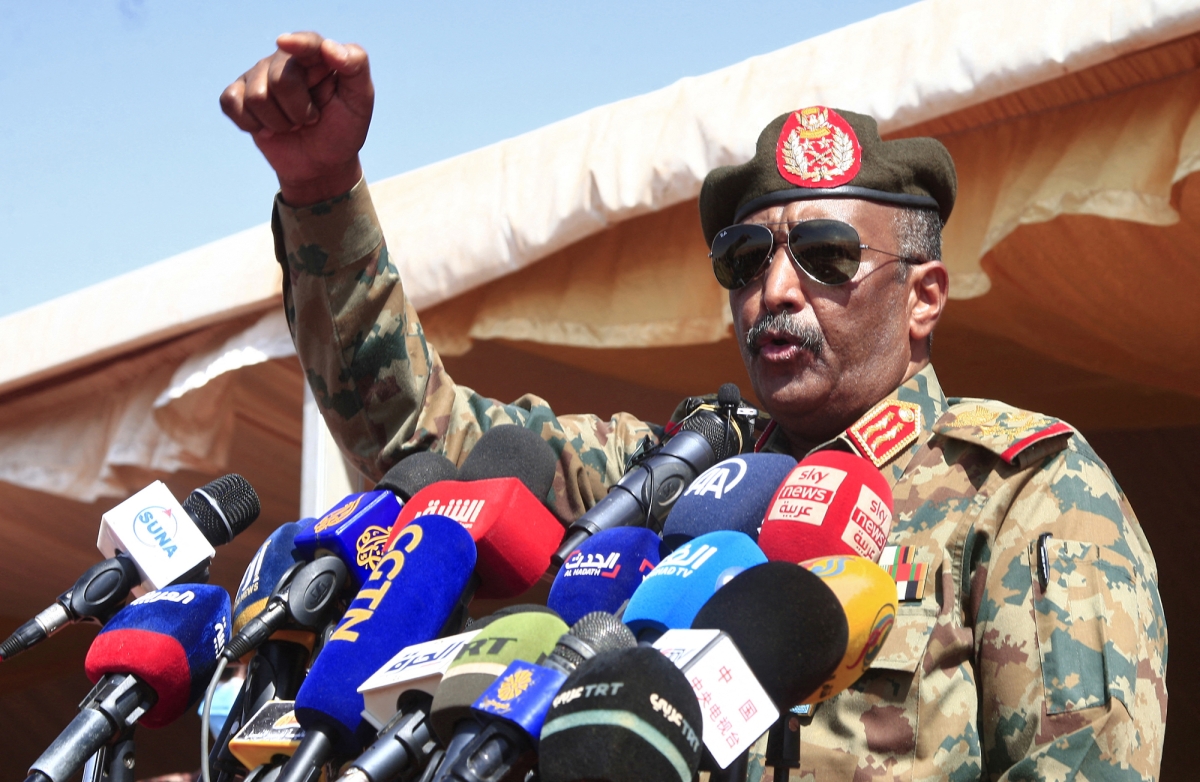
On 11 May 2023, shortly after the start of the war, the SAF and the RSF had already agreed on the Jeddah Declaration of Com­mitment to Protect the Civilians of Sudan after mediation by the United States and Saudi Arabia. It lists in detail existing obli­gations arising from international humanitarian law and international human rights law. This declaration remains one of the few common reference documents on the protection of civilians in Sudan. However, it does not contain a mechanism to monitor compliance with these obligations, review incidents or penalise violations. The United States exerted considerable pressure on the warring parties in 2024 and steadily increased the sanctions on senior leaders, including RSF leader Dagalo and SAF leader Abdelfattah al-Burhan. This pressure appears to have temporarily reduced the number of RSF attacks on El-Fasher.

The European Union (EU) is working towards an agreement between the warring parties on the protection of civilian infra­structure. This should explicitly serve as a starting point for further talks. However, in view of the widespread attacks on markets, hospitals and power stations, no agreement has yet been reached.

The idea of a military or civil-military mission to protect the civilian population has attracted international attention. The US administration under Joe Biden fuelled the discussion about a mission led by Afri­can states or the AU – but the proposal was met with little enthusiasm from the latter. Representatives of the Intergovernmental Authority on Development (IGAD) spoke of a task force of up to 4,500 soldiers to monitor the implementation of the Jeddah Declaration. The UN Fact-Finding Mission on Sudan called for a protection mission, as did the then civilian Sudanese coalition Taqaddum, whose chairman, Abdallah Hamdok, also demanded a no-fly zone and security zones that would grad­ually expand.

However, these demands were strictly rejected by the parties to the conflict. Fur­thermore, practical problems were hardly discussed, such as how a large number of troops could be deployed to secure the most important combat zones and how such a mission could be financed. Even during the joint UN-AU mission in Darfur (UNAMID), which was withdrawn at the end of 2020, the security forces obstructed the mission’s active protection measures. Without the consent of the parties to the conflict and without a ceasefire, a new military mission in Sudan would effectively mean entering the war. So far, nobody seems willing to do this.

Local protection measures

At the local level, Sudanese actors are in­volved in protecting segments of the popula­tion. At the beginning of the war in particu­lar, there were a whole series of successful efforts to achieve local ceasefires, not least due to indications that the decisive battle would be fought in the centre and would not be decided in a provincial capital.

The best known – and longest lasting – efforts were those of the Elders and Media­tion Committee in El-Fasher, the capital of North Darfur state. High-ranking and com­mitted citizens of the town took the initia­tive on the third day of the war to at least ensure the proper and speedy burial of the bodies. They quickly agreed with the local representatives of the SAF and the RSF on a ceasefire and the deployment of police forces between their respective districts in the city. The committee monitored the ceasefire, clarified the movement of troops and handled any incidents. To do this, it was able to build on a long tradition of col­lective conflict management as well as its relationships and social capital with local commanders and the population. The gov­ernor of North Darfur supported the ini­tiative. A few months later, the committee also integrated representatives of armed groups from Darfur, whose leaders held gov­ernment positions (in a government controlled by the SAF) but were still mili­tarily neutral at the time.

Similar efforts were also made in other towns, for example in Ed-Daen, the capital of East Darfur – where merchants in par­ticular campaigned for peace in order to retain access to the market – or in An-Nuhud in West Kordofan. The UN Develop­ment Programme (UNDP) Sudan commissioned a study on these local peace efforts that has been made available to the author and will be published soon.

A central lesson of this revealing study is that, in Sudan, protection and peace efforts at the local level always originate from local social structures. These were often tradi­tional authorities and religious leaders, who sometimes worked together with lawyers, merchants and young activists. Humanitar­ian negotiations could often serve as a gate­way for further talks: Negotiations on medical access or the burial of war victims developed into a dialogue with the parties to the conflict, thereby improving the situa­tion of the civilian population as a whole. According to the study, this shows how important the peace aspect is in the triple nexus of humanitarian aid, development cooperation and peace-building. It was also essential for the local peace efforts to affect and include all of the relevant social groups on the ground, as long as this did not jeop­ardise their impartiality.

Nevertheless, each of the initiatives analysed also exhibited considerable weak­nesses, which are also known from other contexts (see below). Another finding from the study is that areas with a longer ex­perience of armed conflict were often better prepared to negotiate with marauding gangs and militias than the populations in those parts of the country that had been spared fighting for decades.

That said, protection should not be equated with peace measures. If there is no ceasefire, people take measures to protect themselves and those closest to them. The most important measure is to take flight. Sudan is currently experiencing the largest displacement crisis in the world. People are fleeing within the country (or to other countries) not only because of the immedi­ate war, but also because of the danger of attacks by the armed actors, hunger, and because food production and basic supplies have collapsed.

The population movements are of stra­tegic importance for the parties to the con­flict: If a warring party conquers an area and subsequently holds it, it makes a big difference to its legitimacy as to whether the civilian population flees, stays or even returns. Time and again, civilians had placed their hopes for protection in the army, which then retreated before the RSF captured a town.

Taking up arms themselves

Some people in Sudan do not want to run away, but to confront the danger to them­selves and their communities. They join the army, the RSF or one of the numerous militias, armed groups and self-defence units. Of course, widespread recruitment serves the strategic goals of the warring par­ties. There are often few other opportuni­ties for young men to earn money, espe­cially in areas where the economy has been severely damaged. There are also reports of forced recruitment and the use of minors. For some, however, the motivation to pro­tect themselves and others also plays a role.

According to a leaked internal report by the Sudanese Islamic Movement, more than 650,000 people were “mobilised” and more than 2,200 training camps were set up in the first year of the war alone. These figures refer to the areas under the control of the army.

Armed groups from Darfur have at times been involved in the protection of humanitarian supplies, refugee movements and segments of the civilian population. How­ever, as these armed groups came under increasing fire from the RSF, they ended their impartiality and declared their full support for the army in November 2023. In January 2025, the Sudan Liberation Army (SLA-AW) under Abdel Wahid al-Nur and the Gathering of Sudan Liberation Forces (GSLF) under Tahir Hajar founded a so-called neutral protection force, which was also intended to protect deliveries of civil­ian goods, but which in turn came under fire from the RSF. In addition, the GSLF’s alliance with the RSF from February 2025 called into question the impartiality of this protection force.

Humanitarian protection

Protection is a core task of humanitarian aid. Nevertheless, humanitarian actors do not necessarily agree as to what exactly constitutes humanitarian protection. The generally accepted definition of humanitarian protection, as established by the Inter-Agency Standing Committee, is not easy to grasp at first glance. Its core message is that humanitarian actors should ensure – at least in their own emergency relief work – that they protect vulnerable groups and respect the civilian status of the population.

At a local level in Sudan, networks of mutual aid – the Emergency Response Rooms (ERRs) – also fulfil protection func­tions. The ERRs, of which there are hun­dreds throughout the country, are best known for their soup kitchens, which they use to ensure the food supply of neighbouring communities, primarily in areas that are rarely accessible to international actors. The ERRs are based on the Sudanese concept of nafeer, a traditional practice of mutual support in the community. The regular joint activities of people from different back­grounds contribute to social cohesion and thus defy the polarisation caused by the war to a certain extent.

However, the ERRs go even further. In Khartoum, for example, they maintain safe spaces for women and children and also offer psychosocial support for the many traumatised people. Finally, the ERRs’ pro­tection committees help those affected to move from high-risk areas to other parts of the country. To this end, they carry out their own risk assessments in order to prior­itise the evacuation of particularly vulner­able people. They also continually research which routes are currently safe and acces­sible. According to their own statements, the ERRs have helped around 200,000 people to relocate from the capital region alone since the start of the war.

Sudan has a nationwide structure for the coordination of mutual humanitarian aid, the Localisation Coordination Council. ERRs from 13 (out of a total of 18) federal states, 9 national NGOs and, as observers, 6 inter­national NGOs participate in the arrangement. For example, the Council helped vol­unteers in Al-Jazeera to set up ERRs and evacu­ate people after the state was cap­tured by the RSF.

International aid organisations, NGOs and the UN support the ERRs and can also improve the protection of vulnerable groups in Sudan through their own measures. The presence of international aid organisations in an area can, in principle, help to ensure the non-discriminatory distribution and or­ganisation of aid. However, the authorities in Port Sudan have not yet allowed the UN to maintain permanent bases in the areas controlled by the RSF in the west, which is why international aid organisations only come to these areas on a temporary basis. Their work is made more difficult by the significant bureaucratic, logistical, financial and security challenges. It can take weeks for lorries from the Chadian border or from Port Sudan to arrive in parts of Darfur. The first UN convoy from Port Sudan to El-Fasher in a year was bombed near Al-Koma in June 2025, killing five humanitarian workers.

In August 2024, high-level UN humanitarian diplomacy succeeded in reopening the border crossing to Chad in Adré, which has remained open ever since. However, the bureaucratic obstacles of the Humanitarian Aid Commission (HAC) on the SAF side and the Sudan Agency for Relief and Humanitarian Operations (SARHO) on the RSF side are massively hampering the work of inter­national aid organisations. On the ground, armed militias are making money from every vehicle passing through the numer­ous checkpoints.

In areas where aid organisations have been active for some time, they can support local protection networks, many of which were set up before the war. For example, there were protection committees in all of Darfur’s federal states that brought together both civilian and local security authorities with representatives of the civilian popu­lation. However, even then the security forces did not always take part in meetings or showed no interest in reaching agreements. Some networks for the protection of women or for resolving tensions between farmers and herders are anchored locally and continue to function.

Finally, access to telecommunication ser­vices is important so that people can inform themselves and exchange information in order to make their own decisions about their protection. In the areas controlled by the RSF, there is no mobile phone network available because the authorities in Port Sudan have banned Sudanese mobile phone companies from operating there. Instead, people use smuggled Starlink terminals, access to which is expensive and usually controlled by the RSF or people close to them. The collapse of the electricity supply, the lack of availability of cash and the high cost of living make mobile communications difficult everywhere in Sudan, not to men­tion the damage to the telecommunications infrastructure caused by the war, not least in the Khartoum area.

Risks of and experiences with protective measures

Many political demands for the protection of the civilian population frequently refer to the idea of protection zones that are either protected or monitored by different mechanisms: by an international mission (civilian or military), through agreements with the conflict parties, the presence of hu­manitarian actors, or through remote moni­toring with satellites and other methods. According to one proposal, humanitarian partners should offer assistance in these zones and local administrations should ensure basic supplies.

Experiences with local ceasefires such as in El-Fasher show the enormous difficulties of such an approach. All local ceasefires collapsed sooner or later. Even when there were agreements with the local commanders of the conflict parties, the respective leadership groups at the national level in­sisted on military operations. Conversely, the conflict parties’ lack of an effective command and control structure makes local agreements more difficult. Although such agreements can reduce violence in one region, this then allows the parties to the conflict to intensify their offensives else­where. For example, when the RSF advanced into the state of Sennar, the violence in the previously occupied state of Al-Jazeera decreased because the troops were preoccu­pied with the offensive in the neighbouring state.

The concentration of the civilian population in protected zones that are supposedly safe places – where they may also have better access to humanitarian aid – can also benefit the strategies of the parties to the conflict: whether it is to drive out seg­ments of the population or to bring them under their own control, and thus increase their own legitimacy. If attacks do occur – such as in Wad Madani in December 2023, when hundreds of thousands fled from Khar­toum, or in El-Fasher in May 2024 – dis­placed people are particularly at risk because they have few resources of their own and lack local connections. Explicitly declaring protection zones should therefore go hand in hand with a comprehensive local conflict analysis.

Entry points for international actors

As long as the war continues, all efforts to protect civilians in Sudan will have limi­tations. Nevertheless, there are certainly opportunities to strengthen civilian protec­tion measures from the outside without a ceasefire. Given the divisions between the conflict actors and the polarised society, a ceasefire could even lead to its own wave of mass atrocities if it is not accompanied by such preventive measures.

Sudanese actors themselves have identified a need for support that includes fur­ther capacity-building and training for local mediators as well as financial support for ERRs. UNDP could expand existing regional mediation networks and create a national coordination platform, as recommended by the study that it commissioned. Inter­national support for the establishment of local monitoring and verification mechanisms for local agreements, including in the form of digital platforms, is crucial. The ERRs, with their local networks, have sig­nificant experience and are offering to become cooperation partners.

Sudanese media platforms need support and can help to combat disinformation and discriminatory language. UN member states can also assist national human rights orga­nisations and continue to support the UN Fact-Finding Mission on Sudan.

NGOs also make an important contribution and need international support. For example, Geneva Call organises training and workshops with armed actors in Sudan. Nonviolent Peaceforce still has a team in Sudan that supports the civilian population in negotiating with the warring parties on issues of daily survival, and it helps with early warnings about renewed attacks and possible displacement.

The German government should make a strong case to the conflict parties and ensure that international aid organisations have unrestricted access and can be per­manently situated throughout the country, including in areas controlled by the RSF. In addition, humanitarian aid should be more decentralised.

The German government should publicly and explicitly denounce particularly brutal attacks on the civilian population, such as during the takeover of the Zam-Zam camp for displaced persons by the RSF and the bombing of markets by the SAF. The EU should impose further sanctions against both the Sudanese perpetrators of these human rights violations and their international supporters. Reports of foreign mercenaries travelling to Sudan via European airports such as Paris and Madrid, and Emirati com­panies bringing these mercenaries to Sudan via Libya together with weapons – includ­ing European-made arms – demonstrate the need for action.

Despite the deadlock in the conflict, there are numerous starting points for Germany and its European partners to contribute to the protection of the civilian population in Sudan.

Dr Gerrit Kurtz is an Associate in the Africa and Middle East Research Division at SWP. He would like to thank all interviewees in Nairobi, Kampala and online (also in Sudan) as well as Wibke Hansen and Judith Vorrath for their helpful comments.

Photo: Mutual aid kitchen in Khartoum, June 2025. Published by Khartoum Aid Kitchen on X