Protecting Civilians in Sudan

Even without a Ceasefire, There Are Ways to Curb the Brutal Violence against the Civilian Population

SWP Comment, 8 July 2025 (available in German, too)

The war in Sudan, which broke out on 15 April 2023 between the Sudanese Armed Forces (SAF) and the paramilitary Rapid Support Forces (RSF), has triggered the largest humanitarian crisis in the world. Civilians are being directly attacked by the warring parties. The violent actors are destroying civilian infrastructure and blocking humanitarian aid as part of their war strategy. Some are also targeting members of specific identity groups, including on an ethnic basis. At the same time, the parties to the conflict claim to be protecting the civilian population. International efforts to pro­tect the civilian population or particularly vulnerable groups have so far been largely unsuccessful. Calls for military intervention have little chance of success in the current global situation. In fact, the committed efforts of Sudanese citizens to protect themselves and others around them deserve more attention and support. Pro­tection efforts can help alleviate the suffering of the civilian population, even if an end to the war remains out of reach.

On Sunday, 13 April 2025, the RSF captured the Zam-Zam IDP (internally displaced per­sons) camp in North Darfur. Until then, it had been the largest camp for IDPs in Sudan, containing at least half a million people. Some of them had been living there for more than 20 years, since the time they had fled from the RSF’s predecessors. According to the United Nations (UN), around 400,000 people fled the camp in just two days follow­ing its capture by the RSF, and more than 400 civilians were killed in or near the camp. One survivor told Reuters that the RSF killed 14 people who had taken shelter in a mosque. Mohammed, another survivor, said in an online press interview that the RSF had labelled the residents as “slaves”. He said that armed young people from the camp had con­tinued to resist the RSF until their ammu­nition ran out. “Without them, many more people would have been killed”, he said.

Conversely, the RSF said on their official Telegram channel that they had saved the people in Zam-Zam from the “mercenaries” in the “military base”. Abdelrahim Hamdan Dagalo, deputy leader of the RSF, was there himself and had ordered the “securing” of the camp, according to the RSF. Its leader, Mohammed Hamdan Dagalo, Abdelrahim’s brother, announced the formation of a gov­ernment for “peace and unity” in a speech two days after the camp was captured. This government is supposed to serve all Suda­nese, especially those who “have ever felt forgotten, marginalised or excluded”, said RSF leader Dagalo, who is also known as Hemedti.

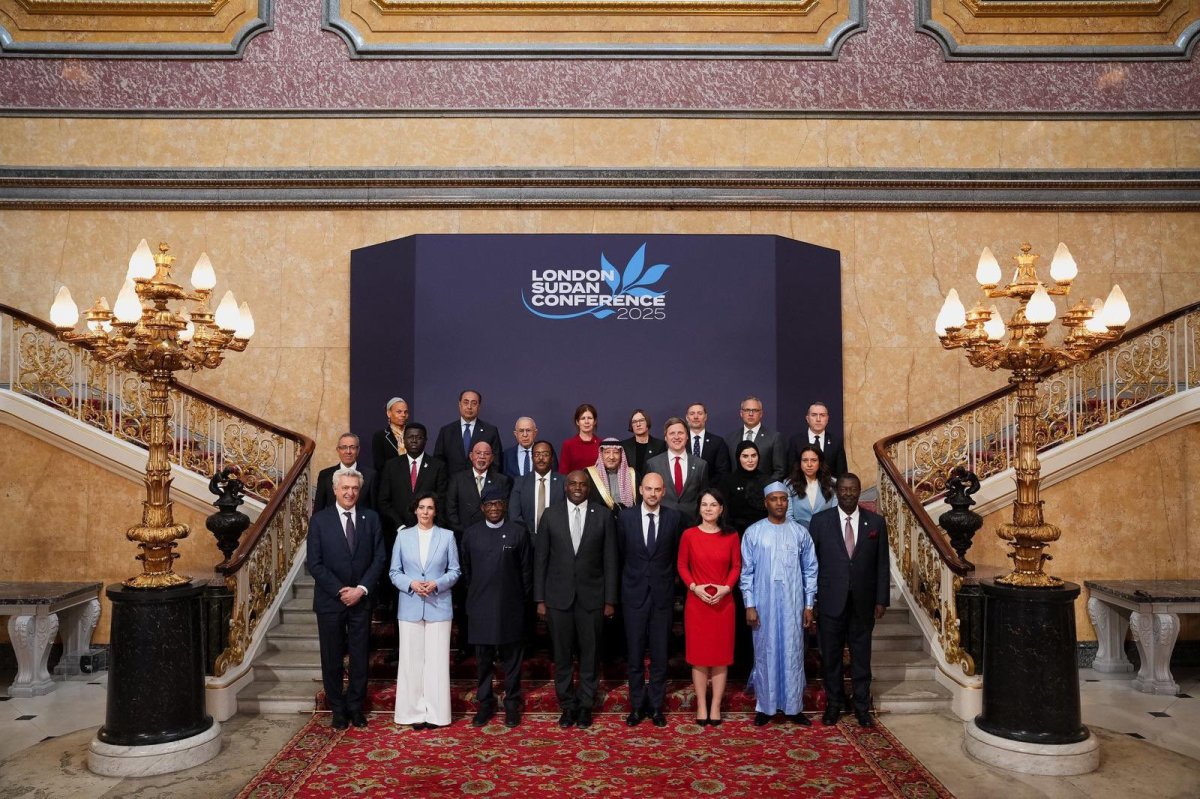
At the Sudan conference in London on 15 April 2025 – the same day as Hemedti’s speech – the states and international orga­nisations present were unable to agree on a joint final declaration. Egypt and Saudi Arabia, both supporters of the SAF, and the United Arab Emirates (UAE), supporters of the RSF, were able to block an agreement. Less than one-sixth of the required inter­national aid for Sudan and the neighbour­ing states was pledged at the conference.

The protection of civilians has long been politicised in Sudan. All parties to the con­flict claim not only to be fighting in the interests of the civilian population, but also to be taking specific measures to protect them from violence. These claims are in stark contrast to their actual behaviour.

Civilians as a target

Violence against the civilian population is not a mere by-product of warfare in Sudan, it is an intrinsic aspect of the behaviour of the warring parties and their respective allies. Both the UN as well as national and international non-governmental organisa­tions (NGOs) have presented numerous detailed reports on the human rights situa­tion in Sudan. At the same time, difficulties in accessing certain regions and the some­times severely restricted telecommunica­tion services mean that many incidents are un­likely to appear in the reports. As a result, there are no exact figures on how many people have already died in the war. How­ever, it is likely that the number of direct and indirect victims has passed six figures.

The danger to the civilian population is first and foremost due to the type of mili­tary action: When using artillery, barrel bombs or other explosive weapons in cities, the warring parties do not differentiate sufficiently between combatants and non-combatants. The RSF shell hospitals with artillery and strike power stations and other civilian infrastructure with drones; the army shells schools, markets and residential areas. Both parties arrest, torture and kill humani­tarian personnel, volunteers and human rights defenders, who they accuse of cooper­ating with the other side. These are the find­ings of the Fact-Finding Mission on Sudan set up by the UN Human Rights Council.

The RSF are looting and pillaging in the places they conquer. Instead of receiving adequate pay, their troops are given a licence to loot. In addition, the RSF use sexual violence across the board, destroy agricultural equipment and rob warehouses, which jeopardises the food supply. In the Zam-Zam camp, RSF units killed the last remain­ing medical staff belonging to the NGO Refugees International before capturing it.

According to the UN panel of experts, 10,000 to 15,000 people are said to have been killed in attacks by the RSF between June and November 2023 in El Geneina, the capital of West Darfur. As a result of these attacks, a large part of the Masalit community fled across the border to Chad – their expulsion was obviously a goal of the RSF. The US State Department formally catego­rised the RSF’s actions as genocide.

The warring parties also benefit from massive external support – military, logis­tical, financial and political. The RSF are primarily supported by the UAE, with Chad, South Sudan, Uganda, Kenya and the Somali region of Puntland making their respective contributions. The SAF cooperate primarily with Egypt, Russia, Turkey, Eritrea and Iran.

However, the violence against the civilian population is not only being committed by the RSF and the SAF. Although the war began as a war between these military units, it has now spread to segments of society. Both sides use ethnically connoted rhetoric to mobilise and recruit. Some units are recruited on a tribal basis; they see the fight as an opportunity to realise their own goals against hostile groups.

Events in the state of Al-Jazeera illustrate the complexity of the violence: The RSF con­trolled the central Sudanese state – to which many people had also fled from Khartoum – between December 2023 and January 2025. The Sudan Shield Forces militia – under the leadership of Abu Aqla Kikel, a former SAF officer – played a key role in this. Under his leadership, the RSF captured the state capital, Wad Madani. In October 2024, however, Kikel defected back to the army and secured the recapture of the state a few months later.

Armed conflicts had not affected Al-Jazeera in the past. It was home to the country’s most important granary. In prior decades, seasonal labourers from other parts of the country – and from what is now South Sudan – went there. They settled there and were known as “Kanabi”. Many of them lived in camps outside the villages of the local population. The state did not provide these camps with public services such as schools and health centres, which were available in the established villages. The RSF knew how to capitalise on the resulting latent tensions by using the lan­guage of the disenfranchised. However, many Kanabi came from so-called “African” ethnic groups from the west of the country and were not treated equally by either the RSF or the Shield Forces, as a women’s rights activist from Al-Jazeera described. The RSF attacked villages they suspected of being close to Kikel after he rejoined the army. Conversely, Shield Forces attacked the Kanabi after recapturing Wad Madani for the army in early 2025.

Although many displaced people are now returning to Al-Jazeera, their relations with other ethnic groups and their confidence that the state will protect them have been severely damaged. The violence against the civilian population is also a consequence of the practice of outsourcing violence to militias and an exploitative state, which Sudan has known for decades.

Calls for international protection

At the international level, the brutal vio­lence against the civilian population in Sudan is a recurring theme of official bodies. Both the UN Security Council and the Peace and Security Council of the Afri­can Union (AU) took up the issue in 2024, but they were unable to take effective action. In June 2024, the UN Security Coun­cil passed a resolution that demanded that all warring parties protect the civilian population and that the RSF end its siege of El-Fasher, the capital of North Darfur. In October 2024, UN Secretary-General António Guterres presented a report on the protection of civilians in Sudan, but it contained hardly any measures that the UN Security Council could take itself. A draft resolution submitted by the United King­dom and Sierra Leone failed in November 2024 due to Russia’s veto; it would have instructed the Secretary-General to work with the warring parties to develop a mechanism to implement their previous voluntary commitments.

On 11 May 2023, shortly after the start of the war, the SAF and the RSF had already agreed on the Jeddah Declaration of Com­mitment to Protect the Civilians of Sudan after mediation by the United States and Saudi Arabia. It lists in detail existing obli­gations arising from international humanitarian law and international human rights law. This declaration remains one of the few common reference documents on the protection of civilians in Sudan. However, it does not contain a mechanism to monitor compliance with these obligations, review incidents or penalise violations. The United States exerted considerable pressure on the warring parties in 2024 and steadily increased the sanctions on senior leaders, including RSF leader Dagalo and SAF leader Abdelfattah al-Burhan. This pressure appears to have temporarily reduced the number of RSF attacks on El-Fasher.

The European Union (EU) is working towards an agreement between the warring parties on the protection of civilian infra­structure. This should explicitly serve as a starting point for further talks. However, in view of the widespread attacks on markets, hospitals and power stations, no agreement has yet been reached.

The idea of a military or civil-military mission to protect the civilian population has attracted international attention. The US administration under Joe Biden fuelled the discussion about a mission led by Afri­can states or the AU – but the proposal was met with little enthusiasm from the latter. Representatives of the Intergovernmental Authority on Development (IGAD) spoke of a task force of up to 4,500 soldiers to monitor the implementation of the Jeddah Declaration. The UN Fact-Finding Mission on Sudan called for a protection mission, as did the then civilian Sudanese coalition Taqaddum, whose chairman, Abdallah Hamdok, also demanded a no-fly zone and security zones that would grad­ually expand.

However, these demands were strictly rejected by the parties to the conflict. Fur­thermore, practical problems were hardly discussed, such as how a large number of troops could be deployed to secure the most important combat zones and how such a mission could be financed. Even during the joint UN-AU mission in Darfur (UNAMID), which was withdrawn at the end of 2020, the security forces obstructed the mission’s active protection measures. Without the consent of the parties to the conflict and without a ceasefire, a new military mission in Sudan would effectively mean entering the war. So far, nobody seems willing to do this.

Local protection measures

At the local level, Sudanese actors are in­volved in protecting segments of the popula­tion. At the beginning of the war in particu­lar, there were a whole series of successful efforts to achieve local ceasefires, not least due to indications that the decisive battle would be fought in the centre and would not be decided in a provincial capital.

The best known – and longest lasting – efforts were those of the Elders and Media­tion Committee in El-Fasher, the capital of North Darfur state. High-ranking and com­mitted citizens of the town took the initia­tive on the third day of the war to at least ensure the proper and speedy burial of the bodies. They quickly agreed with the local representatives of the SAF and the RSF on a ceasefire and the deployment of police forces between their respective districts in the city. The committee monitored the ceasefire, clarified the movement of troops and handled any incidents. To do this, it was able to build on a long tradition of col­lective conflict management as well as its relationships and social capital with local commanders and the population. The gov­ernor of North Darfur supported the ini­tiative. A few months later, the committee also integrated representatives of armed groups from Darfur, whose leaders held gov­ernment positions (in a government controlled by the SAF) but were still mili­tarily neutral at the time.

Similar efforts were also made in other towns, for example in Ed-Daen, the capital of East Darfur – where merchants in par­ticular campaigned for peace in order to retain access to the market – or in An-Nuhud in West Kordofan. The UN Develop­ment Programme (UNDP) Sudan commissioned a study on these local peace efforts that has been made available to the author and will be published soon.

A central lesson of this revealing study is that, in Sudan, protection and peace efforts at the local level always originate from local social structures. These were often tradi­tional authorities and religious leaders, who sometimes worked together with lawyers, merchants and young activists. Humanitar­ian negotiations could often serve as a gate­way for further talks: Negotiations on medical access or the burial of war victims developed into a dialogue with the parties to the conflict, thereby improving the situa­tion of the civilian population as a whole. According to the study, this shows how important the peace aspect is in the triple nexus of humanitarian aid, development cooperation and peace-building. It was also essential for the local peace efforts to affect and include all of the relevant social groups on the ground, as long as this did not jeop­ardise their impartiality.

Nevertheless, each of the initiatives analysed also exhibited considerable weak­nesses, which are also known from other contexts (see below). Another finding from the study is that areas with a longer ex­perience of armed conflict were often better prepared to negotiate with marauding gangs and militias than the populations in those parts of the country that had been spared fighting for decades.

That said, protection should not be equated with peace measures. If there is no ceasefire, people take measures to protect themselves and those closest to them. The most important measure is to take flight. Sudan is currently experiencing the largest displacement crisis in the world. People are fleeing within the country (or to other countries) not only because of the immedi­ate war, but also because of the danger of attacks by the armed actors, hunger, and because food production and basic supplies have collapsed.

The population movements are of stra­tegic importance for the parties to the con­flict: If a warring party conquers an area and subsequently holds it, it makes a big difference to its legitimacy as to whether the civilian population flees, stays or even returns. Time and again, civilians had placed their hopes for protection in the army, which then retreated before the RSF captured a town.

Taking up arms themselves

Some people in Sudan do not want to run away, but to confront the danger to them­selves and their communities. They join the army, the RSF or one of the numerous militias, armed groups and self-defence units. Of course, widespread recruitment serves the strategic goals of the warring par­ties. There are often few other opportuni­ties for young men to earn money, espe­cially in areas where the economy has been severely damaged. There are also reports of forced recruitment and the use of minors. For some, however, the motivation to pro­tect themselves and others also plays a role.

According to a leaked internal report by the Sudanese Islamic Movement, more than 650,000 people were “mobilised” and more than 2,200 training camps were set up in the first year of the war alone. These figures refer to the areas under the control of the army.

Armed groups from Darfur have at times been involved in the protection of humanitarian supplies, refugee movements and segments of the civilian population. How­ever, as these armed groups came under increasing fire from the RSF, they ended their impartiality and declared their full support for the army in November 2023. In January 2025, the Sudan Liberation Army (SLA-AW) under Abdel Wahid al-Nur and the Gathering of Sudan Liberation Forces (GSLF) under Tahir Hajar founded a so-called neutral protection force, which was also intended to protect deliveries of civil­ian goods, but which in turn came under fire from the RSF. In addition, the GSLF’s alliance with the RSF from February 2025 called into question the impartiality of this protection force.

Humanitarian protection

Protection is a core task of humanitarian aid. Nevertheless, humanitarian actors do not necessarily agree as to what exactly constitutes humanitarian protection. The generally accepted definition of humanitarian protection, as established by the Inter-Agency Standing Committee, is not easy to grasp at first glance. Its core message is that humanitarian actors should ensure – at least in their own emergency relief work – that they protect vulnerable groups and respect the civilian status of the population.

At a local level in Sudan, networks of mutual aid – the Emergency Response Rooms (ERRs) – also fulfil protection func­tions. The ERRs, of which there are hun­dreds throughout the country, are best known for their soup kitchens, which they use to ensure the food supply of neighbouring communities, primarily in areas that are rarely accessible to international actors. The ERRs are based on the Sudanese concept of nafeer, a traditional practice of mutual support in the community. The regular joint activities of people from different back­grounds contribute to social cohesion and thus defy the polarisation caused by the war to a certain extent.

However, the ERRs go even further. In Khartoum, for example, they maintain safe spaces for women and children and also offer psychosocial support for the many traumatised people. Finally, the ERRs’ pro­tection committees help those affected to move from high-risk areas to other parts of the country. To this end, they carry out their own risk assessments in order to prior­itise the evacuation of particularly vulner­able people. They also continually research which routes are currently safe and acces­sible. According to their own statements, the ERRs have helped around 200,000 people to relocate from the capital region alone since the start of the war.

Sudan has a nationwide structure for the coordination of mutual humanitarian aid, the Localisation Coordination Council. ERRs from 13 (out of a total of 18) federal states, 9 national NGOs and, as observers, 6 inter­national NGOs participate in the arrangement. For example, the Council helped vol­unteers in Al-Jazeera to set up ERRs and evacu­ate people after the state was cap­tured by the RSF.

International aid organisations, NGOs and the UN support the ERRs and can also improve the protection of vulnerable groups in Sudan through their own measures. The presence of international aid organisations in an area can, in principle, help to ensure the non-discriminatory distribution and or­ganisation of aid. However, the authorities in Port Sudan have not yet allowed the UN to maintain permanent bases in the areas controlled by the RSF in the west, which is why international aid organisations only come to these areas on a temporary basis. Their work is made more difficult by the significant bureaucratic, logistical, financial and security challenges. It can take weeks for lorries from the Chadian border or from Port Sudan to arrive in parts of Darfur. The first UN convoy from Port Sudan to El-Fasher in a year was bombed near Al-Koma in June 2025, killing five humanitarian workers.

In August 2024, high-level UN humanitarian diplomacy succeeded in reopening the border crossing to Chad in Adré, which has remained open ever since. However, the bureaucratic obstacles of the Humanitarian Aid Commission (HAC) on the SAF side and the Sudan Agency for Relief and Humanitarian Operations (SARHO) on the RSF side are massively hampering the work of inter­national aid organisations. On the ground, armed militias are making money from every vehicle passing through the numer­ous checkpoints.

In areas where aid organisations have been active for some time, they can support local protection networks, many of which were set up before the war. For example, there were protection committees in all of Darfur’s federal states that brought together both civilian and local security authorities with representatives of the civilian popu­lation. However, even then the security forces did not always take part in meetings or showed no interest in reaching agreements. Some networks for the protection of women or for resolving tensions between farmers and herders are anchored locally and continue to function.

Finally, access to telecommunication ser­vices is important so that people can inform themselves and exchange information in order to make their own decisions about their protection. In the areas controlled by the RSF, there is no mobile phone network available because the authorities in Port Sudan have banned Sudanese mobile phone companies from operating there. Instead, people use smuggled Starlink terminals, access to which is expensive and usually controlled by the RSF or people close to them. The collapse of the electricity supply, the lack of availability of cash and the high cost of living make mobile communications difficult everywhere in Sudan, not to men­tion the damage to the telecommunications infrastructure caused by the war, not least in the Khartoum area.

Risks of and experiences with protective measures

Many political demands for the protection of the civilian population frequently refer to the idea of protection zones that are either protected or monitored by different mechanisms: by an international mission (civilian or military), through agreements with the conflict parties, the presence of hu­manitarian actors, or through remote moni­toring with satellites and other methods. According to one proposal, humanitarian partners should offer assistance in these zones and local administrations should ensure basic supplies.

Experiences with local ceasefires such as in El-Fasher show the enormous difficulties of such an approach. All local ceasefires collapsed sooner or later. Even when there were agreements with the local commanders of the conflict parties, the respective leadership groups at the national level in­sisted on military operations. Conversely, the conflict parties’ lack of an effective command and control structure makes local agreements more difficult. Although such agreements can reduce violence in one region, this then allows the parties to the conflict to intensify their offensives else­where. For example, when the RSF advanced into the state of Sennar, the violence in the previously occupied state of Al-Jazeera decreased because the troops were preoccu­pied with the offensive in the neighbouring state.

The concentration of the civilian population in protected zones that are supposedly safe places – where they may also have better access to humanitarian aid – can also benefit the strategies of the parties to the conflict: whether it is to drive out seg­ments of the population or to bring them under their own control, and thus increase their own legitimacy. If attacks do occur – such as in Wad Madani in December 2023, when hundreds of thousands fled from Khar­toum, or in El-Fasher in May 2024 – dis­placed people are particularly at risk because they have few resources of their own and lack local connections. Explicitly declaring protection zones should therefore go hand in hand with a comprehensive local conflict analysis.

Entry points for international actors

As long as the war continues, all efforts to protect civilians in Sudan will have limi­tations. Nevertheless, there are certainly opportunities to strengthen civilian protec­tion measures from the outside without a ceasefire. Given the divisions between the conflict actors and the polarised society, a ceasefire could even lead to its own wave of mass atrocities if it is not accompanied by such preventive measures.

Sudanese actors themselves have identified a need for support that includes fur­ther capacity-building and training for local mediators as well as financial support for ERRs. UNDP could expand existing regional mediation networks and create a national coordination platform, as recommended by the study that it commissioned. Inter­national support for the establishment of local monitoring and verification mechanisms for local agreements, including in the form of digital platforms, is crucial. The ERRs, with their local networks, have sig­nificant experience and are offering to become cooperation partners.

Sudanese media platforms need support and can help to combat disinformation and discriminatory language. UN member states can also assist national human rights orga­nisations and continue to support the UN Fact-Finding Mission on Sudan.

NGOs also make an important contribution and need international support. For example, Geneva Call organises training and workshops with armed actors in Sudan. Nonviolent Peaceforce still has a team in Sudan that supports the civilian population in negotiating with the warring parties on issues of daily survival, and it helps with early warnings about renewed attacks and possible displacement.

The German government should make a strong case to the conflict parties and ensure that international aid organisations have unrestricted access and can be per­manently situated throughout the country, including in areas controlled by the RSF. In addition, humanitarian aid should be more decentralised.

The German government should publicly and explicitly denounce particularly brutal attacks on the civilian population, such as during the takeover of the Zam-Zam camp for displaced persons by the RSF and the bombing of markets by the SAF. The EU should impose further sanctions against both the Sudanese perpetrators of these human rights violations and their international supporters. Reports of foreign mercenaries travelling to Sudan via European airports such as Paris and Madrid, and Emirati com­panies bringing these mercenaries to Sudan via Libya together with weapons – includ­ing European-made arms – demonstrate the need for action.

Despite the deadlock in the conflict, there are numerous starting points for Germany and its European partners to contribute to the protection of the civilian population in Sudan.

Dr Gerrit Kurtz is an Associate in the Africa and Middle East Research Division at SWP. He would like to thank all interviewees in Nairobi, Kampala and online (also in Sudan) as well as Wibke Hansen and Judith Vorrath for their helpful comments.

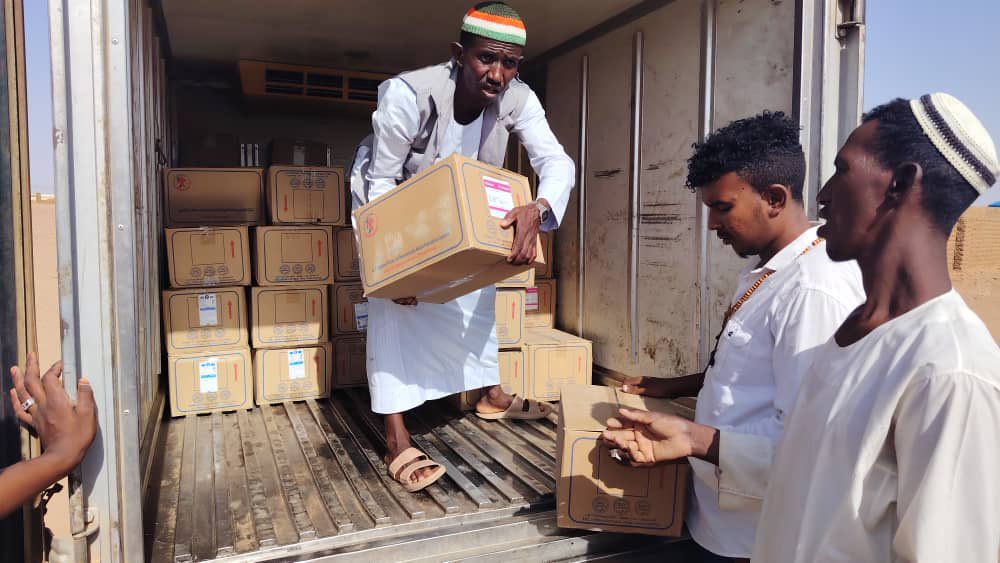
Photo: Mutual aid kitchen in Khartoum, June 2025. Published by Khartoum Aid Kitchen on X
Rethinking Transitional Justice in Sudan

Drawing Lessons From the Transition Process and Finding an End to the War

Published in Verfassungsblog, 26 June 2025

The war that has plagued Sudan since 15 April 2023 is accompanied by massive violations and abuses of international humanitarian law and international human rights law. Sudanese returning to their homes in Khartoum, which was recaptured by the army in late March, often find graves and decomposing bodies. The UN Fact-Finding Mission on Sudan, meanwhile, recently reported “a sharp rise in sexual and gender-based violence.” The Biden administration in the United States even formally determined that war crimes, crimes against humanity, and genocide had taken place, a rare step. Sudan is no stranger to mass atrocities, as violence against civilians, including sexual violence and identity-based attacks on ethnic groups, have marked previous wars as well. Hardly any of the major perpetrators have faced justice.

Addressing this accumulated injustice has proven to be one of the most important stumbling blocs for previous peace and transition processes in Sudan and also remains a key obstacle now. Impunity with the persistence, and indeed rise, of alleged perpetrators is a key dimension of the current war. Many in Sudan associate transitional justice primarily with criminal justice instead of also addressing structural dimensions of atrocities. This has created uncertainty, resentment, and fear among armed actors as well as survivors.

A culture of impunity fueling conflict

Sudan has been plagued by conflict and violence against civilians for decades. For that reason, justice was a key demand of the protestors that helped topple President Omar al-Bashir in April 2019, after thirty years in power. The constitutional declaration that the military and a coalition of political parties, professional associations, and civil society signed in August 2019 to create a civil-military transitional government included a commitment to transitional justice, as had earlier peace agreements that had addressed previous conflicts. Little was ever implemented, though.

The culture of impunity, the lack of reparations for harm, left out institutional reforms, failed investigations, and missing public consensus about the country’s past as part of its national identity created grounds for conflict and the return of authoritarianism. Those responsible for violence against civilians not only remained in power, but benefited and prospered. Instead of gradually reducing the power and influence of the security sector, the 2019-2021 transition process ended up entrenching them even further.

This is particularly the case for the Rapid Support Forces (RSF), led by Mohamed Hamdan Dagalo, also known as Hemedti. The RSF emerged out of Arab militias locally known as Janjaweed, which were responsible for mass violence in Darfur in the early 2000s. Omar al-Bashir, Sudan’s then President, used the RSF for border protection, counterinsurgency, mercenary services in Yemen, and regime security. Hemedti made himself into a key powerbroker when he joined the intelligence service and the Sudanese Armed Forces to replace Bashir in the face of sustained mass protests in April 2019. His forces likely led a subsequent attack on the main protest camp outside the military headquarters on 3 June 2019 that killed more than 120 people. Still, Hemedti became an influential member of the civil-military Sovereign Council (the transitional collective presidency), styling himself as its deputy chairman and de-facto vice president. In the following years, the RSF grew massively in military strength, with the help of the army and international partners like Russia (Wagner) and the UAE, as well as in economic influence. The RSF’s rivalry with the SAF increased notably after the coup in October 2021, with the army itself staffed by senior officers involved in past atrocities as well. The rivalry between the two armies culminated in the outbreak of open hostilities in the morning hours of Saturday 15 April 2023.

Lessons from Sudan’s transition process

Sudan’s most recent transition process underlines how transitional justice can fail – and what future efforts must learn. The civilian component of the transitional government took a top-down approach to transitional justice, with victim and survivor groups feeling insufficiently consulted. A key element was the so-called dismantling committee, which investigated the shadow system, assets and staff associated with the former regime, leading to the dismissal of thousands of public officials. They operated without sufficient regard to due process, however. The United Nations Independent Expert on the situation of human rights in the Sudan warned that the Committee’s decisions “might degenerate into political purges”, as it had the right to dismiss all public employees based on their mere association with the former regime. The UN human rights office worked with the transitional authorities to improve the situation, but these concerns were not sufficiently addressed before the coup.

Furthermore, transitional justice became part of the bargaining process between armed groups and the security forces during the negotiations that led to the Juba Peace Agreement, signed in October 2020. The agreement includes a detailed chapter on “justice, accountability and reconciliation”, including a timeline of 60 days to establish a truth and reconciliation committee and 90 days to establish a special court for Darfur. None of those were ever established. Instead, representatives of the armed movements joined the government in Khartoum, brought back troops to Sudan and engaged in major recruitment drives in Darfur, incentivized by the promise of demobilization packages in the peace agreement.

The security institutions remained highly skeptical of transitional justice, increasing their motivation to remove the civilian component from the government. After the coup, they overturned many decisions by the dismantling committee. Investigations into the violent dispersal of the protest camp in June 2019 stopped.

When it came to a core demand of the revolutionary protest movement of December 2018, the transition not only delivered little in the way of justice but also created resentments and disappointments in many quarters. It failed to engage with the structural causes of Sudan’s atrocities and repression, ultimately contributing to the situation that led to a devastating war – one that has laid waste to the country’s institutions, livelihoods, and social fabric.

Dealing with power structures

Getting the full spectrum of measures that transitional justice entails right is therefore essential for any future political and peace process. Crucially, anyone engaging in transitional justice needs to acknowledge from the get-go that a transitional justice process reflects the prevailing power structures and is therefore inherently political.

This is an uneasy discussion. Given the previous experience of impunity, delayed implementation, and power-seeking elites, some associate transitional justice in Sudan with a so-called “soft landing” approach: perpetrators as well as benefactors of past crimes get to go scot-free if they make some superficial commitments to peace and human rights. As a result, they receive the legitimacy to either remain in positions of power or join the dominant kleptocratic system for their own benefit.

Acknowledging existing power structures does not mean accepting them. Rather, civilian actors (and those foreign governments wishing to support them) should anticipate and prepare for dealing with armed and authoritarian forces with their eyes open. Simply calling for justice, truth, reparations and comprehensive institutional reforms does not suffice, as important as a principled stance is.

This insight has guided recent efforts to rethink transitional justice in Sudan. In a series of workshops organized jointly by the Friedrich Ebert Foundation and the German Institute for International and Security Affairs (SWP) in Kampala and Addis Ababa between February2024 and May 2025, Sudanese and international leading experts on transitional justice and peace came together to consider some of the challenges, trade-offs and possibilities how transitional justice could contribute to ending the war, and to sustaining peace.

Balancing peace and justice demands in Sudan

One of the challenges of transitional justice globally has been that despite frequent commitments to be context-specific, victim-centered and nationally owned, it can be excessively driven by outside actors. This is particularly prevalent in cases where representatives of an ancien régime (like that of Bashir) or those responsible for atrocities during war time retain significant power, not least because most wars end through a negotiated agreement between warring parties, e.g. in Ethiopia and in South Sudan. In such contexts, in trying to reduce the sensitivity of the subject, transitional justice is often reduced to a technical exercise of consultations, legislation, institutions, and processes. Even in situations where, for example, a truth commission has been able to work – such as in Kenya –, the impact remains very limited. International criminal proceedings may be possible, for example at the International Criminal Court, specialized tribunals or in national courts based on universal jurisdiction, yet they remain distant from the communities and survivors involved.

In a situation of active hostilities as in Sudan, balancing the concurrent demands of peace and justice is key. This has been a lesson that one of the members of the expert group, Rifaat Makkawi, mentioned in a podcast of the INSAF campaign for transitional justice. “Our views shifted”, he said. “We used to believe that justice comes first.” Experiencing the devastation of the war firsthand, the campaign now seeks “a balance between justice and peace.”

The key here is that such a balance means aligning peace and justice as much as possible, not just seeking an immediate target instead of a seemingly more long-term one. Makkawi and Amal Hamdan, another member of the expert group, tackled one of the most controversial subjects in this area: amnesty. In a joint paper, they call for shaping conditional amnesty provisions in such a way that they facilitate peace while not precluding prosecutions, for example through a hybrid court with national and international elements. Conditional amnesty would be a novel instrument in Sudanese conflicts, as previous peace processes have always resulted in either explicit or de facto blanket amnesty due to lack of implementation.

The role of civil society

Furthermore, transitional justice is about much more than criminal trials. It also needs to speak to a sense of everyday peace and justice that helps not just elites but whole communities to co-exist. Reconciliation, an often-cited goal of transitional justice, seems almost far-fetched in the face of mass atrocities. Changing out leaders responsible for such crimes is important, as is transforming the relationship between state institutions and civilian populations.

Sudan has an extraordinarily active civil society. In many parts of the country, mutual aid networks provide basic services in areas that international aid organisations often do not reach. Women, youth and other civilian initiatives discuss ways with political and military leaders to halt violence and end the war. Even if the war’s polarization and displacement affect them deeply just like everyone else, they can still play important roles in transitional justice, and often already do. These roles include the documentation of violations, combating hate speech, trainings, rehabilitation, peace messaging, psychosocial as well as material support to victims and survivors, in addition to advocacy. They do not need to wait for the warring parties, donors, or international organisations to include them to make a difference.

Moving forward, seeking possibilities as well as creative entry points remain essential. Sudan’s war is a fundamental challenge to its social fabric, state integrity and regional stability. Ending the war and overcoming violence requires a combination of principles and innovation.

Note: The author co-organized the expert group on transitional justice and peace in Sudan with a workshop series on which parts of this analysis are based, a project in collaboration with the Friedrich Ebert Foundation.

Wie die Drohnenangriffe den Krieg in Sudan verändern

Die neue Fähigkeit der RSF, Ziele in ganz Sudan zu treffen, verändert die Dynamik des Kriegs aufs Neue. Ob sich daraus ein strategisches Patt ergibt, das Verhandlungen begünstigen könnte, hängt jedoch auch maßgeblich von den externen Unterstützern der Kriegsparteien ab.

Erschienen in Zenith, 26.05.2025

An einem frühen Sonntagmorgen begannen die Angriffe aus der Luft auf Port Sudan. Die Hafenstadt am Roten Meer, Anfang des 20. Jahrhunderts von den britischen Kolonialherrschern in der Nähe einer alten osmanischen Siedlung für den Sues-Verkehr errichtet, galt bis zum 4. Mai 2025 als sicher.

Der Kampf in Sudan hatte gut zwei Jahre vorher im Zentrum von Militär, Politik und Wirtschaft in der Hauptstadt Khartum begonnen und sich auf weite Teile des Landes ausgebreitet – der Norden und Osten blieben bis auf wenige Ausnahmen sowie den Druck durch die Aufnahme vieler Vertriebener verschont. Die Ministerien und das herrschende Militär zogen nach Port Sudan um, da Khartum zur Kriegszone wurde. Auch internationale Hilfsorganisationen richteten Büros dort ein und landeten Personal und Güter an den einzigen internationalen See- und Flughäfen des Landes an.

Am 4. Mai stand eine massive Rauchwolke über dem militärischen Teil des etwas vom Stadtzentrum entfernten Flughafens, ein Munitionsdepot hatte sich in eine Feuerwolke verwandelt. Der Luftaum wurde gesperrt. In den nächsten Tagen trafen weitere Drohnen auch den Hafen, ein Treibstofflager, ein Kraftwerk, ein Radar, eine Marinebasis, ein Hotel in der Nähe des Militärhauptquartiers, und weitere offensichtlich sorgfältig ausgewählte Ziele. Es dauerte fünf Tage, bis das Feuer in dem Treibstofflager gelöscht war.

Erhebliche Beeinträchtigungen zu erwarten

Bewaffnete Drohnen sind keine neue Waffe im Sudan-Krieg. Sowohl die Sudanesischen Streitkräfte (SAF) als auch die Rapid Support Forces (RSF) setzen sie ein, und zwar kleine wie größere, fortgeschrittenere Modelle. Die RSF hatten in den vergangenen Monaten immer wieder militärische und zivile Infrastruktur weit hinter den Frontlinien getroffen, beispielsweise in Atbara oder Meroe. Diese Ziele liegen jedoch gerade einmal auf der Hälfte der fast 700 Kilometer langen Strecke zwischen der nächsten bekannten Position der RSF in Omdurman und Port Sudan. Kamikazedrohnen und Drohnen der Klasse »Medium Altitude Long Endurance« (MALE), über die die RSF verfügen, können noch erheblich weiter fliegen – doch sie so präzise, weit entfernt und zuvor unbemerkt zum Ziel zu bringen, war der RSF vorher nicht möglich gewesen. Zum Vergleich: Die Armee setzt zwar deutlich mehr Drohnen als die RSF ein, aber nur in Zentralsudan; für Angriffe in Darfur und Kordofan nutzt sie ihre – weitaus weniger präzise – Luftwaffe.

Dabei ist weiterhin unklar, von wo aus die Drohnen gestartet sind, um Port Sudan anzugreifen. Die Vertreter der Armee behaupten, die Vereinigten Arabischen Emirate hätten die Drohnen von »Basen am Roten Meer« abgefeuert. In Expertenkreisen werden eher Orte im Westen Sudans, die von den RSF kontrolliert werden, diskutiert. Allein: Stichhaltige Belege für den geografischen Ursprung der Angriffe, die seit mehreren Wochen Port Sudan erreichen, gibt es nicht. Die RSF selbst haben auch kein offizielles Statement veröffentlicht, im Gegensatz zu ihren zahlreichen Propagandavideos und Statements von ihren Einheiten und Beratern über ihren Bodenkrieg. So deutet einiges auf eine mutmaßlich erhebliche Rolle eines externen Akteurs bei diesen Angriffen hin.

Ihre psychologische Wirkung verfehlten die Angriffe jedoch nicht. Sie verbreiteten Schrecken und Unsicherheit, in der Bevölkerung, aber auch beim sudanesischen Militär. Noch Ende März war Militärführer Abdelfattah Al-Burhan das erste Mal seit Kriegsbeginn mit dem Hubschrauber auf dem weitgehend zerstörten Flughafen von Khartum gelandet und hatte seinen Soldaten persönlich gratuliert, nachdem sie den Präsidentenpalast im Zentrum Khartums zurückerobert hatten. Einige Beobachter mag die Inszenierung an die berühmte Landung des damaligen US-Präsidenten George W. Bush auf dem Flugzeugträger USS Abraham Lincoln im Mai 2003 erinnert haben, um eine »mission accomplished« im Irak zu verkünden.

Daneben beeinträchtigen die Drohnenangriffe Port Sudan auch materiell. Treibstoffpreise schnellten in die Höhe, die Stromversorgung wurde noch unzuverlässiger, Trinkwasser war Mangelware. Die Versorgung mit kommerziellen, humanitären und militärischen Gütern über den Seehafen und den Flughafen ist möglicherweise gefährdet. Entsprechend warnte auch die höchste UN-Repräsentantin in Sudan, Clementine Nkweta-Salami, dass die Angriffe auf zivile Infrastruktur in Port Sudan und anderen Teilen des Landes die logistischen Schwierigkeiten der Hilfsorganisationen weiter erschwerten.

Ein mögliches strategisches Patt

Die offensichtliche Fähigkeit der RSF, Ziele ganz im Osten Sudans zu treffen, könnte die strategische Aussicht des Krieges verändern. Nach der Rückeroberung Khartums plante die Armee, die militärischen Auseinandersetzungen in den Westen des Landes zu verlegen und dort die RSF in die Enge zu treiben. Tatsächlich ist es weiterhin unwahrscheinlich, dass es den RSF gelingen könnte, erneut Gelände in der Hauptstadtregion oder insgesamt auf der östlichen Seite des Nil zu erobern.

Dazu müssten sie wahrscheinlich deutlich besser in der Lage sein, ihre unterschiedlichen Verbände und militärischen Fähigkeiten – einschließlich aus der Luft – integriert und abgestimmt einzusetzen. Solange sie ihre Schlagkraft durch Drohnen (mit der entsprechenden externen Unterstützung) aufrechterhalten können, können die RSF jedoch die Armee nun stark unter Druck setzen, selbst wenn sie in Kordofan oder Darfur Boden verlieren sollten.

Theoretisch könnte sich aus diesem strategischen Patt also ein Fenster für Verhandlungen ergeben. Beide Seiten können ihren Willen auf absehbare Zeit nicht militärisch umsetzen, und die Weiterführung des Krieges erzeugt für sie erhebliche Risiken und Kosten.

Die Geister, die sie riefen

Die Aussichten auf belastbare Gespräche, um den Krieg zu beenden, sind bisher allerdings weiterhin getrübt. Multilaterale Organisationen wie die Vereinten Nationen, die Afrikanische Union (AU) oder die »Zwischenstaatliche Behörde für Entwicklung« (IGAD), die weiterhin den Anspruch vertreten, sich für Mediation einzusetzen, sind geschwächt und gespalten. Trotz entgegenlautender Versprechen arbeiten sie oft in Konkurrenz zueinander. Neben den Aktivitäten der jeweiligen Sekretariate liegt deren Schwäche in den widerstreitenden Interessen einflussreicher Mitgliedstaaten begründet, also Russland, den USA und Großbritannien im UN-Sicherheitsrat, oder Ägypten, Kenia und Äthiopien in der AU beziehungsweise IGAD.

Hinzu kommt, dass Zweiparteiengespräche zwischen SAF und RSF eine erhebliche Belastung für die Kohärenz ihrer jeweiligen Koalitionen sein könnten. Die Bündnisse der RSF mit der Sudan People’s Liberation Movement-North (SPLM-N) sowie einigen Milizen und Politikern aus Darfur sowie der SAF mit anderen bewaffneten Gruppen aus Darfur um Mini Minawi und Geibril Ibrahim sind transaktionaler Natur. Ein Abkommen, das beispielsweise den RSF weite Teile des Westens, die sie bislang kontrollieren, zuschlüge, würde vermutlich auf erheblichen Widerstand bei Minawi, dem Gouverneur von Darfur und Führer der »Sudan Liberation Army« (SLA), und weiteren Bewegungen treffen.

Anders könnten sich die Dinge verhalten, wenn sich die wichtigsten externen Unterstützer der sudanesischen Kriegsparteien verständigen sollten, darunter die VAE, Ägypten, Saudi-Arabien, Katar und die Türkei. Allerdings spüren diese Mächte die Auswirkungen des Kriegs in sehr unterschiedlichem Maße – über eine Million Geflüchtete sind aus Sudan nach Ägypten gekommen, Port Sudan liegt auf der anderen Seite des Roten Meers, gegenüber der saudischen Hafenstadt Dschidda. Umgekehrt ist Abu Dhabi das Ziel von Goldexporten sowohl aus Gebieten der RSF als auch der Armee. Und das Vertrauen in einen möglichen Ausgleich von Interessen ist gering. So geht der Krieg in Sudan in die nächste Runde.

Mediation Efforts on Sudan: Beware the Pitfalls of Diplomatic Coordination

Establishing an informal but regular contact group of like-minded states and international organizations on Sudan would be an important outcome of the April 15 Sudan conference in London. It should learn lessons from the Friends of Sudan and other international coordination efforts, in the way it engages with Sudanese actors as well as external supporters of the conflict parties.

Commentary at ISPI, 15 April 2025

As the war in Sudan approaches its two-year anniversary, the conflict is set to enter a new phase. Regaining the heart of the capital Khartoum has been a major success – and a morale booster just ahead of the end of Ramadan – for the Sudanese Armed Forces (SAF). The Rapid Support Forces (RSF), for their part, still control vast swathes of Sudan’s territory west of the Nile. Military action won’t end the war anytime soon. This could be an entry point for a renewed push for a ceasefire

Given this prospect, more effective international coordination is essential. There is currently no unified, regular diplomatic contact group on Sudan, the biggest humanitarian crisis in the world with more than 30 million peopleneeding assistance (and much less getting it). The so-called Extended Mechanism created by the African Union (AU) in the first weeks of the war has only met infrequently and is probably also too unwieldy as a workable mechanism. Sudan special envoys have met in various configurations, including convened by the Intergovernmental Authority on Development (IGAD), the sub-regional body for the Horn of Africa, and by Ramtane Lamamra, the UN Secretary-General’s Personal Sudan Envoy. However, none of these have yet resulted in a regular mechanism. 

An overall aim of such a mechanism should be to provide regular updates of the members’ activities and create a platform to provide a modicum of coordination wherever possible. Ideally, it would also lead to more coherence, unity and sincerity in support of a negotiated end to the war, help mobilizing resources to avert (further) famine, and prevent the polarization of regional and international actors that are increasingly taking sides in the war. However, the current geopolitical context means that these objectives are probably no more than wishful thinking.

Why international efforts to end the war have failed so far

The war in Sudan is becoming increasingly protracted. SAF and RSF lead coalitions of armed actors over which they do not have complete control, but whose interests they have to consider in their political positions. Both Abdelfattah al-Burhan as head of the SAF and Mohamed Hamdan Dagalo (better known as Hemedti) as head of the RSF made clear in their respective Eid speeches at the end of March 2025 that there would be no negotiations. In contrast to previous declarations by the RSF over their readiness to talks, Hemedti now said there would be “only the language of the gun”. The roadmap for peace published by Sudan’s Ministry of Foreign Affairs includes a national dialogue and a cabinet of technocrats, but also makes the laying down of arms and withdrawal from all areas currently controlled by the RSF a prerequisite: a negotiated surrender in all but name. 

So, there is no easy opening for mediation. In view of these rejections, international efforts so far relied essentially on three different approaches: security talks focused on a ceasefire and protection of civilians; personal accommodation through a face-to-face meeting between al-Burhan and Hemedti; and mobilizing a civilian bloc as alternative “third force”.

Talks in Jeddah led by the US and Saudi Arabia in May 2023 resulted in a declaration on the protection of civiliansand a one-week ceasefire signed by SAF and RSF. Nevertheless, the parties did not adhere to their commitments, with no consequences for them. At the next round in October/November 2023, the parties did not confirm the ceasefire, and failed to follow through on their individual commitments for improved humanitarian access. Instead of a third round, the US tried to convene a slightly broader group of states and the two belligerents in Geneva in August 2024. However, the SAF delegation did not want to be treated on the same level as the RSF (and avoid exposing its internal differences) and declined the invitation. Lowering their ambition, the US-led coalition of facilitators founded in Geneva focused on improving humanitarian access instead. However, these efforts had limited success, as humanitarian access to fighting zones remained severely hampered in their search for a pragmatic approach, the US were prepared to accord the authorities in Port Sudan more legitimacy by treating al-Burhan as Head of the Transitional Sovereign Council and not just as head of the military. The supposed lead mediator, US Special Envoy Thomas Periello, was, for US security reasons, only able to travel to Port Sudan and meet al-Burhan in November 2024 though, when the result of the presidential elections signaled the foreseeable end of his term with the outgoing Biden administration, weakening the scope of this initiative.

AU and IGAD created several mechanisms for mediation, but were not fully accepted by the SAF: firstly, Sudan remains suspended from the AU because of the coup in October 2021; SAF withdrew from the IGAD initiative after a failed one-on-one meeting with Hemedti was followed by Hemedti attending an IGAD summit in Kampala in January 2024. SAF also rejected Kenya’s role as chair of IGAD’s quartet, a skepticism which only grew in light of the founding of a new RSF-led political alliance with Nairobi’s blessing in February 2025. The AU’s high-level panel on Sudan was very slow to organize talks with civilian actors, which has been its main objective, and failed to follow-up with them for months after two roundtables in the summer of 2024. The AU’s presidential ad hoc committee aims to organize a face-to-face meeting between Burhan and Hemedti, but has never met.

Competition between mediators did not help. Egypt distrusts IGAD as a mediation channel – both because it is not a member state, and because of the dominant role played in it by Ethiopia. It pushes for Sudan’s readmission to the AU (so far unsuccessfully) and organized its own initiative of Sudan’s neighboring countries (in July 2023), with no impact. Being non-African, the UAE and Saudi Arabia, major players in Sudan, are not part of the AU, and are also skeptical of pushing for a renewed civilian-led government in Sudan. When the UAE and Egypt facilitated a secret meeting in Bahrain, SAF and RSF both sent their respective deputy leaders and got relatively far. Yes, negotiations stalled again, and SAF withdrew from the talks, pointing to the RSF’s failed commitment to the Jeddah declaration. Cooperation between the AU and UN envoys remains difficult on the Sudan file. So-called “proximity talks” (i.e. indirect) talks set up by UN Special Envoy Ramtane Lamamra did not bring a breakthrough. Finally, a draft resolution in the UN Security Council co-signed by the UK and Sierra Leone, that would have asked the UN Secretary-General to develop a compliance mechanism for the protection of civilians and called for a cessation of hostilities, was vetoed by Russia in November 2024.

The fractured nature of the warring parties has been a major challenge. The mediation efforts failed to sufficiently account for the complex dynamics within the conflict parties as well as between them and their external backers, including in response to the situation on the battlefield. Competition between would-be mediators allowed Sudanese warring parties to decline invitations, withdraw from negotiations, and to avoid making compromises that could fracture their coalitions of militias, regular forces and mercenaries.

Learning from the Friends of Sudan experience

On April 15, 2025, British Foreign Secretary David Lammy is hosting a ministerial conference on Sudan in London, organised with Germany, France and the European Union. Lammy has vowed to make Sudan a foreign policy priority. The conference is billed as a follow-up to a similar conference in Paris a year earlier, which was co-hosted by the EU, France and Germany, all three of which will co-convene the London meeting with the UK as well. In contrast to Paris, there won’t be a humanitarian pledging element, nor will there be a parallel meeting of Sudanese civilian actors. Instead, the UK will convene around 20 foreign ministers and representatives of international organizations. Better coordination among this group is a central objective.

In doing so, the UK should reflect on the experience of previous coordination mechanisms on Sudan. For decades, the UK was itself part of the Troika (with the US and Norway), which supported negotiations to end Sudan’s Second Civil war and South Sudan’s path to independence in 2011, among other issues. However, the Troika doesn’t appear to be an appropriate grouping on Sudan any longer, given the drastic aid cuts by the US and the Trump administration’s disregard for multilateralism and preference of optics over lasting results.

After the fall of Sudan’s thirty-year dictator Omar al-Bashir in 2019, the UK was also part of the Friends of Sudan. This was an informal diplomatic group, co-founded by Germany and the US, whose primary purpose was to support Sudan’s transition process. Notably, it included also Egypt, the UAE, Saudi-Arabia, Qatar and the AU, among others. For a while, the Friends of Sudan met regularly at the level of Sudan envoys or senior officials, focusing mainly on coordinating the economic and financial support to the transitional government, including debt relief and setting up a cash transfer program for the parts of the population hit hard by the withdrawal of subsidies and high inflation. After the coup in October 2021, it lost its civilian Sudanese counterpart, and it petered out once the war started and the Sudanese authorities pushed out the UN mission – which had taken over a regular convening role of the Friends of Sudan – a few months later.

Key issues going forward

None of the mediation initiatives so far did have any major impact. Four points will be critical if any new diplomatic coordination mechanism is to even have the chance to influence events in Sudan. 

First, any high-profile conference on Sudan needs to have a link to Sudanese civilian actors. UK diplomats held meetings with Sudanese civil society in the Horn of Africa and the British Director General of African Affairs spoke with the authorities in Port Sudan to collect their perspectives. Still, Sudanese will always question the legitimacy of an international Sudan conference without any Sudanese present. The Paris conference organized a roundtable of around 50 people that represented different types of stakeholders, not just one civilian coalition. Attendees told me that they found it useful, because it had been rare for those diverse perspectives to be in the same room since the start of the war.

Second, any coordination mechanism resulting from the London conference should be nimble and relatively informal. There needs to be some agreement on who to include and how frequently to convene them, but perhaps not much more. It is unlikely to develop strong agency for joint actions. The main multilateral organizations – the UN, the AU, IGAD, perhaps the EU – should be in the lead, if they can be made to act jointly. Like-minded actors need to focus on tangible support to the Sudanese population, especially in light of the massive aid cuts by the US and other countries. While they won’t be able to fill all gaps, they should concentrate on stepping in to fully support the appeal of the Emergency Response Rooms, mutual aid networks. To function, this initiative would need 12 m USD per month, hardly any of which they have received so far. This won’t be enough – the UN appeals for Sudan and the neighboring countries are around 6 bn USD for 2025 – but the ERRs work particularly in areas hardly reached by international aid, where the risk of starvation is among the greatest.

Third, a new diplomatic group as well as the London conference should refrain from normalizing external interference. The Paris conference included a joint communiqué that urged “all foreign actors to cease providing armed support or materiel to the warring parties”. Egypt and the UAE signed this statement – yet, they have continued their support to SAF and RSF. If they were able to sign onto a similar statement, they could do so confident that a lack of commitment would remain without consequences. The foreign ministers present at the meeting should hold these foreign sponsors accountable for supporting warring parties. They should single out the UAE in particular because of their support to the RSF, as described by U.S. Senator Chris Van Hollen and Representative Sara Jacobs, citing a US government briefing. Just this weekend, the RSF captured Zam-Zam camp, Sudan’s biggest displacement camp, after besieging it and neighbouring El-Fasher for many months. The RSF operates advanced drones and artillery to attack El-Fasher and Zam-Zam camp, which it most likely acquired from abroad. 

Finally, those international actors that have not picked a side in Sudan’s devastating civil war should not do so now. Normalizing relations with SAF-led authorities in Port Sudan won’t help people trapped in RSF-held areas nor will it help end the war. Assembling in London, foreign ministers will call global attention to the catastrophe that is the war in Sudan. Outrage without any of these actions would just underline their collective weakness. It is time to take responsibility. 

Horn von Afrika: Die Zivilgesellschaft wird weiter geschwächt

Beitrag in: Nadine Biehler (Koord.), US ohne AID?, Berlin: Stiftung Wissenschaft und Politik, 04.04.2025 (360 Grad)

Am Horn von Afrika sind die USA bislang der größte Geber gewesen, sowohl in der klassischen Entwicklungszusammenarbeit als auch in der humanitären Hilfe. 45 Prozent der Mittel für die von den Vereinten Nationen (UN) koordinierte Hilfe für Sudan, die weltweit größte humanitäre Krise, kamen im vergangenen Jahr aus den USA. 

Hilfsorganisationen berichten, dass sie zwar Ausnahmen von den Kürzungen erhielten, die Mittel jedoch nicht bei ihnen ankommen, weil das Zahlungssystem von USAID nicht mehr funktioniert. Die Konsequenzen bekommt vor allem die Zivilbevölkerung zu spüren. Diese steht in einer von Konflikten, Klimaveränderungen, schwacher Infrastruktur und Repression geprägten Region ohnehin unter massivem Druck. Drei zentrale Folgen lassen sich identifizieren: 

Erstens wird die extreme humanitäre Not weiter steigen. In Sudan herrscht bereits jetzt in wahrscheinlich zehn Gebieten eine Hungersnot. Ohne zusätzliche Mittel dürfte sich die Hungersnot auf weitere Teile des Landes ausbreitenRund 30 Millionen Sudanes:innen sind auf humanitäre Hilfe angewiesen, aber nur ein Teil wird sie bekommen. Dies betrifft nicht nur Lebensmittel. In der äthiopischen Region Tigray zum Beispiel musste eine Organisation ihre psychosoziale Hilfe für Opfer sexueller Gewalt abrupt einstellen. Dies kann das Trauma der Überlebenden verstärken.

Zweitens drohen die US-Kürzungen, den zivilgesellschaftlichen Sektor am Horn von Afrika massiv zu schwächen. Dies betrifft nicht nur Organisationen in Feldern wie Gesundheit und Ernährung, sondern auch solche, die sich für Frieden, Menschenrechte und Demokratie einsetzen. So mussten in Äthiopien 85 Prozent aller zivilgesellschaftlichen Organisationen ihre Arbeit einstellen. In den vergangenen Monaten standen diese ohnehin unter Druck: Einigen wurde die Lizenz entzogen, andere wurden zeitweise verboten oder ihre Führung ausgetauscht. In Südsudan könnten 60 Prozent des Mediensektors kollabieren, einschließlich der Radiosender in lokalen Sprachen. Dies verschärft die ohnehin unzuverlässige Nachrichtenlage in einer Situation, in der falsche Gerüchte schnell bewaffnete Auseinandersetzungen anheizen.

Drittens könnte der Ausfall internationaler Unterstützung zwar langfristig die dringend nötige Lokalisierung humanitärer Hilfe beschleunigen – kurzfristig ist jedoch das Gegenteil der Fall. So mussten rund 80 Prozent der Gemeinschaftsküchen im Sudan, die von Selbsthilfenetzwerken mithilfe von US-Mitteln betrieben wurden, schließen. Die Diaspora unterstützt diese Netzwerke ebenfalls, kann den Wegfall aber kurzfristig nicht kompensieren. Europäische Geber, die ebenfalls ihre Mittel zurückfahren, sollten sich darauf konzentrieren, solche Selbsthilfenetzwerke und lokale Helfer stärker zu unterstützen. 

Horn of Africa: Time for preventive diplomacy

In both Ethiopia and South Sudan, conflicts are escalating again. To prevent further regionalisation of the conflict landscape, Europe should support high-level diplomacy, says Gerrit Kurtz.

SWP Point of View, 21 March 2025. Also available in German.

In the Horn of Africa, two peace processes are in acute danger: Local power struggles in South Sudan and Ethiopia’s Tigray region are at risk of escalating into regional crises. In South Sudan – as in 2013 at the beginning of the last civil war – a power struggle is raging over the possible successor to 73-year-old President Salva Kiir. He is already positioning his son-in-law as a potential replacement. At the same time, clashes between the White Army – a Nuer militia – and the South Sudanese army in the Upper Nile region are causing a stir after a United Nations helicopter was shot down and a high-ranking army general was killed.

During the civil war from 2013 to 2018, the White Army fought on the side of the main rebel group, the Sudan People’s Liberation Army/Movement-in Opposition (SPLA/M-IO) under today’s First Vice President Riek Machar. Tensions between Kiir and Machar are intensifying once again – a dangerous déjà vu for the country, which has barely had time to recover after decades of conflict.

Ethiopia: Split within the TPLF and growing tensions with Eritrea

In Ethiopia, a local power struggle in the Tigray region threatens to escalate into a regional crisis between the federal government in Addis Ababa and Eritrea. The Tigray People’s Liberation Front (TPLF) – once Ethiopia’s ruling party and the Ethiopian government’s opponent in the war between 2020 and 2022 – is divided: A faction led by chairman Debretsion Gebremichael is opposed by a reformist faction under the president of the Tigray Interim Regional Administration, Getachew Reda. 

The Debretsion faction has large parts of the Tigrayan military on its side and has been taking over local administrative structures for months, sometimes violently. In the meantime, it has also brought media and parts of the administration in the provincial capital, Mekelle, under its control. The TPLF’s Debretsion faction is said to have good relations with Eritrea, whereas Getachew is counting on Ethiopian Prime Minister Abiy Ahmed. Bilateral relations between Ethiopia and Eritrea have cooled markedly since the Pretoria Agreement, which ended the war between the TPLF and the government in 2022. Both countries are accused of supporting opponents of the other’s regime.

Due to the increasing tensions, there is a risk that there will be a regionalisation of the conflict landscape. Uganda has already sent troops to support the South Sudanese government, as it did in 2013. Similar to previous clashes, Sudanese actors are also intervening. Over the weekend, militias of the Rapid Support Forces in South Sudan were already fighting against units of the SPLA/M-IO, which were apparently on their way to receive weapons from the Sudanese Armed Forces.

Failure of the peace agreements – fragmented international engagement

The current escalations are no coincidence. The respective agreements to end the civil wars in South Sudan and Ethiopia have only been implemented to a limited degree. Unilateral deviations by both governments from their obligations have de facto prevailed. Kiir rapidly replaced cabinet members and had high-ranking generals of the SPLA/M-IO arrested. In Ethiopia, important measures of the Pretoria Agreement, such as the demobilisation of militias and the withdrawal of Eritrean and Amharic troops from Tigray, have largely failed to materialise. 

International engagement with the region is increasingly fragmented – as are the states of the region themselves. In Ethiopia, for example, there is a lack of credible guarantors for the peace process. At the recent extraordinary summit of the Intergovernmental Authority on Development (IGAD) on South Sudan, only two countries took part at the level of their president. Whereas the United States used to be the most important international partner for peace in the region, countries such as the United Arab Emirates, Saudi Arabia, and Turkey are now influential, but they tend to support certain sides rather than mediate in internal conflicts.

In view of the deteriorating situation, it is now time for high-level preventive diplomacy. A coordinated international approach could contain the escalation. An informal division of tasks would be conceivable: Influential countries such as Turkey and Saudi Arabia could defuse tensions at the intergovernmental level, while European actors could support IGAD and the African Union in local mediation processes.

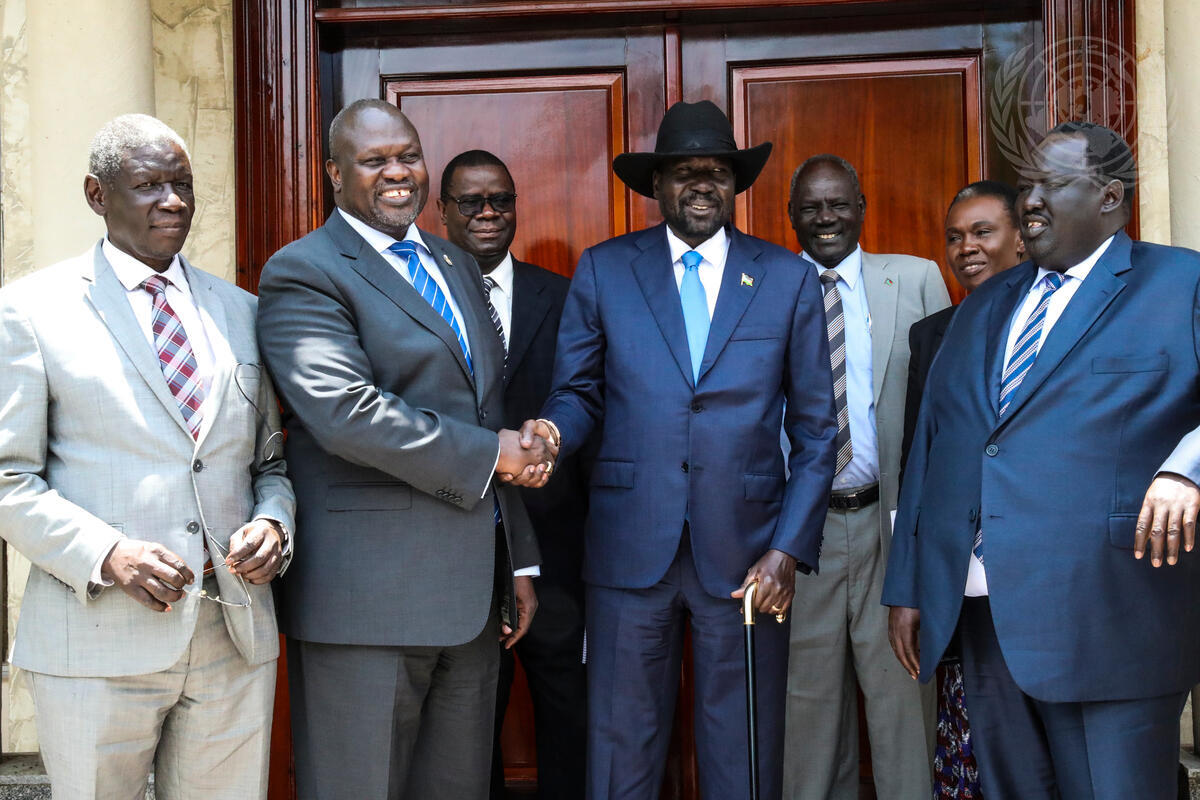
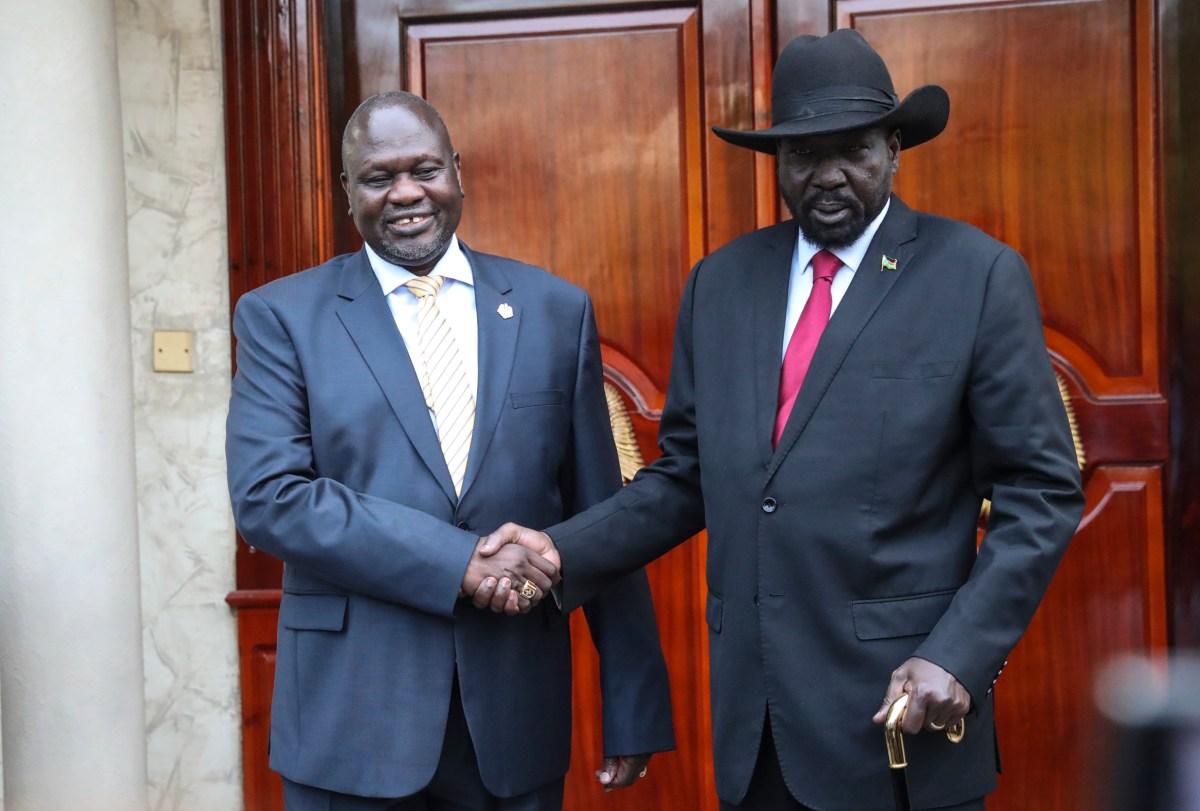
Picture: In better times in 2019, President Salva Kiir met the head of the SPLA/M-IO, Riek Machar, in Juba, to prepare the government of national unity. Source: UN Photo/Isaac Billy

The Myth of the Gamechanger: Drones and Military Power in Africa

Advanced combat drones are increasingly used in conflicts in Africa. This analysis of the conflicts in Mali, Chad and Sudan shows, their potential to shift the balance of military power between state forces and insurgents depends on symmetrical access to technology, type of warfare and topography.

Megatrends Policy Brief 33, 05.03.2025, zusammen mit Wolfram Lacher und Denis Tull

Medium-altitude long-endurance combat drones are increasingly appearing in armed conflicts in Africa. In contexts where governments have historically possessed little or no air power, some expect drones to change the balance of military power between state and non-state forces. But is this actually
the case? This Policy Brief examines the role played by drones in recent conflicts in Mali, Chad and Sudan, finding three aspects to be particularly relevant. Firstly, access: does one conflict party enjoy privileged access to drones and interception technology? Secondly, is the fighting regular or irregular? Are both sides holding territory and fighting on definable fronts, or is it a guerrilla war? Thirdly, is the terrain open or covered? Are the distances involved within the range of available drones? In Africa’s theatres of conflict these factors rarely combine in ways that allow one side to derive a major strategic advantage from the use of combat drones.

Photo: Likely Chinese-made MALE UAV on Nyala airfield, Sudan, January 2025. Source: Maxar/ Humanitarian Research Lab at Yale School of Public Health

Wie Militär die Zivilbevölkerung schützen kann

Rezension von Stian Kjeksrud (2023): Using Force to Protect Civilians. Successes and Failures of United Nations Peace Operations in Africa, OUP, in: Vereinte Nationen 1/2025, S. 45

Trotz mehr als zwei Jahrzehnten Praxis wissen wir wenig darüber, wie genau militärische Mittel die Zivilbevölkerung schützen können. Stian Kjeksrud versucht in seiner Dissertation auszudifferenzieren, was militärische Einheiten in UN-Friedensmissionen tun, wenn sie Zivilpersonen beschützen. Dabei greift Kjeksrud, der an der Militärakademie der norwegischen Streitkräfte lehrt und selbst als Soldat in UN-Missionen gedient hat, auf Erkenntnisse aus der Militärtheorie zurück. Aus militärischer Sicht ist der Schutz der Zivilbevölkerung (Protection of Civilians – PoC) noch eher neu, trainieren Militärs doch traditionell darauf, Operationen gegen einen bewaffneten Gegner durchzuführen. Viele verstehen unter PoC primär die Einhaltung des humanitären Völkerrechts, also die Vermeidung eines unverhältnismäßigen Einsatzes eigener Kräfte. Bei PoC im Sinne der UN geht es jedoch darum, Zivilpersonen vor der Gewalt anderer zu bewahren.

Kjeksrud zieht eine Kombination von quantitativen und qualitativen Methoden heran, um seine Forschungsfragen zu beantworten. Dafür hat er einen eigenen Datensatz erstellt, der 200 militärische Operationen in UN-Friedensmissionen umfasst, die PoC zum Ziel hatten und in der regelmäßigen UN-Berichterstattung über die Missionen erwähnt werden. Diese wertet er statistisch aus. Er ergänzt seine Analysen um zwei strukturierte Fallstudien: den Kampf der Interventionsbrigade als Teil der Stabilisierungsmission der Organisation der Vereinten Nationen in der Demokratischen Republik Kongo (United Nations Organization Stabilization Mission in the Democratic Republic of the Congo – MONUSCO) gegen die bewaffnete Gruppe ›M23‹ im Jahr 2013 und den Einsatz Gerrit Kurtz der Mission der Vereinten Nationen in Südsudan (United Nations Mission in South Sudan – UNMISS) Ende des Jahres 2011 im Bundesstaat Jonglei. Trotz des erheblichen Aufwands, den Kjeksrud bei der Datenerhebung und -auswertung betrieben hat, weist er durchgehend auf die äußerst begrenzte Datenlage und die dementsprechend begrenzte Aussagekraft seiner Ergebnisse hin, die nur einen Teil seiner Fälle erklären können.

Der Autor kommt zu dem Schluss, dass militärische Operationen Erfolge zeigen können, Zivilpersonen vor größerem Schaden zu bewahren. Die reine Truppenpräsenz in einem Land genüge jedoch nicht, gleichfalls mache es keinen Unterschied, ob die Truppen von traditionell risikoaversen Truppenstellerstaaten kommen oder nicht. Wichtig sei vielmehr, dass diese Einheiten präventiv eingesetzt würden und ihr Auftreten an der Operationsweise der jeweiligen bewaffneten Gruppe ausgerichtet sei. Es komme also darauf an, die Art der Gewaltausübung, die Motivation der bewaffneten Akteure und das taktische Vorgehen in der jeweiligen Situation zu analysieren.

Gleichwohl ergibt sich noch keine Theorie, wie Kjeksrud selbst zu bedenken gibt. In der Regel kommen weitere Faktoren hinzu. Dazu gehören die Mobilität und Flexibilität der Truppen in unwegsamem Gelände durch den Einsatz von Hubschraubern, die effektive Zusammenarbeit mit den Sicherheitskräften des Gastlands und die Verbindung mit zivilen Fähigkeiten. Auch wenn die Zeit der großen und komplexen Missionen zu Ende geht, ist Kjeksruds stark empirisch ausgerichtete Analyse wertvoll, weil sie einen Beitrag dazu leistet, die komplexe Kausalität militärischer Einsätze aufzuschlüsseln.

Photo: Quick Reaction Force of MINUSMA Hosts Base in Ogossagou in Mali, (c): UN Photo/Harandane Dicko

Peace in Sudan: a fresh mediation effort is needed – how it could work

Published on The Conversation Africa, 28 January 2025

Intense fighting has ravaged Sudan since 15 April 2023. The war between the Sudanese Armed Forces and its erstwhile comrades-in-arms, the paramilitary Rapid Support Forces, has created one of the worst humanitarian crises in the world. Famine, displacement and mass atrocities are wreaking havoc in the country.

International mediation efforts have been lacklustre and fruitless. The United Nations security council has been preoccupied with other crises and blocked by its own divisions. The African Union has created diplomatic groups, a high-level panel and a presidential committee, none of which has been particularly active. It has been very slow in tackling the political process it wanted to lead.

The US and Saudi Arabia convened several rounds of talks, first in Jeddah, then in Switzerland. The Sudanese Armed Forces delegation failed to turn up in Switzerland. The Rapid Support Forces expressed willingness to talk peace, while simultaneously committing sexual and gender-based violence on a massive scale. The Biden administration only lately slapped sanctions on the top leaders of both forces, Abdelfattah al-Burhan and Mohamed Hamdan Dagalo (also known as Hemedti).

I have studied civil wars, mediation and peacebuilding for more than 12 years, with a focus on Sudan, including regular visits to the country and the region in the past five years. Based on this experience I have identified five reasons why mediation has failed. These are: the resistance of the conflict parties based on the dynamic nature of the war; continued military and financial aid by their external sponsors; as well as mediation attempts that were too narrow, not viewed as impartial, and lacking in coherence.

Clearly, a new approach to mediation is needed, not simply a new mediator. Turkey has recently offered to lead talks between the Sudanese Armed Forces and the United Arab Emirates, the main backer of the Rapid Support Forces, but Egypt, Kenya and several multilateral organisations also keep looking for opportunities.

Any new initiative will have to have certain components if it’s going to succeed:

  • political parameters, ideally set by a parallel civilian political process, of what might come next for Sudan should guide mediators
  • negotiations should take place in secret so that trust can be established
  • back channel communications networks must be established with potential spoilers without ceding undue legitimacy to them
  • a gender- and youth-inclusive approach
  • more effective international coordination
  • consistent pressure on the conflict parties and their external backers.

Why previous mediation efforts failed

Firstly, neither the Sudanese Armed Forces nor the Rapid Support Forces have shown significant willingness to stop hostilities.

The military fortunes of the two sides has waxed and waned. As long as either side feels successful militarily, they are unlikely to commit to sincere negotiations. Outright military victory leading to control of the whole territory (and its borders) remains out of reach for all.

Secondly, their respective allies have not shown any particular interest in peace.

External actors have provided military support to the warring parties, and helped finance them. The UAE is the main sponsor of the Rapid Support Forces. The Sudanese Armed Forces cooperates with Egypt, Eritrea, Iran and Russia, for arms deliveries and training. The UAE promised the US to stop supporting the Rapid Support Forces, but the arms flows continued.

Thirdly, some conflict management efforts were based on a flawed conflict analysis. There were attempts to organise a face-to-face meeting between Hemedti and Burhan, by the Intergovernmental Authority on Development and the African Union. But the war is not primarily a contest of “two generals”. Neither Hemedti nor Burhan has full control of their forces. Nor is a renewed military government acceptable to large parts of Sudan’s vibrant civil society.

Fourth, mediation efforts suffered because some of the parties saw them as lacking impartiality. Sudanese Armed Forces leaders don’t trust Kenya, whose President William Ruto is closely aligned with the UAE and has, until recently, allowed the Rapid Support Forces to conduct meetings and a press conference in Nairobi. Kenya was supposed to lead the Intergovernmental Authority on Development quartet of mediators, which never really got off the ground. Similarly, Sudan remains suspended from the African Union.

Finally, there was a competition of mediation platforms, allowing the warring parties to shop for the most convenient forum for them.

What a path to a ceasefire might look like

International attention is currently focused on Turkish president Recep Erdogan, who has offered to mediate between the Sudanese Armed Forces and the UAE. The Sudanese Armed Forces has harshly criticised the UAE for its support to the Rapid Support Forces. The offer, then, is based on the assumption the UAE might actually cease that support.

Any new approach should differ from previous efforts.

  • Mediators should provide a broad sense of political parameters for a post-war (interim) order, ideally with strong input from Sudan’s civilian groups. Those could include a conditional amnesty as well as assurances of personal safety for the top military leaders and of some stake in a transitional period, without promising any blanket impunity or renewed power-sharing.

But international mediators should grant the warring parties political recognition and legitimacy only in exchange for feasible concessions.

  • Negotiations should take place in secret, allowing confidential exchanges between declared enemies. This is particularly important for the Sudanese Armed Forces given the rivalry among its leadership.
  • Back channel communications should be established to all actors with real constituencies in Sudan, without empowering them unnecessarily. Turkey is well-placed to reach out to senior members of the previous (Bashir) regime who have found exile there. They control large parts of the fighting forces on the side of Sudanese Armed Forces and could prove to be a major spoiler. The armed groups in the so-called “joint forces” would also need to feel somewhat included.
  • Mediators should find ways to include a broad array of civilian actors, in particular women and youth groups. Instead of only targeting “men with guns”, a peace process should be gender-inclusive.
  • Any lead mediator should keep other interested parties such as the EU, the UK, Norway, and the other countries and organisations already mentioned, informed and engaged.
  • Pressure should be kept up by the US, UK and EU on external backers of the two main warring parties, and target both military and financial flows. Policies, including further targeted sanctions, should be as aligned as possible.

Preparing for a window of opportunity

There’s no guarantee that the violence would cease even if these conditions were met. The main belligerents are likely to continue their current offensives. The Sudanese Armed Forces will try to oust the Rapid Support Forces from central Khartoum completely. The Rapid Support Forces will keep trying to take El Fasher, the only capital in Darfur not under their control.

The impending re-capture of Khartoum by the Sudanese Armed Forces may provide an opportunity for a new round of talks, if it comes with consistent international pressure. Mediators should be ready to push for an end to the fighting.

Horn von Afrika: Geopolitische Folgen

Erschienen in: Nicolai von Ondarza, Azadeh Zamirirad (Koord.), Perspektiven auf Trump II aus Europa, Nahost und Afrika, Berlin: Stiftung Wissenschaft und Politik, 20.01.2025 (360 Grad)

Am Horn von Afrika erhoffen sich einige Akteure, die Gunst der kommenden US-Administration für ihre jeweilige Agenda zu gewinnen. Transaktionale, kurzfristig orientierte Politik, die Donald Trump oft zugesprochen wird, ist hier bereits weit verbreitet. Dabei dürfte die neue US-Regierung diese Region primär vor dem Hintergrund ihrer globalen Konkurrenz mit China sowie als Fortsetzung der eigenen Nahostpolitik betrachten. Das schließt die enge Zusammenarbeit mit Ländern wie den Vereinigten Arabischen Emiraten (VAE), Ägypten und Saudi-Arabien ein, die eine zentrale Rolle am Horn von Afrika spielen. Die VAE haben beispielsweise massiv in Äthiopien, Somaliland und die sudanesischen Rapid Support Forces (RSF) investiert.

In Äthiopien unterstützten die USA während der ersten Präsidentschaft von Trump den damals neuen Premierminister Abiy Ahmed so klar, dass dieser sich ermutigt fühlen konnte, kompromisslos gegen die frühere Regierungspartei der Tigray People’s Liberation Front (TPLF) vorzugehen. Die von den Golfmächten geförderte Zusammenarbeit zwischen Abiy und Eritrea spielte dabei ebenfalls eine wichtige Rolle. Unter Biden spielten die USA eine wesentliche Vermittlungsrolle, um den Krieg zwischen der TPLF und der äthiopischen Regierung zu beenden und den Friedensprozess zu begleiten. Diese könnte jetzt zurückgefahren werden.

Somaliland hofft, von der neuen US-Regierung als völkerrechtlich unabhängig von Somalia anerkennt zu werden. Mehrere Republikaner befürworten einen entsprechenden Schritt. Eine Passage im »Project 2025« konservativer Organisationen verweist ebenfalls auf die Möglichkeit, Somaliland anzuerkennen. Eine größere militärische Zusammenarbeit mit Somaliland sollte in dieser Argumentation dem wachsenden chinesischen Einfluss im benachbarten Dschibuti Rechnung tragen, wo sowohl die USA als auch China eine Militärbasis betreiben. Gleichzeitig gibt es im republikanischen Lager Vorbehalte gegenüber der bisherigen militärischen Unterstützung der somalischen Regierung in Mogadischu. 

Die sudanesischen Streitkräfte, die sich seit April 2023 im Krieg mit den RSF befinden, bemühen sich um die Anerkennung als legitime Regierungsvertretung durch die USA. Auch hier gibt es Sympathien im republikanischen Lager. Allerdings müssten sich die Streitkräfte dafür wahrscheinlich von ihren aktuellen Verbündeten Iran, Russland und der Sudanesischen Islamischen Bewegung distanzieren. In jedem Fall müsste Washington die gegensätzlichen Einflüsse seiner Partner in Kairo und Abu Dhabi ausbalancieren. Die mangelnde Rücksichtnahme und teilweise offene Parteinahme der neuen Trump-Administration könnten somit die Spannungen am Horn von Afrika weiter verschärfen.