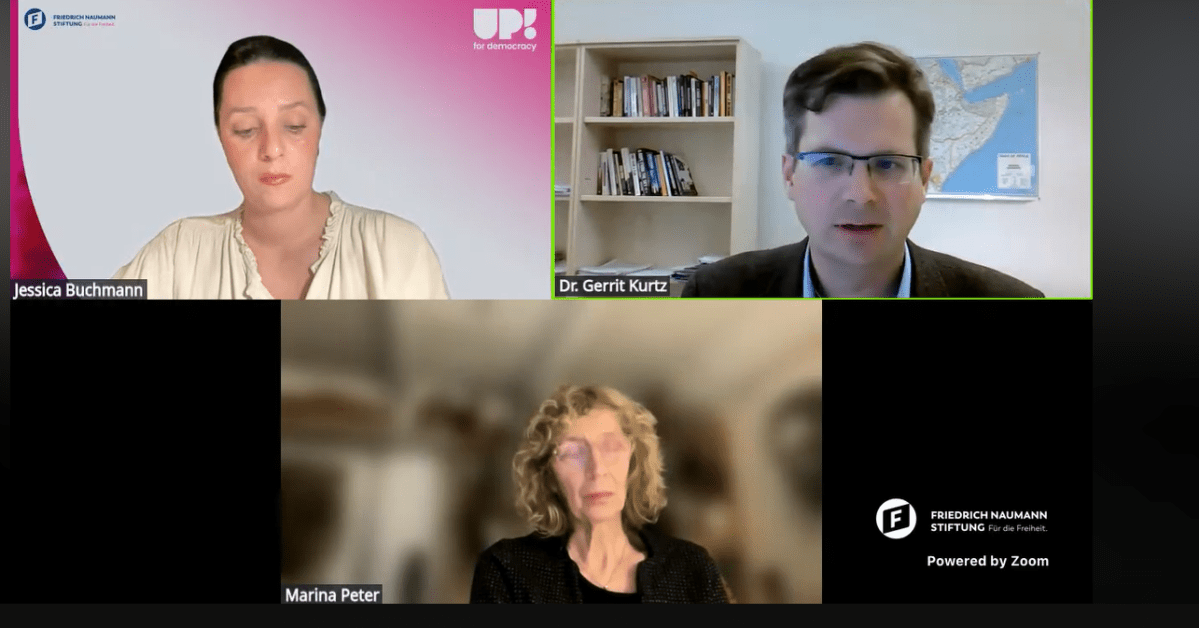
Aufzeichnung einer Online-Diskussion der Friedrich-Naumann-Stiftung zu Entwicklungen in und zu Sudan 2025. Zusammen mit Marina Peter (Sudan und Südsudan Forum) diskutierte ich moderiert von Jessica Buchmann am 10.Dezember 2025.
Category: Media and events
Krieg in Sudan: Warum die Armee einen Waffenstillstand ablehnt
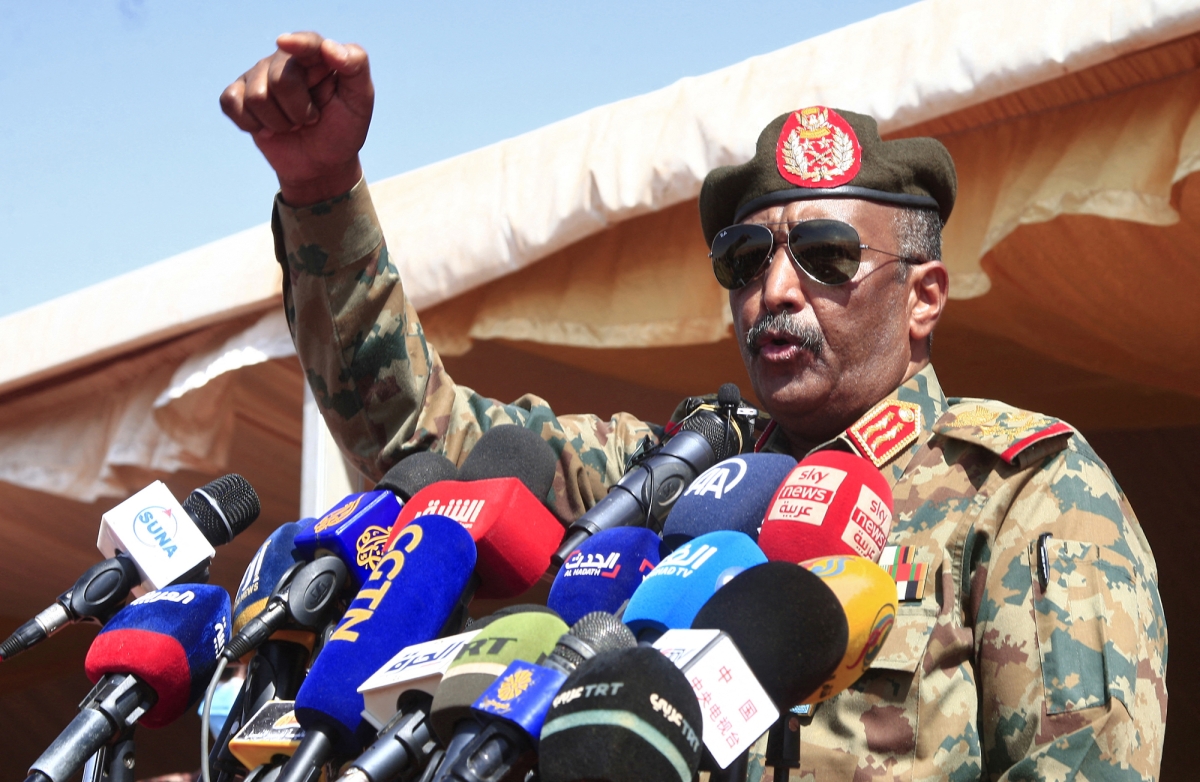
Interview mit dem SRF Rundfunk, 26.11.2025
Sicherheitshalber-Podcast: Krieg in der Ukraine

Das Sicherheitshalber-Team hat mich eingeladen, mit ihnen über den Krieg in Sudan, Hintergründe, externe Akteure und Handlungsmöglichkeiten zu sprechen.
Folge #101, 25.November 2025: https://sicherheitspod.de/2025/11/25/folge-101-krieg-im-sudan-diktatfrieden-in-der-ukraine/
The fall of El Fasher and mass atrocities in Darfur

On 26 October 2025, the Rapid Support Forces captured the division of the 6th infantry division of the Sudanese Armed Forces, fully consolidating their control of El Fasher in the following days. Subsequently, reports of mass atrocities by the RSF against Zaghawa and other non-Arab people trapped inside El Fasher emerged.
I spoke to several media outlets about the fall-out and implications of these events.
Interview with DLF Kultur Studio 9, 28.10.2025
Interview with ZDF Heute Update, 28.10.2025
Interview with Phoenix Der Tag, 28.10.2025
Interview with ZDF Heute Journal, 29.10.2025
Interview with SR Kultur Bilanz am Abend, 29.10.2025 (from 3:40)
Interview with Deutsche Welle, 31.10.2025 (from 16:10) (in English)
Quotes in ZEIT Online, 05.11.2025
Interview with Deutschlandfunk, Informationen am Morgen, 08.11.2025
Quotes in Deutschlandfunk Kultur, 12.11.2025
Wem gehört der Nil? Wie ein Megastaudamm das Horn von Afrika aufmischt

Interview mit dem FAZ-Podcast “Machtprobe”, 11.10.2025
Photo: Ethiopian PM Abiy Ahmed at the opening of the GERD in September 2025.
Civilian perspectives on peace and humanitarian action in Sudan

I faciliated the kick-off panel at the conference “civilian perspectives on peace and humanitarian action in Sudan” that took place on 18 September 2025 in Berlin. The conference was organized by a coalition of 20 German civil society organizations.
Inauguration of the Grand Ethiopian Renaissance Dam

I spoke about the inauguration of the GERD in Ethiopia in several programmes of ZDF including the evening news.
The discourse surrounding the dam serves the leaders of both Ethiopia and Egypt.
Eygpt is certainly highly dependend on the Nile, but highlighting the threat posed by the GERD serves to externalize the government’s responsibility to ensure water security for its vast population, whereas in most cases, water will continue to flow, indeed the operation of the GERD depends on that. Prolonged drought would present a real risk, but that is not imminent.
For Ethiopian PM Abiy Ahmed, the GERD serves to show the country’s aspiration to become a major power, the government’s investment in essential services, and national unity in times of deep divisions. At the same time, the GERD at the moment produces much more electricity than the Ethiopian economy could normally absorb. Fully one third of all of the country’s electricity production this year is likely to be used by (mainly Chinese) cryptomining companies. Only slightly more than half the population has even access to electricity at the moment, with government plans to expand this reach in the next few years.
The building of the GERD is not just about water security, electricity or economic growth though. It is about regional hegemony, with Ethiopia trying to reclaim its position as a major Nile power, whereas Egypt used to see itself as the main power on the Nile and reserve a veto on upstream development. Ultimately, all riparian countries’ interests would be best served by multilteral cooperation.
Der Krieg im Nahen Osten und seine Folgen für Ostafrika
Online-Veranstaltung der Friedrich-Naumann-Stiftung, 27.August 2025
Gäste:
Dr. Gerrit Kurtz ist Wissenschaftler in der Forschungsgruppe Afrika und Mittlerer Osten der Stiftung Wissenschaft und Politik. Er hat am King’s College London in Friedens- und Konfliktforschung promoviert.
Dr. Hans-Jakob Schindler ist Senior Director des Counter Extremism Project (CEP) in New York und Berlin, Co-Vorsitzender des Advisory Board des Global Diplomatic Forum in London sowie Lehrbeauftragter der ASW Akademie AG in Essen.
Die beispielose humanitäre Katastrophe im Sudan
Zitate in Die Welt, 17.08.2025
…
Hoffnung auf eine baldige Beilegung des Sudan-Konflikts gebe es derzeit wenig, sagt Gerrit Kurtz von der „Stiftung Wissenschaft und Politik“ (SWP) WELT. Die USA bemühten sich zwar durchaus, doch die Trump-Regierung finde im Sudan keinen Ansatz für ihre „sehr transaktionale, ressourcenorientierte“ Diplomatie unter Präsident Donald Trump.
So wurde ein für Ende Juli in Washington geplantes Treffen der Außenminister der USA, Saudi-Arabien, den VAE und Ägypten im letzten Moment auf unbestimmte Zeit verschoben. Die RSF-Verbündeten aus den VAE und Ägypten, das traditionell auf der Seite von Sudans Armee steht, hatten sich nicht auf eine Abschlusserklärung einigen können. Es ging um eine Formulierung, die sowohl Sudans Streitkräfte als auch die RSF davon ausschließen sollte, eine führende Rolle in einer zukünftigen Regierungsstruktur zu übernehmen.
Sudan-Experte Kurtz hält es für höchste Zeit, dass der internationale Druck auf die Emirate erhöht wird, ihre Unterstützung für die Miliz einzustellen. Öffentliche Kritik bleibe weitgehend aus – auch von deutscher Seite. Als Beispiel für diese Zurückhaltung nennt Kurtz die Sudan-Konferenz in London vor einigen Monaten.
Aus Rücksicht auf den Golf-Staat hätten die Organisatoren – darunter Deutschland, Frankreich und Großbritannien – die RSF nicht einmal namentlich erwähnt, obwohl diese kurz zuvor im Zamzam-Flüchtlingslager über 1.000 Menschen getötet und rund 400.000 vertrieben habe. „Das haben viele Beobachter als ziemlichen Rückschlag empfunden“, sagt Kurtz, „und das völlig zu Recht.
Lage in El-Fashir spitzt sich weiter zu
Interview mit SR Info Bilanz am Abend, 12.8.2025 (ab 11:50)
 Dr. Gerrit Kurtz